
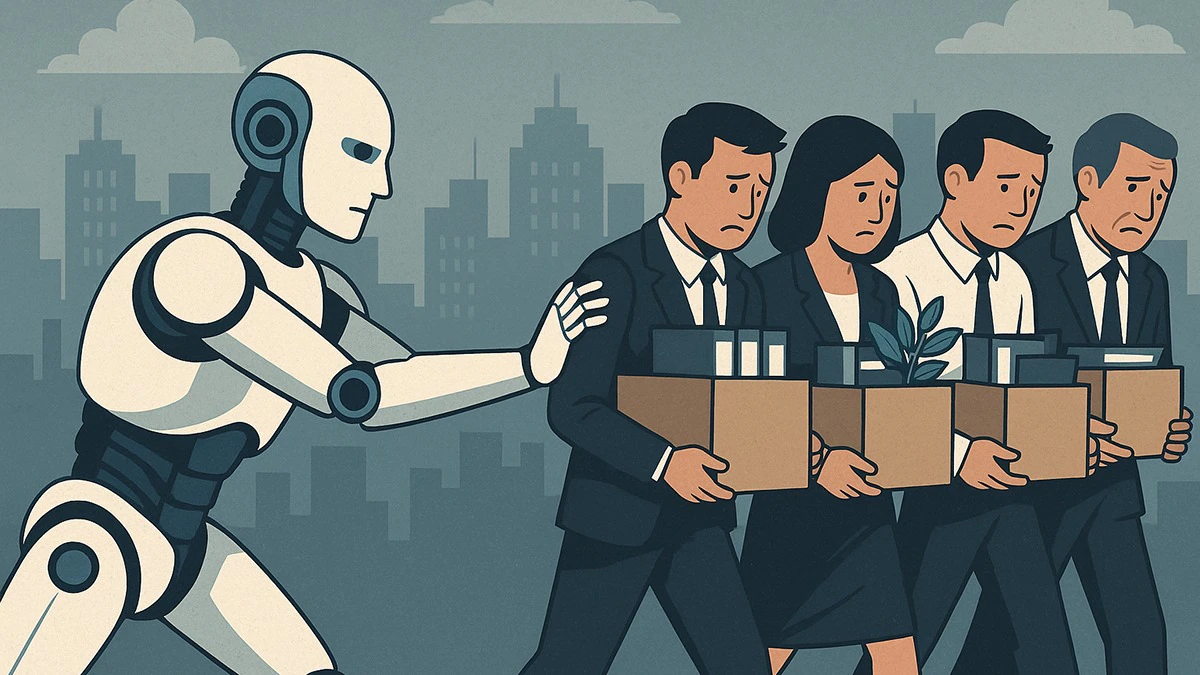

Artificial Intelligence was once a buzzword. Now, it’s quietly becoming part of our daily work. From chatbots handling customer service to algorithms scanning resumes and machines managing inventory, AI is reshaping how businesses function. While it brings efficiency and speed, it’s also subtly replacing human roles—especially repetitive, routine, and data-heavy tasks that were once seen as safe.
In offices across India, especially in Tier 2 cities, small businesses and startups are turning to AI tools to cut costs. Tasks like marketing design, accounting, translation, and even customer interaction are being handled by software that works faster and doesn’t need breaks or salaries. For many entrepreneurs, this automation feels like a blessing, helping them scale quickly with fewer people on the payroll.
But for employees, the shift feels uncertain. Entry-level jobs are shrinking, and fresh graduates often find themselves competing with technology rather than colleagues. The irony is that while AI is creating new roles—like prompt engineers, data trainers, and automation specialists—these positions demand advanced digital skills that not everyone has. The result is a widening skill gap between those who can adapt and those left behind.
Even traditional sectors like retail, education, and manufacturing are adopting AI-driven systems. Self-checkout machines, virtual teachers, and predictive maintenance tools are quietly reducing human dependency. The impact isn’t loud, but it’s steady—and over time, it could redefine how the Indian workforce operates.
Still, AI isn’t replacing human creativity, emotional intelligence, or complex decision-making just yet. The best path forward lies in learning to work with AI, not against it. For India’s youth, that means upskilling, embracing technology, and preparing for a workplace where humans and machines share the desk.
The quiet rise of AI isn’t about machines taking over—it’s about how ready we are to evolve with them.