
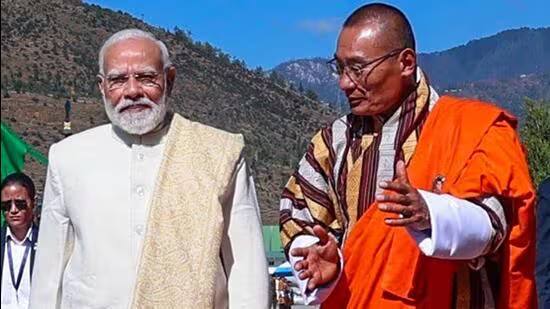

Prime Minister Narendra Modi’s recent visit to Bhutan holds significant strategic and economic weight, particularly for India’s North East region and its emerging Tier 2 border cities. Beyond diplomatic optics, the visit has triggered a new phase of connectivity and energy cooperation aimed at strengthening India’s Himalayan frontier and linking it more deeply with Bhutan’s infrastructure ecosystem.
Why Bhutan remains central to India’s regional strategy
Bhutan is one of India’s most trusted neighbours, connected not only by geography but also by economic and energy partnerships. Over 80 percent of Bhutan’s electricity exports currently flow to India, powering parts of Assam, West Bengal, and Bihar. Modi’s visit reinforced this partnership through new agreements focused on hydropower expansion, cross-border transmission lines, and digital connectivity. The long-term goal is to integrate the energy grids of Bhutan and North East India more seamlessly, ensuring consistent power supply for industrial growth in cities such as Guwahati, Siliguri, and Tezpur.
Boosting energy cooperation through new hydropower projects
Hydropower remains the backbone of India-Bhutan cooperation. Modi and Bhutanese Prime Minister Tshering Tobgay discussed fast-tracking three key hydroelectric projects currently under joint development. India already imports over 1,400 MW of electricity from Bhutan annually, and the new agreements aim to add an additional 1,200 MW within the next five years. This additional power is expected to benefit North Eastern states that often face transmission bottlenecks, particularly during peak demand periods. Enhanced grid stability will also help Tier 2 industrial zones in Assam and Meghalaya attract manufacturing investments that rely on reliable electricity.
Connectivity as a tool for border economic growth
The visit also advanced the Indo-Bhutan connectivity roadmap. Both countries agreed to accelerate the development of cross-border road and rail links, including the Gelephu-Guwahati economic corridor. This corridor is designed to function as a gateway between Bhutan and India’s Northeast, connecting key Assam towns such as Barpeta and Bongaigaon with Bhutanese trade hubs. Additionally, discussions on extending railway lines from Kokrajhar to Gelephu are underway, marking Bhutan’s first potential rail connection with India. These infrastructure linkages will open new trade opportunities for local businesses in Tier 2 border cities, particularly in logistics, agri-exports, and tourism.
Digital and financial integration through fintech and UPI expansion
One of the under-reported outcomes of the visit is the expansion of India’s Unified Payments Interface (UPI) system into Bhutan’s economy. Bhutan was the first country to adopt UPI for retail payments, and the new agreements are expected to deepen interoperability between banks in both nations. This will make cross-border payments faster and cheaper, directly benefitting traders and SMEs in North East India who deal with Bhutanese counterparts. UPI-based settlement mechanisms will also support tourism businesses in border cities like Phuentsholing and Samdrup Jongkhar, where Indian tourists contribute a major share of revenue.
Impact on tourism and cultural corridors
The Modi-Tobgay talks included a strong emphasis on tourism revival. Bhutan is reopening several mountain passes and road routes that had limited movement post-COVID. Enhanced connectivity is expected to boost tourism inflows into both Bhutan and adjacent Indian regions such as Arunachal Pradesh and Sikkim. Tier 2 cities like Gangtok, Tawang, and Tezpur are expected to see increased hotel, homestay, and adventure tourism investments. Joint cultural initiatives, including heritage circuit tours and Buddhist trail projects, will likely attract international visitors and create employment opportunities in the hospitality sector.
Strategic relevance for North East India
Beyond economics, the visit also reinforces India’s border security framework. Stronger economic integration with Bhutan acts as a stabilizing factor in a region sensitive to Chinese infrastructure expansion across the border. The new connectivity initiatives double as strategic corridors, allowing faster troop and supply movement during emergencies while simultaneously promoting trade and people-to-people exchange. North Eastern states stand to gain not just through improved infrastructure but through greater inclusion in India’s Act East Policy.
Challenges ahead and what needs coordination
While the vision is ambitious, execution will depend on overcoming terrain, funding, and bureaucratic delays. Hydropower projects often face cost overruns due to difficult Himalayan geography. Coordinating multiple agencies across India’s North East states is also complex. Experts suggest setting up a joint project monitoring cell involving both governments to fast-track approvals and manage logistics bottlenecks. Continuous engagement between local administrations in Assam and Bhutan’s border provinces will be critical for ensuring that connectivity projects benefit communities on both sides of the border.
Takeaways
• Modi’s Bhutan visit strengthened bilateral cooperation in hydropower, trade, and connectivity.
• North East India’s Tier 2 cities will gain from improved energy access and transport links.
• UPI and fintech integration will simplify cross-border transactions and support SMEs.
• Bhutan’s collaboration aligns with India’s broader Act East Policy for regional growth.
FAQs
Q1. What are the key projects announced during Modi’s Bhutan visit?
The visit included agreements on new hydropower projects, digital payment integration, and the Gelephu-Guwahati connectivity corridor to enhance trade and energy exchange between the two countries.
Q2. How will this visit impact India’s North East?
North Eastern states will benefit from increased power supply, better transport infrastructure, and cross-border business opportunities with Bhutan, particularly in energy, trade, and tourism.
Q3. What role does Bhutan play in India’s energy strategy?
Bhutan is a critical partner in clean energy. Its hydropower surplus helps India meet regional electricity demand, while new projects will strengthen grid reliability in border areas.
Q4. How do Tier 2 cities in the border region benefit?
Cities like Guwahati, Siliguri, and Tezpur will see improved logistics, lower energy costs, and new tourism and trade ventures, helping them grow into regional economic hub