
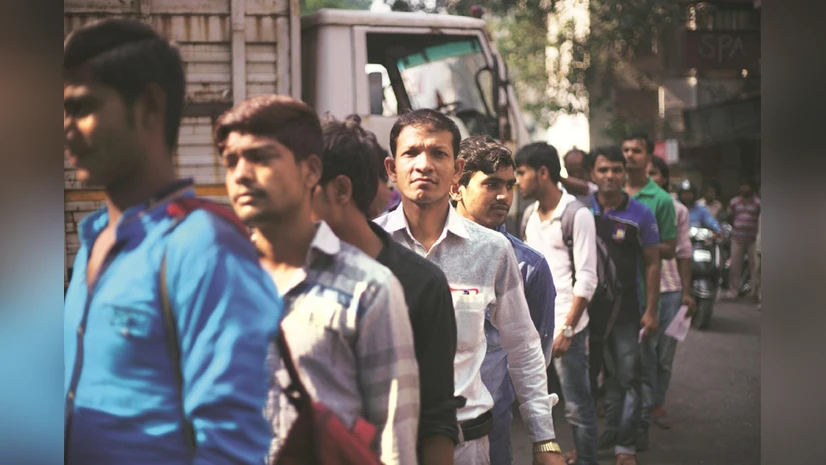

As Bihar heads toward its 2025 assembly elections, youth unemployment has emerged as a defining issue that could shape voter sentiment across its smaller towns and rural belts. With over half of the state’s population under 30 and limited access to quality jobs, the employment crisis has become more than an economic concern—it is now a political and social fault line.
Rising youth unemployment in Bihar’s smaller towns
Bihar’s unemployment rate among youth aged 15 to 29 is one of the highest in India, standing at nearly 18 percent according to recent labour force surveys. The challenge is sharper in Tier 3 towns like Siwan, Begusarai, Arrah, and Samastipur, where industrial presence is limited and the majority of employment remains informal. Overdependence on agriculture and seasonal migration to states like Delhi, Punjab, and Maharashtra have kept the local job base stagnant. As election campaigns intensify, unemployment has become a top demand in voter interactions, replacing caste and infrastructure issues as a priority topic.
Migration dependency and its political implications
For decades, Bihar’s economy has relied on migration-driven income. An estimated 30 lakh people from the state work outside Bihar, sending remittances that sustain local economies. However, this pattern has weakened local labour markets and deepened inequality. Tier 3 towns have witnessed youth disengagement from local job opportunities due to low wages and lack of skill relevance. The return migration during the COVID-19 lockdown exposed how fragile this model is. Large numbers of educated youth came back to towns like Muzaffarpur and Darbhanga but found no formal employment ecosystem. This has turned unemployment into a visible political liability that parties cannot ignore in 2025.
Government schemes and limited results
Over the past five years, the state government has launched multiple employment-linked programs such as Kushal Yuva Program (KYP) and Bihar Startup Policy. While these initiatives have created training avenues, placement rates remain low. Most skill centers in smaller districts lack industry linkages. According to local reports, only 25 to 30 percent of trained youth have secured sustained jobs or self-employment. Without concurrent industrial growth or service sector expansion, such training has limited impact. Additionally, bureaucratic delays in implementing entrepreneurship grants have discouraged first-time business aspirants.
The education-employment disconnect
Bihar produces over five lakh graduates annually, yet most remain unemployed due to skill mismatch. Tier 3 towns with colleges under state universities suffer from outdated curricula and poor industry alignment. Employers often cite lack of soft skills, digital literacy, and vocational exposure among graduates. While private coaching institutes flourish in cities like Patna and Gaya, Tier 3 students face resource gaps and low exposure to emerging sectors like fintech, logistics, or renewable energy. As a result, even educated youth continue to depend on public sector exams as their primary employment aspiration—a path that offers limited openings and long wait periods.
Infrastructure bottlenecks restricting job creation
Connectivity improvements through projects like the Ganga Expressway and East-West Corridor have helped logistics and construction, but industrial investment remains sparse. Bihar’s power reliability, land acquisition issues, and slow industrial approvals deter large employers. Tier 3 cities still lack integrated industrial estates or digital infrastructure strong enough to attract startups. Without private sector anchor investments, local job creation cannot keep pace with the state’s youth population growth. Election manifestos are now expected to focus heavily on infrastructure-led employment, with both ruling and opposition parties promising incentives for agro-based industries and IT-enabled services.
How unemployment is shaping Bihar’s 2025 political narrative
In the upcoming elections, unemployment is expected to play a central role in shaping alliances and campaign messaging. Young voters now form nearly 45 percent of Bihar’s total electorate. Ground-level surveys show that job creation and migration control rank above traditional issues like road construction or welfare subsidies. Political parties are already framing their narratives around employability and entrepreneurship. The ruling coalition is likely to highlight past infrastructure and training initiatives, while opposition parties are pushing for a dedicated employment guarantee scheme for educated youth. The emerging political competition could push long-delayed structural reforms if backed by consistent public pressure.
Socioeconomic ripple effects in Tier 3 towns
Rising unemployment has also altered social dynamics in Bihar’s smaller towns. Many families invest heavily in private education hoping for urban placement, but prolonged joblessness leads to financial strain and youth frustration. Informal gig work and low-wage retail jobs are filling the gap, but these do not provide long-term stability. Local entrepreneurs cite lack of credit and digital support as barriers to hiring more youth. Unless policy intervention directly targets Tier 3 economies, the migration cycle is likely to continue, draining local talent and weakening regional resilience.
Takeaways
• Youth unemployment in Bihar’s Tier 3 towns is driving a shift in political priorities.
• Skill development programs need industry partnerships and better execution.
• Infrastructure and digital expansion remain key to attracting private investment.
• Migration dependency highlights the urgency for localized employment ecosystems.
FAQs
Q1. What is the current youth unemployment rate in Bihar?
According to the latest labour surveys, Bihar’s youth unemployment rate is around 18 percent, higher than the national average, with Tier 3 towns facing the sharpest distress.
Q2. Why is migration a key factor in Bihar’s employment scenario?
Bihar’s limited local job base pushes lakhs of workers to migrate to other states. While remittances support families, this dependency weakens local industries and keeps wages low.
Q3. What are the main barriers to job creation in small towns?
Poor industrial infrastructure, slow policy execution, weak connectivity, and limited digital access prevent small businesses from expanding and hiring locally.
Q4. How will this issue influence Bihar’s assembly elections?
With nearly half the electorate under 30, unemployment will be a decisive factor. Parties are expected to focus on job creation, vocational training, and entrepreneurship incentives in their campaigns.