
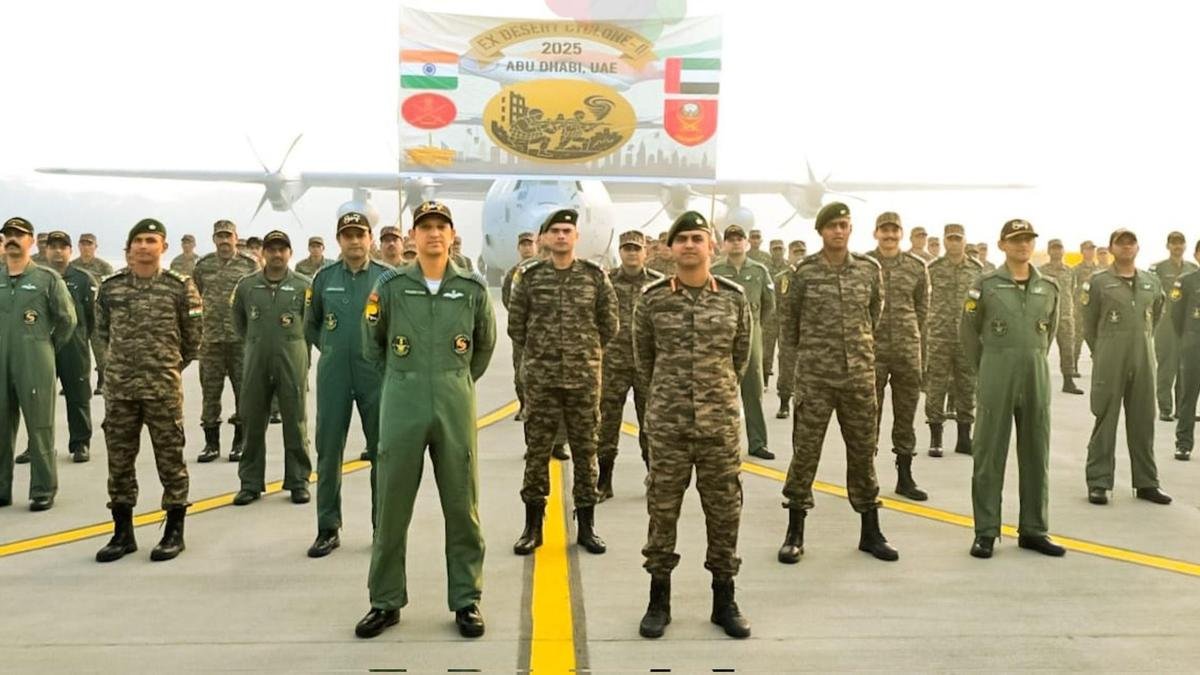

India UAE military ties have taken a significant step forward with the Desert Cyclone II exercise, reflecting the growing strategic alignment between the two countries. The joint military drill highlights shared security priorities, regional stability goals and deepening defence cooperation beyond symbolic engagement.
This topic is time sensitive as the exercise is currently underway and represents an active development in bilateral defence relations. The tone follows a news reporting style with analytical context.
What Desert Cyclone II Exercise Is About
Desert Cyclone II is a joint military exercise between the Indian Army and the UAE Armed Forces focused on enhancing interoperability, tactical coordination and mutual understanding. The exercise builds on the foundation laid by the first edition and expands the scope of joint operations.
The drill involves troops from both sides participating in simulated combat scenarios, urban warfare modules and counter terrorism operations. Emphasis is placed on joint planning, execution and command level coordination rather than ceremonial engagement.
By conducting such exercises, both countries aim to ensure their forces can operate together effectively in real world contingencies.
Why India UAE Military Cooperation Is Expanding
India UAE military ties have expanded rapidly over the past decade due to shared geopolitical and security interests. Both countries face challenges related to terrorism, maritime security and regional instability.
The UAE has emerged as one of India’s most important strategic partners in West Asia. Defence cooperation now complements strong economic, energy and diaspora links. Joint exercises like Desert Cyclone II signal trust and long term intent rather than short term alignment.
For India, deeper military engagement with the UAE strengthens its strategic footprint in the Gulf region. For the UAE, cooperation with India diversifies its defence partnerships beyond traditional allies.
Key Operational Focus Areas of the Exercise
Desert Cyclone II focuses on operations relevant to modern conflict environments. Urban combat drills simulate situations forces are likely to encounter in counter terror and peace enforcement missions. Special operations training improves coordination between elite units.
The exercise also includes planning sessions where officers exchange operational doctrines and lessons learned from recent deployments. This intellectual exchange is as important as field drills in building long term capability alignment.
Logistics coordination and communication protocols are tested to ensure smooth joint operations under pressure.
Strategic Significance for Regional Security
The exercise carries strategic significance beyond bilateral ties. It sends a clear message about the commitment of India and the UAE to regional stability and cooperative security.
In a region marked by shifting alliances and security uncertainties, visible defence collaboration reassures partners and deters hostile non state actors. It also reflects a move toward issue based security cooperation rather than bloc politics.
India’s growing defence engagement in West Asia aligns with its broader objective of being a net security contributor in the region.
How This Fits Into India’s Broader Defence Diplomacy
Desert Cyclone II is part of India’s expanding defence diplomacy framework. India conducts joint exercises with multiple partners across regions to build interoperability and strategic trust.
Unlike traditional alliances, India’s approach focuses on flexible partnerships tailored to specific security needs. Engagements with the UAE complement exercises with other Gulf and Indian Ocean nations.
This strategy allows India to strengthen security ties without formal military alliances, preserving strategic autonomy while expanding influence.
Implications for the UAE Armed Forces
For the UAE, the exercise offers exposure to Indian Army operational experience in diverse terrains and counter insurgency environments. Indian forces bring decades of operational expertise that add value to joint training.
The UAE Armed Forces benefit from learning adaptive tactics and integrated command structures. This exchange supports the UAE’s efforts to modernize its military and enhance readiness for complex security scenarios.
Such cooperation also supports the UAE’s vision of being a proactive security partner rather than a passive regional actor.
Defence Industry and Future Cooperation Potential
Joint exercises often pave the way for deeper defence industry collaboration. India and the UAE have explored opportunities in defence manufacturing, technology sharing and maintenance support.
Operational familiarity builds confidence in equipment compatibility and future joint projects. While Desert Cyclone II is primarily a military exercise, its long term impact may extend to procurement and co development discussions.
Defence cooperation is increasingly viewed as a strategic pillar of the bilateral relationship.
What Comes Next After Desert Cyclone II
Military officials from both countries are expected to review outcomes and identify areas for future engagement. This may include expanded troop participation, inclusion of new domains or regularization of joint drills.
As trust deepens, exercises could evolve from tactical training to broader operational planning scenarios. This would mark a new phase in India UAE military ties.
The trajectory suggests sustained and institutionalized defence cooperation rather than one off engagements.
Takeaways
Desert Cyclone II strengthens India UAE military interoperability
The exercise reflects growing strategic trust and alignment
Urban warfare and counter terrorism are key focus areas
Defence ties now extend beyond symbolic cooperation
FAQ
What is the purpose of Desert Cyclone II exercise
The exercise aims to enhance joint operational capability and mutual understanding between the Indian Army and UAE Armed Forces.
Is Desert Cyclone II a regular military drill
It is part of an evolving series of joint exercises reflecting deepening defence cooperation.
Does this exercise signal a military alliance
No formal alliance is indicated. It reflects strategic partnership and cooperative security engagement.
Will India and UAE conduct more such exercises
Future exercises are likely as both sides expand defence and security collaboration.