
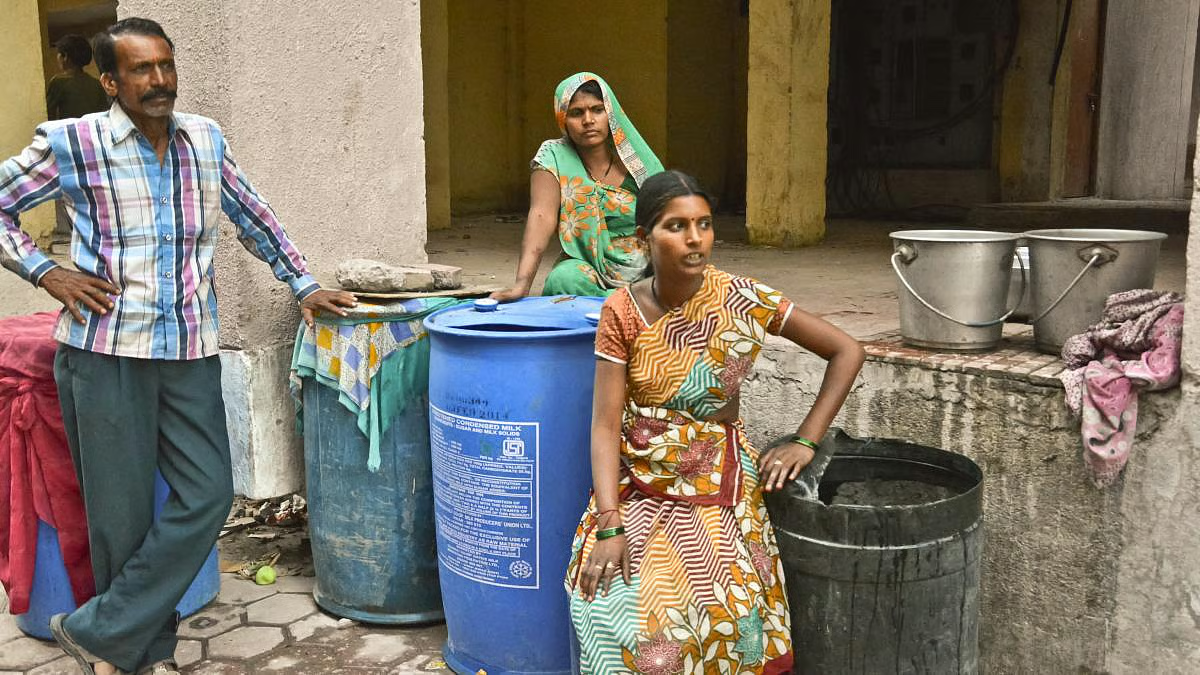

The water crisis fallout in Indore has triggered public concern after contamination in the city’s drinking water supply led to reported deaths, widespread illness, and emergency interventions. The incident has raised urgent questions around health impact, government response, and long term accountability.
This topic is time sensitive and news driven. The tone is factual and reporting focused, based on verified developments and administrative actions rather than opinion.
Indore, often cited for civic rankings and cleanliness, faced an unexpected public health emergency when residents in multiple localities reported severe gastrointestinal illness after consuming municipal water. The situation escalated rapidly as hospitals recorded a surge in patients with dehydration, vomiting, and suspected waterborne infections. The crisis exposed vulnerabilities in urban water management that extend beyond one city.
What triggered the water contamination in Indore
The immediate trigger for the crisis was contamination in sections of the municipal water distribution network. Preliminary administrative assessments pointed to leakage and cross contamination between drinking water pipelines and sewage lines in specific zones.
Heavy pressure on aging infrastructure, combined with seasonal factors and maintenance gaps, increased the risk of untreated water entering the supply. In some affected areas, residents reported changes in water colour and smell days before official alerts were issued.
Such contamination patterns are not uncommon in older urban systems, but the scale of impact in Indore highlighted how quickly localized failures can turn into city level emergencies.
Reported deaths and scale of health impact
Health authorities confirmed that multiple deaths were linked to severe waterborne illness following the contamination. While exact attribution requires medical verification, officials acknowledged that unsafe drinking water played a significant role in worsening patient outcomes.
Government hospitals and private clinics reported hundreds of cases of acute gastroenteritis and related symptoms. Children, elderly citizens, and individuals with pre existing conditions were the most affected.
Emergency wards were stretched as patients required intravenous fluids and monitoring. Doctors stressed that early treatment prevented a higher fatality count, underlining the seriousness of delayed detection.
Areas and populations most affected
The impact was concentrated in specific residential clusters supplied by the affected pipelines. Densely populated neighbourhoods with shared water connections saw faster spread of illness.
Informal settlements and lower income households were disproportionately affected due to higher dependence on direct tap water without additional filtration. In contrast, households using purifiers or bottled water reported fewer cases.
The incident exposed inequities in access to safe drinking water, even within the same urban zones.
Immediate government response and emergency measures
Once the scale of the issue became clear, the district administration initiated emergency protocols. Contaminated water supply lines were shut down in affected areas, and tanker based water distribution was arranged.
Medical teams were deployed for door to door checks in high risk localities. Chlorination drives and flushing of pipelines were carried out to disinfect the system. Public advisories urged residents to boil water before use and report symptoms immediately.
While these measures helped contain further spread, questions remain about the delay between early complaints and full scale response.
Role of municipal authorities and infrastructure gaps
Municipal officials acknowledged that pipeline damage and aging infrastructure contributed to the crisis. Indore’s rapid urban expansion has placed stress on water networks originally designed for smaller populations.
Maintenance schedules, leak detection systems, and real time monitoring were found to be inadequate in some zones. Experts noted that routine inspections often focus on supply continuity rather than contamination risk.
The crisis has renewed calls for comprehensive audits of water pipelines, especially in older neighbourhoods.
Accountability and administrative scrutiny
Following public outcry, the state government ordered internal reviews and sought detailed reports from civic bodies. Accountability questions focused on whether early warning signs were ignored and whether routine checks were sufficient.
Opposition leaders and citizen groups demanded transparent disclosure of findings and responsibility fixing. Past incidents in other cities suggest that accountability often weakens once immediate attention fades.
The effectiveness of follow up actions will determine whether systemic changes actually occur or the issue remains reactive.
Public trust and communication challenges
One of the major consequences of the crisis has been erosion of public trust. Residents questioned why alerts were not issued sooner despite complaints.
Communication gaps between civic authorities and citizens worsened anxiety. In fast moving public health situations, delayed or unclear messaging can increase harm.
Clear, timely communication is now being seen as equally important as technical fixes in preventing future crises.
Lessons for other Tier-2 cities
Indore’s experience serves as a warning for other Tier-2 cities with similar infrastructure profiles. Rapid urban growth without proportional investment in water safety monitoring increases risk.
Experts stress the need for proactive contamination detection, routine water quality testing, and community level reporting systems. Cities that act only after health impacts emerge face higher human and reputational costs.
The incident underscores that rankings and perception cannot replace ground level preparedness.
Long term implications and next steps
In the aftermath, authorities have promised infrastructure upgrades, stricter monitoring, and accountability reviews. Whether these translate into sustained action remains to be seen.
For residents, the crisis has changed water consumption behaviour, with increased reliance on filtration and packaged water. This shift reflects declining confidence in municipal supply safety.
The real test will be whether preventive systems improve before the next stress event.
Takeaways
- Water contamination can escalate rapidly into a public health crisis
- Delayed alerts and infrastructure gaps increase health risks
- Emergency response helped limit impact but raised accountability concerns
- Indore’s case highlights vulnerabilities across Tier-2 cities
FAQs
What caused the water crisis in Indore?
Pipeline leaks and sewage contamination in parts of the municipal supply led to unsafe drinking water.
How many people were affected by the contamination?
Hundreds reported illness, with several deaths linked to severe waterborne infection and complications.
What steps did authorities take to control the situation?
Water supply shutdowns, tanker distribution, chlorination, medical camps, and public advisories were implemented.
Can similar incidents happen in other cities?
Yes. Cities with aging water infrastructure and weak monitoring face similar risks.