
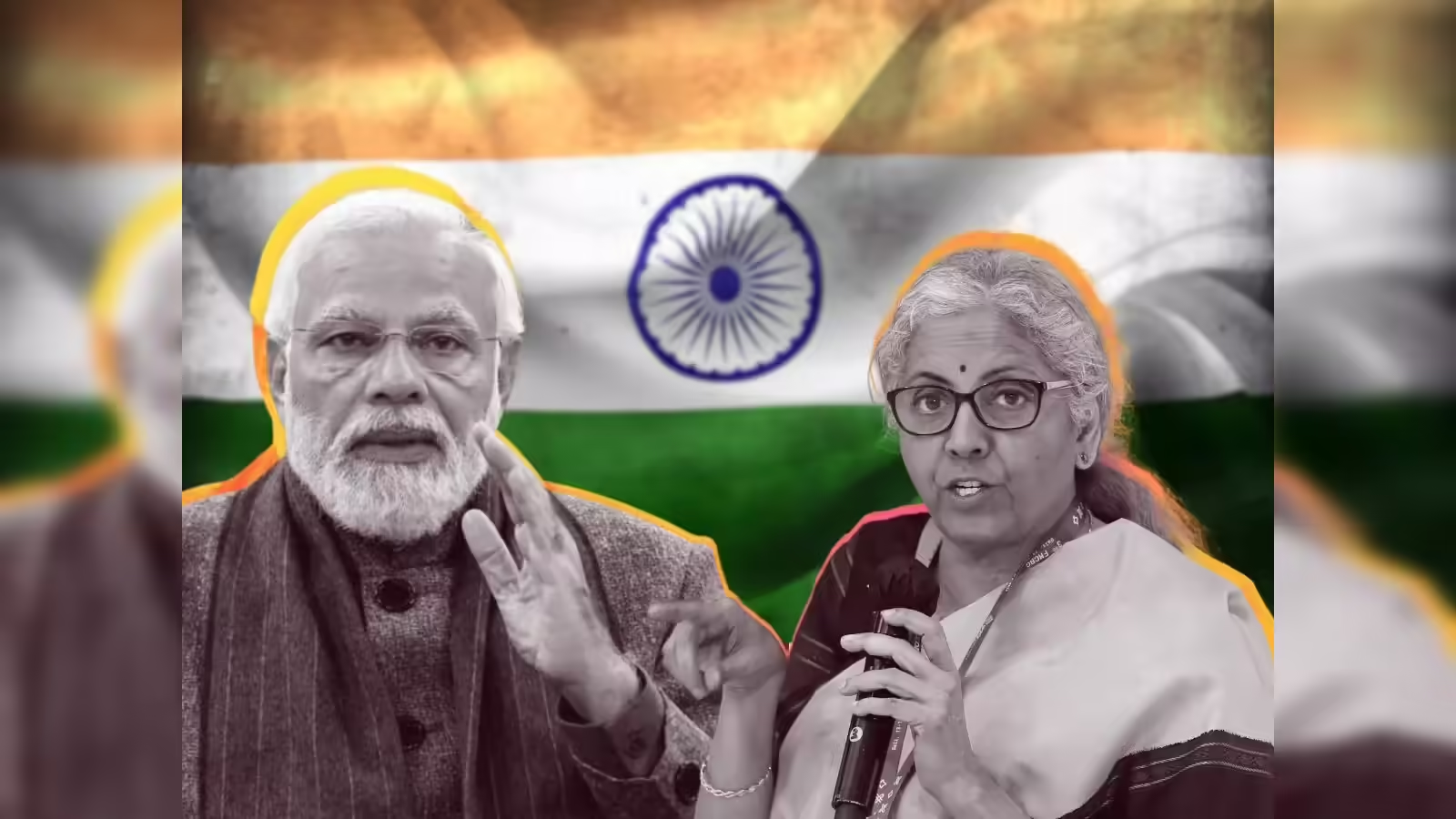

India’s pragmatic foreign policy shift in 2026 signals a clear move toward interest driven diplomacy with direct economic outcomes. For Tier-2 exporters, this evolving global playbook is reshaping market access, compliance expectations, logistics routes, and long term trade opportunities.
This topic is time sensitive and news driven. The tone here is analytical and reporting focused, reflecting an active policy transition rather than a theoretical framework.
India’s foreign policy in 2026 is no longer anchored to alignment or ideology alone. It is structured around trade resilience, supply chain security, and strategic autonomy. This shift is already influencing export priorities and commercial engagement beyond metro based enterprises.
What defines India’s pragmatic foreign policy shift
The defining feature of India’s 2026 foreign policy is flexibility. India is engaging simultaneously with competing global blocs while avoiding over dependence on any single market. Trade agreements, strategic partnerships, and diplomatic engagements are increasingly evaluated through an economic lens.
This approach prioritises export growth, technology access, energy security, and logistics continuity. For exporters, this means trade policy decisions are being designed to reduce friction rather than score diplomatic points.
India is positioning itself as a stable, reliable trading partner amid global uncertainty. That positioning directly affects how foreign buyers view Indian suppliers across sectors.
Trade diversification beyond traditional markets
A key outcome of the new global playbook is diversification. India is actively expanding trade ties with regions beyond traditional Western markets. Increased engagement with West Asia, Africa, Latin America, and Southeast Asia is creating new demand corridors.
For Tier-2 exporters, this reduces over reliance on the United States and Europe. Smaller exporters who previously struggled with high compliance costs in mature markets now find opportunities in emerging economies with similar product demand.
This diversification strategy spreads risk and stabilises export earnings, especially during global downturns.
Implications for Tier-2 exporters and MSMEs
Tier-2 exporters stand to gain significantly from the policy shift. Government focus has moved toward broadening the export base rather than concentrating benefits among large corporates.
Export promotion initiatives, trade delegations, and buyer seller meets are increasingly targeting non metro clusters. Sectors such as textiles, food processing, engineering goods, handicrafts, chemicals, and light manufacturing are seeing renewed attention.
The policy environment now favours consistent suppliers with scalable capacity rather than only high volume exporters. This aligns well with Tier-2 production ecosystems.
Changing compliance and quality expectations
While market access is expanding, compliance expectations are rising. India’s trade engagements emphasise quality assurance, traceability, and sustainability standards.
Tier-2 exporters must adapt to stricter documentation, packaging norms, and digital compliance systems. Countries entering trade agreements with India expect predictable quality and delivery timelines.
The foreign policy shift does not lower standards. It raises them while providing support mechanisms for exporters to meet requirements.
Those who invest early in compliance systems will gain a long term advantage.
Logistics, connectivity, and supply chain realignment
India’s global playbook also prioritises logistics diplomacy. Improved port access, shipping routes, and regional connectivity agreements are part of trade negotiations.
For exporters based in Tier-2 cities, this translates into better access to inland container depots, faster customs processing, and alternative shipping corridors.
Supply chain resilience is now a strategic objective. Exporters who can demonstrate reliable sourcing and delivery benefit from buyer confidence, especially in uncertain global conditions.
Impact on pricing power and contract stability
India’s pragmatic stance strengthens its negotiating position. As buyers seek stable alternatives to volatile supply chains, Indian exporters gain leverage.
Tier-2 exporters benefit through longer term contracts, repeat orders, and better payment terms. Price sensitivity remains, but buyers increasingly value reliability alongside cost.
This shift rewards exporters who focus on consistency rather than chasing short term margins.
Role of state governments and export clusters
State governments are aligning with national policy by promoting regional export clusters. Infrastructure upgrades, export facilitation centres, and skill development programs are being channelled toward Tier-2 hubs.
States with proactive export policies are attracting international buyers directly to production centres. This reduces dependence on intermediaries and improves margins for manufacturers.
Coordination between state and central initiatives is improving export execution on the ground.
Risks and challenges exporters must manage
Despite opportunities, risks remain. Geopolitical tensions can still disrupt markets. Currency volatility affects pricing. Compliance costs can strain small exporters.
Tier-2 businesses must avoid assuming policy support guarantees success. Execution capability, financial discipline, and market research remain essential.
The new global playbook creates openings, not shortcuts.
What exporters should do next
Tier-2 exporters should reassess target markets based on current trade priorities. Investing in certifications, digital documentation, and logistics planning is no longer optional.
Building relationships through trade fairs, embassies, and export councils aligned with new focus regions increases visibility.
Those who align business strategy with policy direction will scale faster and more sustainably.
Takeaways
- India’s 2026 foreign policy prioritises trade resilience and flexibility
- Tier-2 exporters gain access to diversified and emerging markets
- Compliance and quality standards are rising alongside opportunity
- Logistics and contract stability improve for reliable suppliers
FAQs
What is driving India’s foreign policy shift in 2026?
Economic resilience, supply chain security, and strategic autonomy are key drivers.
How does this affect Tier-2 exporters specifically?
It expands market access, increases government support, and reduces over reliance on metro exporters.
Are compliance requirements becoming stricter?
Yes. Quality, traceability, and documentation standards are rising across new trade partnerships.
Which sectors benefit the most from this shift?
Manufacturing, textiles, food processing, engineering goods, and MSME led exports see the strongest impact.