
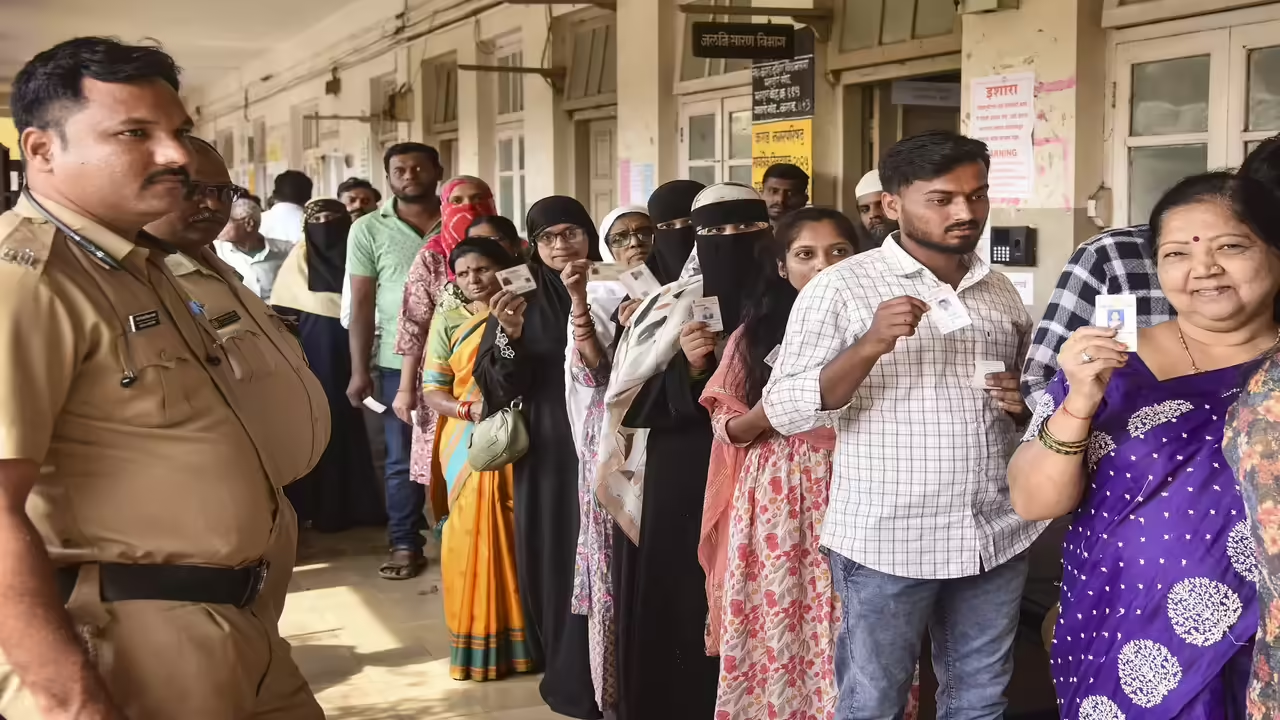

The Maharashtra civic body election 2026 results reveal clear voting patterns among Tier 2 and Tier 3 city voters, highlighting local governance priorities over national narratives. These outcomes show how municipal issues, leadership credibility, and service delivery shaped voter choices across smaller urban centres.
Understanding the Context and Nature of the Results
This topic is time sensitive and news driven. The Maharashtra civic body election 2026 results come amid shifting political equations in the state and renewed voter focus on grassroots governance. Civic polls traditionally reflect local sentiment more accurately than state or national elections, and this cycle was no different.
Voters in Tier 2 and Tier 3 cities prioritised immediate concerns such as water supply, road conditions, sanitation, property tax, and local employment. Unlike metro regions, where larger political narratives often dominate, smaller cities showed preference for candidates with visible ward level work and accessibility. The results underline that municipal elections remain performance driven rather than purely ideology driven.
What Tier 2 and Tier 3 Voters Chose
Across several municipalities, voters leaned towards candidates and alliances that promised stability and continuity in civic administration. In many towns, sitting councillors with a track record of addressing local grievances managed to retain seats, regardless of party shifts at the state level.
Independent candidates and smaller regional groups also performed strongly in select civic bodies. This reflects voter willingness to move beyond traditional party symbols when local credibility outweighs brand value. In towns facing infrastructure stress, voters backed candidates with experience in municipal committees rather than first time political entrants.
The results suggest that local leadership visibility, ward level presence, and responsiveness played a decisive role in shaping outcomes.
Party Performance and Shifts at the Local Level
Major political parties retained influence, but with notable variations across regions. In some Tier 2 cities, ruling alliances consolidated their position by leveraging organisational strength and welfare messaging. In contrast, certain Tier 3 towns witnessed fragmented verdicts, leading to hung councils and coalition negotiations.
These outcomes point to a decentralised political mood. Voters did not uniformly endorse or reject any single party across the state. Instead, decisions were shaped by city specific factors such as past municipal performance, candidate reputation, and local factional dynamics.
This pattern reinforces the idea that civic elections cannot be read as a straight indicator of assembly or parliamentary trends.
Key Local Issues That Influenced Voting
Infrastructure remained the dominant issue across most civic bodies. Poor road maintenance, drainage problems during monsoon seasons, and delays in water supply projects featured prominently in voter conversations. Waste management and cleanliness also influenced urban voters, especially in towns aiming to attract investment or tourism.
Property tax rationalisation and transparency in municipal finances emerged as important talking points. Traders and small business owners in Tier 2 and Tier 3 cities expressed concern over arbitrary assessments and inconsistent enforcement.
Employment related expectations, particularly for local youth, also played a role. Candidates promising skill centres, industrial linkages, and support for small enterprises gained traction in industrial and semi industrial towns.
What the Results Mean for Local Governance
The Maharashtra civic body election 2026 results signal increased accountability expectations from municipal representatives. Voters demonstrated willingness to reward performance and penalise non delivery. This creates pressure on newly elected councils to focus on execution rather than symbolism.
Local administrations are likely to face greater scrutiny on budget utilisation, project timelines, and service quality. With many councils operating under tight financial conditions, the mandate emphasises efficient use of existing resources rather than ambitious announcements.
For citizens, the results reaffirm the importance of civic participation. Higher voter engagement in smaller cities shows growing awareness of how municipal decisions directly affect daily life.
Implications for State Level Politics
While civic elections are local in nature, they influence political momentum. Strong performances in Tier 2 and Tier 3 cities provide organisational confidence ahead of future state level contests. At the same time, mixed outcomes serve as caution signals for parties relying solely on leadership projection without grassroots connect.
The results may also reshape internal party strategies, including candidate selection and alliance management. Leaders are likely to recalibrate their focus towards strengthening ward level networks and addressing hyper local issues.
For opposition groups, gains in municipal councils offer platforms to demonstrate governance capabilities and build credibility outside legislative assemblies.
What to Watch in the Coming Months
The immediate next phase involves mayoral selections, standing committee formations, and coalition negotiations in councils without clear majorities. These decisions will determine governance stability and policy direction.
Observers should watch how quickly elected bodies move to clear pending civic works and whether election promises translate into action. Budget approvals and project prioritisation will be early indicators of whether the voter mandate is being respected.
The effectiveness of these councils will shape public sentiment well before the next major electoral cycle.
Takeaways
Tier 2 and Tier 3 voters prioritised local performance over party narratives
Infrastructure, civic services, and accessibility influenced voting decisions
Independent and regional candidates gained ground in several towns
The results increase accountability pressure on municipal administrations
FAQs
Do civic election results predict state election outcomes?
Not directly. Civic polls reflect local issues and candidate performance more than broader political trends.
Why are Tier 2 and Tier 3 cities important in municipal elections?
They represent a large share of urban population and face distinct infrastructure and governance challenges.
What happens after the civic body results are declared?
Councils are formed, leadership positions are elected, and budget and policy decisions follow.
Can independent councillors influence municipal governance?
Yes, especially in councils without clear majorities where coalition support becomes crucial.