
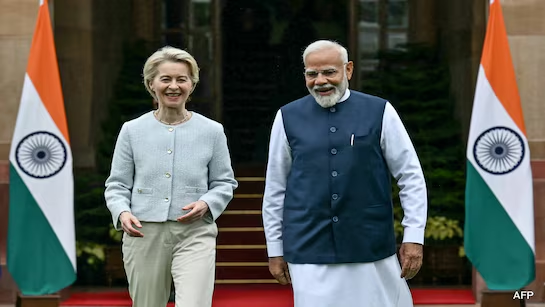

India prepares for Republic Day 2026 amid heightened diplomatic focus as top European Union leaders arrive as chief guests. The Republic Day preparations underline India’s strategic priorities, security readiness, and evolving global partnerships ahead of the 26 January celebrations in New Delhi.
Understanding the Context and Nature of the Event
This topic is time sensitive and news driven. Republic Day is an annual national event, but the presence of senior EU leadership gives the 2026 celebrations added geopolitical significance. The intent here is informational reporting, focusing on preparations, diplomatic messaging, and what this signals for India’s international positioning.
Republic Day commemorates the adoption of the Constitution and traditionally combines military display, cultural representation, and foreign policy signalling. Inviting EU leaders reflects India’s emphasis on multilateral engagement beyond bilateral alliances. Preparations this year are shaped not only by ceremonial needs but also by security, protocol, and diplomatic coordination.
Why EU Leaders as Guests Matter This Year
Having top EU leaders as Republic Day guests signals deepening India EU relations across trade, technology, and strategic cooperation. The European Union represents one of India’s largest trading partners and a key player in global policy frameworks.
The invitation highlights India’s intent to balance relationships across major global blocs while asserting strategic autonomy. It also reflects shared interests in supply chain resilience, digital governance, climate action, and security cooperation.
For Republic Day 2026, the guest choice sends a message of alignment on democratic values and multilateral cooperation, without tying India to any single power centre.
Security and Parade Preparations in New Delhi
Security preparations for Republic Day 2026 have been intensified due to the high profile guest presence. Multi layer security arrangements are in place across central Delhi, with heightened surveillance, restricted airspace zones, and coordinated deployment of security agencies.
The Republic Day parade rehearsals have followed a tighter schedule this year to accommodate diplomatic engagements alongside ceremonial duties. Movement protocols for visiting delegations are integrated with parade logistics to avoid disruption.
Public access, traffic advisories, and crowd management plans are being calibrated to ensure safety while maintaining the inclusive spirit of the event.
Parade Themes and Cultural Messaging
The Republic Day parade remains a showcase of India’s military capability and cultural diversity. This year’s themes emphasise indigenous defence production, technological self reliance, and regional cultural representation.
Tableaux from states and union territories highlight development initiatives, heritage, and innovation. The presence of EU leaders adds international visibility to these narratives, positioning India as both rooted in tradition and forward looking.
Military contingents, including women led formations and modern equipment displays, reinforce the message of capability and reform within the armed forces.
Diplomatic Engagements Around Republic Day
Republic Day celebrations extend beyond the parade. High level meetings, cultural events, and bilateral discussions form a parallel diplomatic track. EU leaders are expected to engage with Indian leadership on trade negotiations, investment cooperation, and regulatory alignment.
Business forums and policy dialogues around Republic Day week offer platforms for advancing economic ties. For India, this is an opportunity to push priorities such as manufacturing partnerships, clean energy collaboration, and technology transfer.
These engagements often shape policy momentum long after the ceremonial events conclude.
What This Means for India’s Global Positioning
India preparing for Republic Day with EU leaders as guests reflects a broader foreign policy approach that values diversified partnerships. It demonstrates confidence in hosting complex diplomatic events while managing domestic security and public participation.
The symbolism matters. Republic Day guests are chosen carefully to reflect strategic intent. In 2026, the focus is on strengthening ties with a collective of nations rather than a single country, reinforcing India’s role as a balancing power.
This positioning is particularly relevant in a fragmented global environment marked by trade tensions and geopolitical uncertainty.
Public Sentiment and National Focus
For citizens, Republic Day remains a moment of national pride. The presence of international leaders adds global attention but does not overshadow the domestic significance of the day.
Public interest remains centred on the parade, flypast, and cultural displays. At the same time, awareness of the diplomatic context is growing, reflecting a more globally informed audience.
Republic Day 2026 thus blends tradition with strategic messaging, appealing to both domestic and international audiences.
Takeaways
Republic Day 2026 carries added diplomatic significance with EU leaders as guests
Security and logistical preparations are heightened due to the high profile visit
The event signals India’s focus on multilateral and balanced global partnerships
Cultural and military displays reinforce India’s domestic and international messaging
FAQs
Why are EU leaders invited as Republic Day guests in 2026?
The invitation reflects India’s strategic emphasis on strengthening ties with the European Union across multiple sectors.
Does the guest choice affect Republic Day celebrations for the public?
The core celebrations remain the same, though security measures and protocols may be tighter.
Are diplomatic meetings held alongside the parade?
Yes, Republic Day week includes high level meetings, business interactions, and policy discussions.
Is Republic Day mainly symbolic or policy relevant?
It is both. While symbolic, guest selection and engagements often signal policy direction.