

Basant Panchami rituals and puja muhurat preparation require clarity on timing, materials, and procedure. This guide explains how to prepare correctly, follow traditional practices, and avoid common mistakes while keeping the process simple, accurate, and suitable for home worship across Indian households.
Understanding the significance of Basant Panchami rituals
Basant Panchami marks the arrival of spring and is dedicated to Goddess Saraswati, associated with knowledge, learning, music, and arts. The day holds special importance for students, teachers, artists, and families beginning educational or creative pursuits. Unlike many Hindu festivals, Basant Panchami rituals are simple and do not require elaborate arrangements or fasting. Yellow is considered auspicious as it represents prosperity, energy, and the vibrancy of spring.
The puja is traditionally performed during the daytime muhurat specified for Saraswati worship. Basant Panchami is considered an auspicious day itself, which is why activities like initiating education, writing first letters, and starting new learning journeys are encouraged. Understanding this context helps families focus on discipline and intention rather than excessive decoration or expense.
Identifying the correct Basant Panchami puja muhurat
Puja muhurat refers to the most auspicious time window for performing Saraswati puja. It is calculated based on the Panchami tithi, which begins and ends according to the lunar calendar rather than sunrise to sunset. For home worship, the recommended practice is to perform the puja during the Panchami tithi, preferably during daytime hours.
If the Panchami tithi spans across two days, the muhurat falling during daylight is prioritized. Families should avoid early morning or late night worship unless specified in local calendars. This approach ensures alignment with traditional guidelines without unnecessary confusion. Checking a reliable Panchang a day in advance helps with planning flowers, offerings, and personal schedules.
Preparing the puja space at home
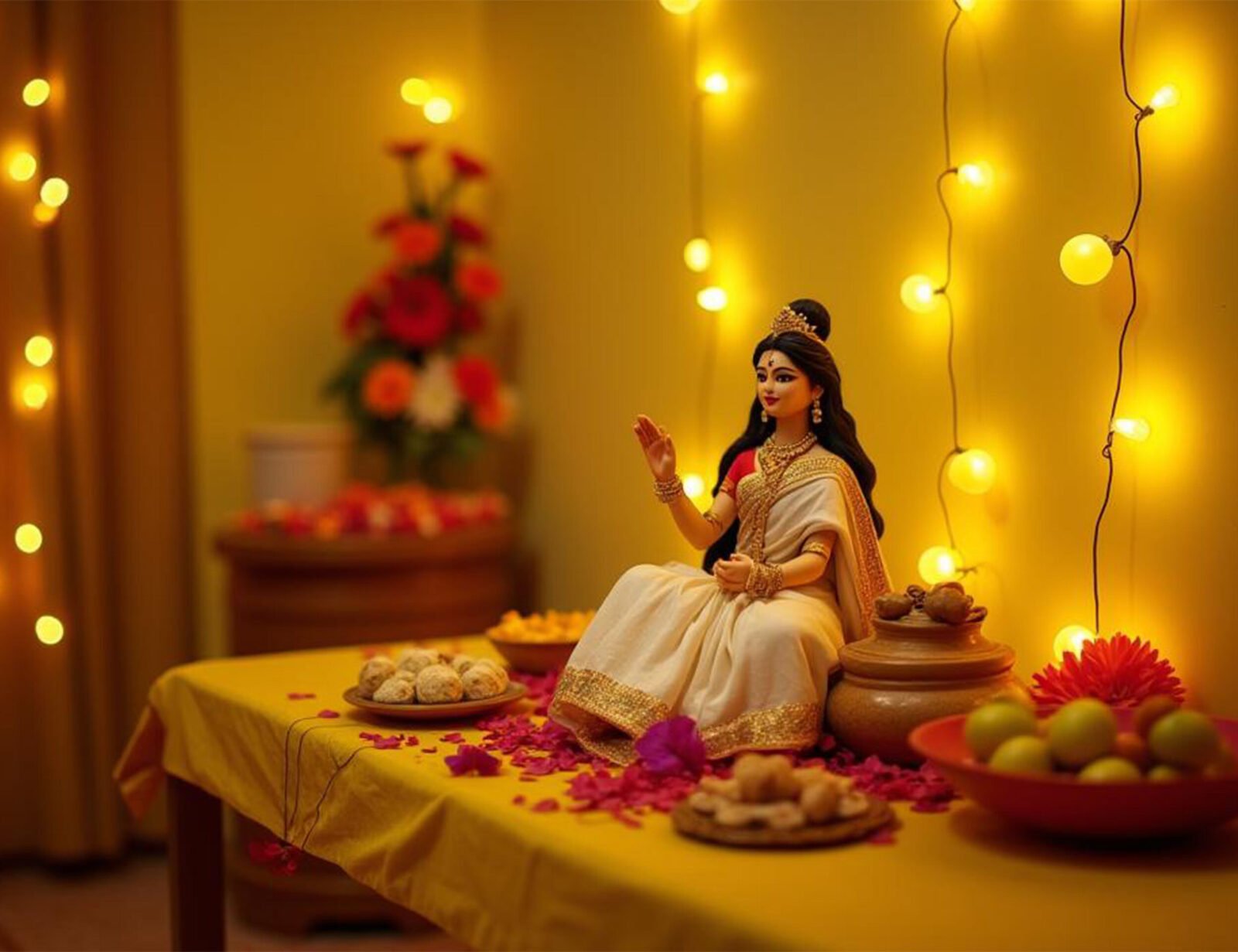
The puja area should be clean, calm, and well lit. A small table or altar facing east or north is ideal but not mandatory. The idol or image of Goddess Saraswati should be placed on a clean yellow cloth. Avoid cluttering the space with unrelated items.
Books, musical instruments, notebooks, pens, and tools of learning should be placed near the deity as symbolic offerings. These items should not be touched or used until the puja is completed. Lighting a diya with ghee or oil is preferred, along with incense for purification. Keeping the space minimal helps maintain focus and reduces distractions during worship.
Puja samagri checklist for Basant Panchami
The puja items required for Basant Panchami are simple and commonly available. Yellow flowers such as marigold or mustard flowers are ideal. Offerings typically include fruits, sweets made with milk, and yellow colored foods like kesar rice or boondi.
Other essentials include turmeric, sandalwood paste, rice grains, incense sticks, diya, and clean water. Some families include honey and curd as symbolic offerings. There is no strict rule on the number of items, and simplicity is encouraged. Over preparation often leads to confusion rather than devotion.
Step by step Saraswati puja procedure
Begin by cleaning yourself and wearing light colored or yellow clothing. Sit calmly and light the diya and incense. Offer flowers and invoke Goddess Saraswati with a short prayer or mantra. Applying sandalwood or turmeric paste to the idol or image is customary.
Next, offer fruits and sweets while mentally dedicating your learning and efforts to the goddess. Students may write a few letters or words as a symbolic start to learning. Avoid reading or studying books before the puja concludes. End the ritual with a short prayer seeking clarity, discipline, and wisdom. Distribute prasad among family members after completion.
Cultural practices and regional variations
Basant Panchami rituals vary slightly across regions. In eastern India, particularly in Bengal, Saraswati puja is often more elaborate and performed collectively in schools and colleges. In northern India, home worship with family participation is more common.
Some communities observe dietary preferences such as avoiding non vegetarian food on the day. Kite flying and wearing yellow attire are popular cultural expressions in several regions. While regional customs differ, the core ritual remains focused on learning, purity, and positive intent.
Common mistakes to avoid during Basant Panchami puja
One common mistake is treating Basant Panchami like a major fast or complex festival. The rituals are meant to be light and thoughtful. Another mistake is ignoring the puja muhurat and performing rituals at random times due to convenience.
Using excessive decorations, loud music, or rushing through prayers reduces the spiritual value of the observance. Touching books or instruments before the puja is completed is traditionally discouraged. Keeping the process calm and intentional leads to a more meaningful experience.
Takeaways
Basant Panchami is an auspicious yet simple festival focused on learning and clarity
Perform Saraswati puja during the Panchami daytime muhurat for best results
Minimal puja items and a clean space are more important than elaborate setups
Avoid rushing rituals and respect traditional guidelines for symbolic offerings
FAQs
Is Basant Panchami puja mandatory for students?
No, but it is traditionally encouraged as it symbolizes respect for education and knowledge.
Can Saraswati puja be done at home without an idol?
Yes, an image or even books placed respectfully are sufficient for home worship.
Why is yellow color important on Basant Panchami?
Yellow represents spring, energy, prosperity, and is associated with Goddess Saraswati.
Can adults also perform Basant Panchami rituals?
Yes, the festival is meant for anyone seeking wisdom, creativity, or a fresh start in learning.