
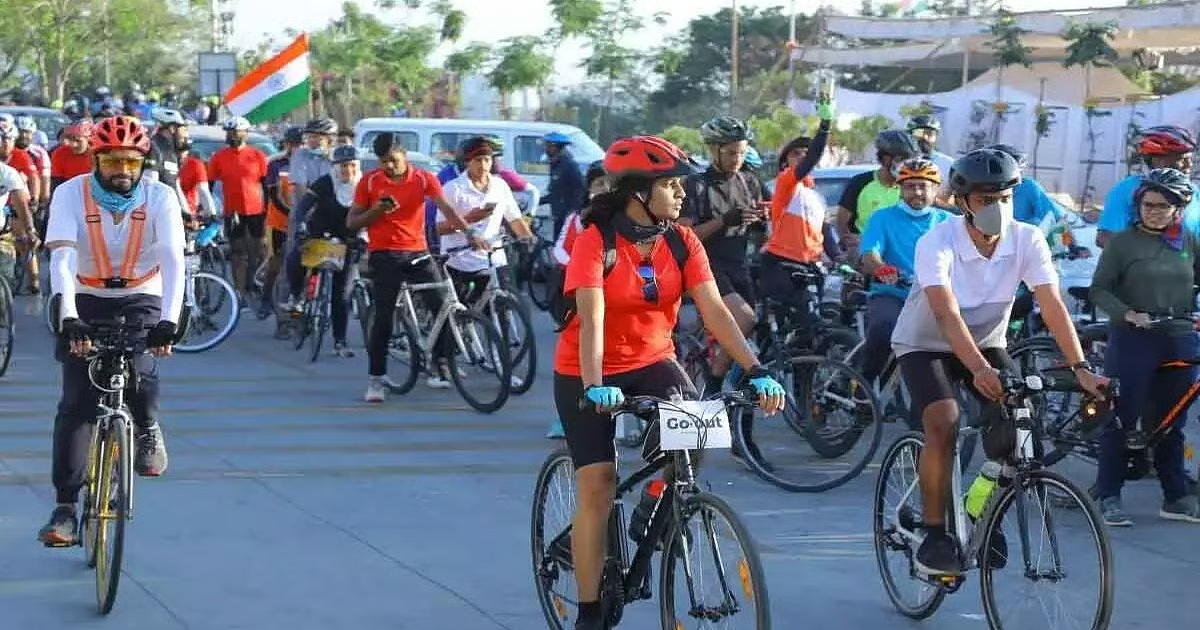

The Pune Grand Challenge Tour holiday notice has led to office closures across parts of the city, affecting economic activity, traffic movement, and local businesses. This article explains why the holiday was declared, how the event impacts daily life, and what residents and employers should expect.
Why the Pune Grand Challenge Tour triggered a holiday
The Pune Grand Challenge Tour is a large scale international cycling and endurance sporting event that passes through major arterial roads and sensitive urban zones. The holiday notice is time sensitive and administrative in nature, aimed at ensuring public safety and smooth execution of the event rather than celebrating a public festival.
Such events require long route stretches to remain vehicle free for extended hours. This involves road barricading, police deployment, emergency services positioning, and crowd management. Declaring a holiday for offices and some institutions reduces commuter density, lowers traffic pressure, and allows authorities to manage the event without risking congestion or accidents. The decision is operational, not symbolic.
Impact on office operations and work schedules
Office shutdowns linked to the Pune Grand Challenge Tour primarily affect government offices, educational institutions, and selected private establishments located along or near the event route. Many corporate offices adopt work from home arrangements rather than complete closure.
For businesses, the holiday reduces productivity for one working day but prevents larger disruptions that would occur if employees attempted to commute during extensive road closures. Companies operating in IT parks and commercial clusters away from the route may function partially, depending on internal policies and employee access.
The holiday also helps reduce last minute absenteeism caused by traffic delays, which often proves more disruptive than a planned shutdown.
Traffic restrictions and commuter movement
Traffic management is the most visible reason behind the holiday notice. The Pune Grand Challenge Tour requires early morning to afternoon road closures on key corridors. Diversions are implemented, but alternative routes often cannot handle full weekday traffic volumes.
Public transport services operate with modified routes, leading to delays and confusion for daily commuters. Emergency services are prioritised, but general vehicular movement remains restricted. By reducing office footfall, authorities aim to keep roads clear for event participants and emergency response units.
Residents are advised to avoid non essential travel during event hours and plan errands either before or after the closures.
Economic impact on the city for the day
From a purely economic standpoint, a holiday leads to mixed outcomes. Formal sector productivity sees a temporary pause, particularly in administrative and service based offices. However, the overall economic loss is limited because the closure is planned and limited to a single day.
At the same time, the event brings indirect economic activity. Hospitality services, transport vendors, event management staff, and temporary workers benefit from increased demand. Hotels hosting participants and support teams see higher occupancy. Local suppliers providing logistics, food, and security services gain short term contracts.
The net impact is not a loss but a redistribution of economic activity across sectors.
Effect on local businesses and street level commerce
Local businesses experience varied effects depending on location. Shops and vendors located along the event route may face temporary access restrictions, reducing walk in customers. However, businesses near event hubs, spectator points, and accommodation zones often see increased footfall.
Food outlets, cafes, and convenience stores experience higher demand from visitors and event staff. Small vendors selling refreshments and essentials benefit from controlled but steady crowds. For most local businesses, the disruption is limited to a few hours rather than a full day shutdown.
Advance communication helps businesses plan inventory and staffing accordingly.
Public response and resident sentiment
Public reaction to the Pune Grand Challenge Tour holiday is generally practical rather than emotional. Many residents appreciate advance notice, which allows them to plan work, travel, and personal commitments. Concerns mainly arise when communication is unclear or when road closure maps are not widely shared.
Some residents view the holiday as an inconvenience, especially daily wage workers and small traders who depend on routine operations. Others see value in hosting international sporting events that enhance the city’s profile and tourism potential.
Clear communication remains the key factor shaping public perception.
Why such holidays are preferred over partial restrictions
Authorities prefer declaring a holiday over partial restrictions because it simplifies enforcement. Managing traffic when offices operate normally while roads are closed leads to confusion, violations, and safety risks.
A holiday reduces vehicle volume at the source. It also allows police and civic agencies to focus on event execution rather than crowd control at office districts. This approach has been used in other cities hosting marathons, cycling tours, and major public events.
The goal is controlled disruption rather than uncontrolled chaos.
What residents and businesses should do
Residents should stay informed about event timings and road closure schedules. Planning work from home, postponing non essential travel, and using public advisories helps reduce stress.
Businesses should inform employees early, adjust delivery schedules, and coordinate with suppliers. For customer facing businesses, aligning operating hours with event footfall can turn disruption into opportunity.
Preparation determines whether the day feels wasted or well managed.
Long term significance for Pune
Hosting large sporting events positions Pune as a capable urban centre with infrastructure and administrative coordination. While one day disruptions are unavoidable, repeated successful events strengthen the city’s reputation for tourism, fitness culture, and international engagement.
Such events also test and improve traffic management systems, emergency response coordination, and public communication frameworks.
Takeaways
The holiday notice is driven by traffic and safety requirements
Office closures reduce congestion during major route shutdowns
Economic impact is mixed but largely redistributed, not lost
Clear planning helps residents and businesses adapt smoothly
FAQs
Is the Pune Grand Challenge Tour holiday a public holiday?
It is an administrative holiday declared for operational reasons, not a nationwide public holiday.
Are all offices required to shut down?
No, closures depend on location and employer policy, with many opting for work from home.
Will public transport run during the event?
Yes, but with route diversions and possible delays.
Do such events benefit the city long term?
Yes, they enhance the city’s profile and support tourism and event based economic activity.