
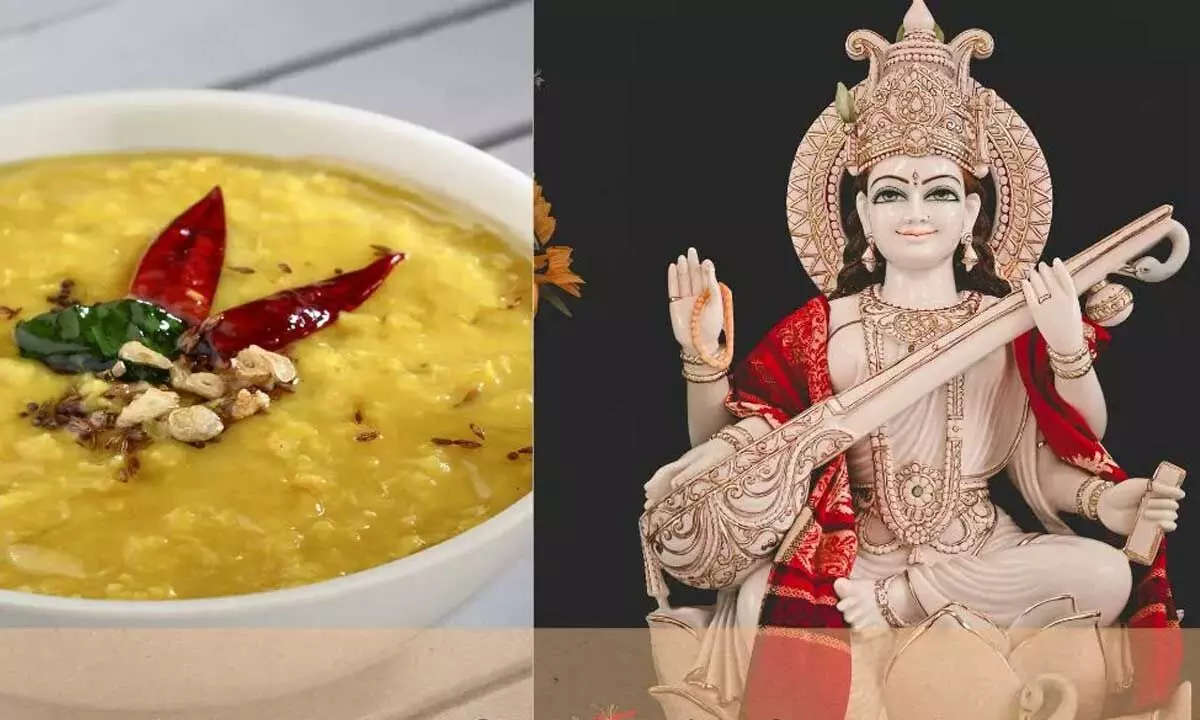

Basant Panchami bhog is a set of traditional vegetarian dishes prepared to mark the arrival of spring and honour Goddess Saraswati. This step by step guide explains what to cook, why each item matters culturally, and how to prepare everything at home with simple ingredients.
Understanding Basant Panchami Bhog and Its Significance
Basant Panchami is an auspicious Hindu festival associated with learning, wisdom, music and the onset of spring. The bhog offered on this day is deeply symbolic. Yellow coloured food dominates the platter because yellow represents energy, prosperity and the blooming mustard fields seen during this season.
Traditional Basant Panchami bhog is sattvik in nature. That means no onion, garlic or excessive spices. The food is light, homemade and cooked with clarity of intention. While items vary by region, the core idea remains the same: seasonal, yellow toned dishes prepared with devotion.
Essential Dishes in a Traditional Basant Panchami Bhog
A complete Basant Panchami bhog usually includes a sweet dish, a rice based preparation and one or two simple accompaniments. Commonly prepared items include kesari bhaat, boondi ladoo, saffron flavoured kheer and yellow vegetable curry.
In North India, sweet saffron rice or kesari chawal is almost mandatory. In eastern regions, payesh or rice kheer with turmeric or saffron is preferred. Some households also add yellow chana dal, plain puri or satvik khichdi. You can choose three to four items based on time and family tradition.
Step by Step Recipe for Kesari Chawal
Kesari chawal is the most widely recognised Basant Panchami bhog dish. It is aromatic, mildly sweet and easy to prepare.
Start by washing one cup of basmati rice thoroughly and soaking it for twenty minutes. Heat two tablespoons of ghee in a heavy bottom pan. Add whole spices like two green cardamoms and a small piece of cinnamon. Drain the rice and sauté gently until the grains turn glossy.
Add two cups of water, a pinch of salt and a few strands of saffron soaked in warm milk. Cover and cook until the rice is done and water is absorbed. In a separate pan, lightly warm half a cup of sugar with two tablespoons of water. Add this syrup to the rice, mix gently and cook for another three minutes. Finish with chopped almonds and raisins.
How to Prepare Simple Boondi Ladoo at Home
Boondi ladoo is another popular offering because it symbolises sweetness and celebration. For a quicker homemade version, you can use ready made plain boondi.
Heat one tablespoon of ghee and lightly roast one cup of boondi on low flame. In a separate pan, prepare a one string sugar syrup using half a cup of sugar and quarter cup of water. Add a pinch of turmeric or food grade saffron for colour. Mix the warm syrup with boondi, add crushed cardamom and shape into small ladoos once the mixture cools slightly.
Making Yellow Kheer for Basant Panchami
Kheer is considered pure and auspicious and fits perfectly into Basant Panchami bhog. Boil one litre of full cream milk in a thick pan. Add two tablespoons of soaked rice and cook on low heat, stirring occasionally.
Once the rice softens and the milk thickens, add sugar to taste and a pinch of turmeric or saffron for the yellow hue. Cook for another five minutes. Garnish with chopped dry fruits. Let it cool slightly before offering.
Offering the Bhog and Cultural Practices
Traditionally, the bhog is offered during the morning hours after Saraswati puja. The food is placed on clean utensils, preferably brass or steel. Books, musical instruments and study material are kept near the offering as part of the ritual.
After the offering, the bhog is distributed as prasad among family members. The emphasis is not on variety but on purity and seasonal relevance. Even one well prepared dish is considered sufficient if made with devotion.
Takeaways
- Basant Panchami bhog focuses on yellow coloured, sattvik food prepared at home
- Kesari chawal, boondi ladoo and kheer are the most commonly prepared items
- Ingredients are simple and seasonal with minimal spices
- Cultural intention and cleanliness matter more than the number of dishes
FAQs
Is it compulsory to prepare multiple dishes for Basant Panchami bhog?
No. Even a single homemade sweet or rice dish is enough if offered with devotion.
Why is yellow food important on Basant Panchami?
Yellow symbolises spring, learning and prosperity and is associated with Goddess Saraswati.
Can Basant Panchami bhog be prepared without sugar?
Yes. Some households offer plain yellow rice or khichdi if sweets are avoided.
Is onion or garlic allowed in Basant Panchami bhog?
Traditionally no. The bhog is sattvik and avoids onion, garlic and heavy spices.