

Short summary
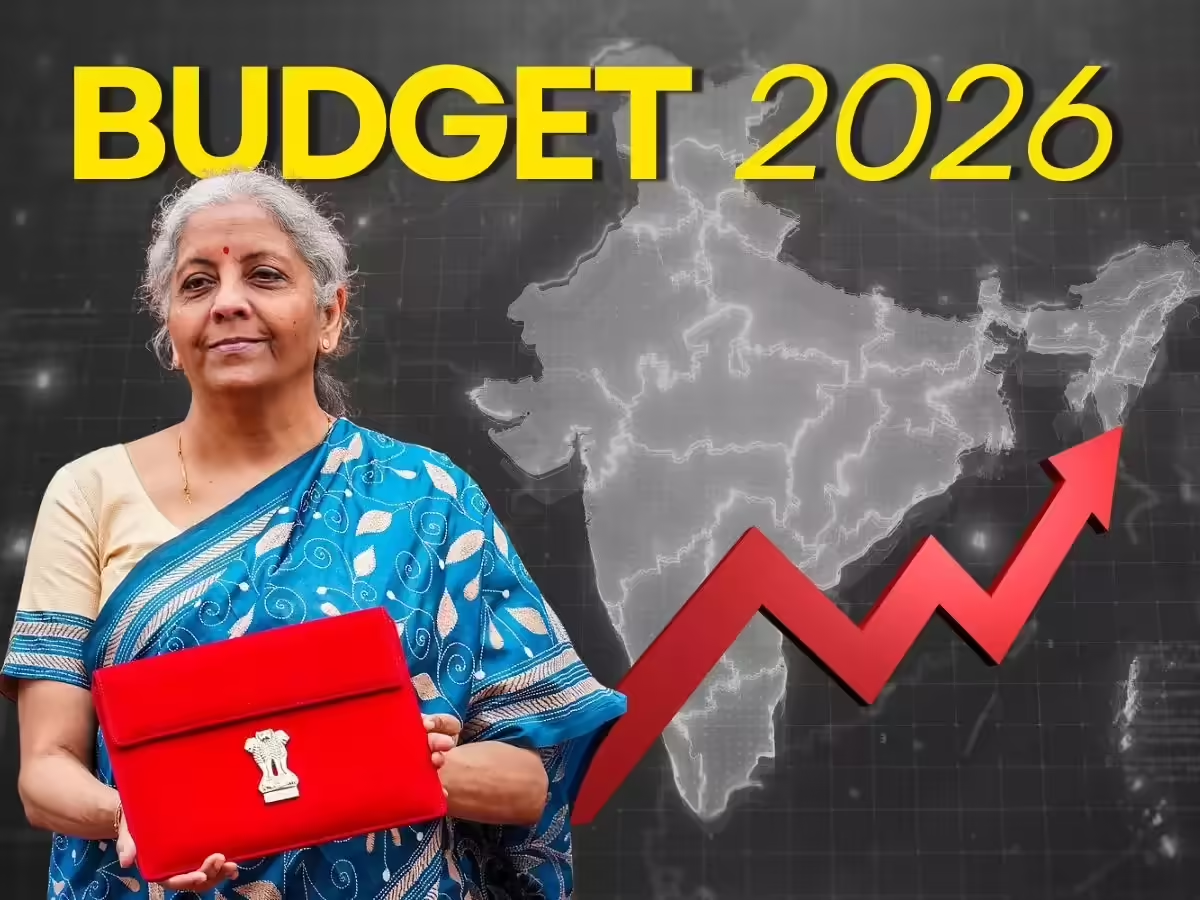
State-level economic stories to watch post-Budget reveal how policy announcements translate into real outcomes for small industries, agriculture, and jobs. This analysis breaks down the trends emerging across states, highlighting where execution, funding flow, and employment impact are likely to matter most.
Understanding the intent and nature of the topic
This is a time sensitive news analysis topic. While Budget announcements are national, their real impact unfolds at the state level over the following months. The tone here is analytical and reporting driven, focused on what to track next rather than what was promised.
Why state-level economic stories matter after the Budget
State-level economic stories to watch post-Budget are critical because most economic delivery happens outside the Union government. Small industries, agriculture support, and job creation are implemented by states using a mix of central allocations and their own resources.
The Budget sets direction through schemes, incentives, and fiscal signals. States decide speed, scale, and prioritisation. Differences in administrative capacity, political focus, and local economic structure lead to uneven outcomes across regions.
For citizens and businesses, the post-Budget phase is when announcements begin to affect credit access, procurement, infrastructure rollout, and employment opportunities. Tracking states rather than headlines offers a clearer picture of economic momentum.
Small industries and MSME execution at state level
Small industries and MSMEs are a major focus area after every Budget, but outcomes depend heavily on state implementation. Credit guarantee schemes, interest subvention, and cluster development programs require state machinery to identify beneficiaries and push approvals.
States with strong industrial departments and active district industries centres tend to move faster. Industrial parks, plug-and-play infrastructure, and faster approvals attract MSMEs relocating from congested metros to Tier 2 cities.
Key stories to watch include how quickly states clear pending subsidies, whether local procurement policies favour small suppliers, and how industrial power tariffs are adjusted post-Budget. These factors directly affect cost structures and hiring decisions for small manufacturers.
Agriculture policy impact beyond announcements
Agriculture is another area where state-level economic stories diverge sharply after the Budget. While national allocations cover procurement, insurance, and irrigation, states control ground-level delivery.
Post-Budget trends to track include procurement efficiency for crops, timely payment to farmers, and expansion of storage and cold chain facilities. States with better logistics and digital land records usually see smoother rollout of schemes.
Weather patterns also intersect with policy outcomes. States facing irregular rainfall or fog related disruptions often need rapid administrative response to protect farmer incomes. How states adjust crop planning, input subsidies, and extension services becomes a key economic signal.
Employment generation and job-linked spending
Job creation remains one of the most watched post-Budget outcomes. States play a central role in translating employment schemes into actual work opportunities.
Infrastructure spending by states has a direct employment multiplier. Road construction, housing projects, and urban development schemes generate both skilled and unskilled jobs. The pace of tendering and execution after the Budget indicates how serious states are about job creation.
Another trend to monitor is skill development alignment. States that link training programs with local industry demand tend to see better placement outcomes. Migration patterns often shift toward states showing faster post-Budget hiring activity.
Urban versus rural economic divergence
Post-Budget economic performance often reveals a widening gap between urban and rural regions within states. Urban areas benefit faster from infrastructure spending, startup incentives, and service sector growth.
Rural regions depend more on agriculture support, public works, and welfare-linked employment. States that balance both tend to maintain social stability and consumption demand.
Tracking retail sales, construction activity, and transport demand at the district level provides clues about how evenly economic benefits are spreading. Sharp urban-rural divergence can signal future political and economic stress.
Fiscal health and state borrowing patterns
Another important post-Budget story is how states manage their finances. Increased borrowing to fund capital expenditure can boost growth if managed well, but excessive reliance on debt raises long-term risks.
States with disciplined fiscal planning tend to prioritise capital assets over revenue expenditure. Monitoring how states allocate funds between salaries, subsidies, and infrastructure reveals economic intent.
Credit rating outlooks, payment delays to contractors, and arrears in welfare schemes are warning signs that affect private investment confidence.
What business owners and workers should watch
For small business owners, post-Budget signals include faster GST refunds, state tax incentives, and improved logistics. These directly affect cash flow and expansion plans.
Workers should watch employment notifications, apprenticeship programs, and large infrastructure project announcements at the state level. Hiring usually follows funding release with a lag of a few months.
Local newspapers and district level updates often provide more actionable information than national debates during this phase.
How post-Budget trends shape the year ahead
The months following the Budget set the economic tone for the year. States that execute early tend to attract more private investment and generate momentum.
Lagging states often try to catch up later, but delays reduce impact. This is why post-Budget monitoring is more valuable than Budget day reactions.
Takeaways
State-level execution determines the real impact of Budget announcements
Small industries benefit most where states move quickly on credit and infrastructure
Agriculture outcomes depend on procurement efficiency and local administration
Job creation tracks closely with state infrastructure spending and skill alignment
FAQs
Why should citizens track state-level economic trends post-Budget
Because most policies affecting jobs, agriculture, and small businesses are implemented by states, not directly by the Union government.
Which sectors show impact first after the Budget
Infrastructure and MSMEs usually show early movement, followed by agriculture and employment schemes.
Do all states benefit equally from Budget allocations
No. Outcomes vary based on administrative capacity, fiscal health, and local priorities.
How long does it take for Budget impact to be visible
Initial signals appear within two to three months, while full impact unfolds over the financial year.