
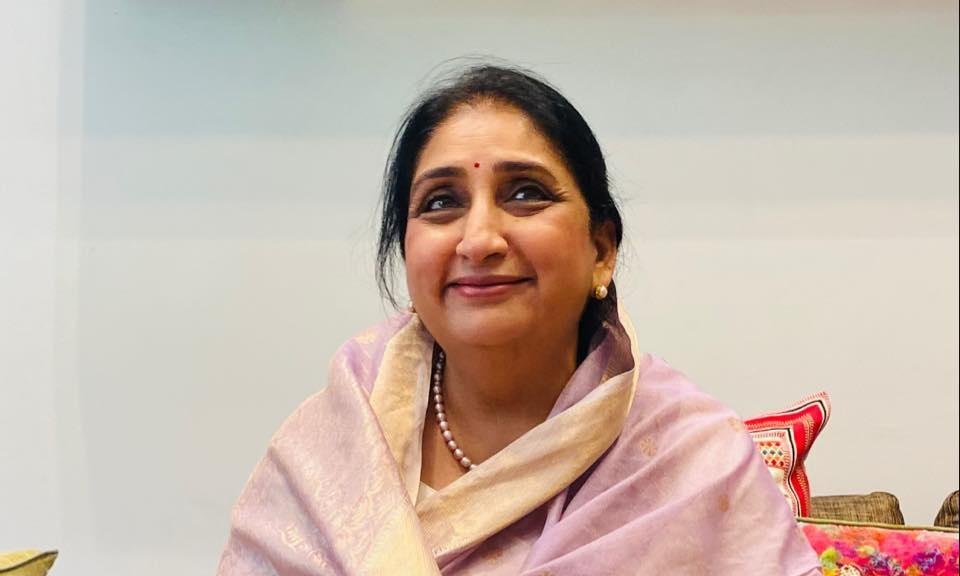

Sunetra Pawar’s appointment as Maharashtra Deputy Chief Minister marks a significant moment in the state’s evolving political landscape. The development has immediate implications for coalition balance, regional power centres, and the direction of governance in Maharashtra at a time of political realignment.
This article examines what Sunetra Pawar’s elevation means for state politics, party equations, regional leadership dynamics, and upcoming electoral strategies, with a focus on how power is being redistributed within Maharashtra.
Context behind Sunetra Pawar’s appointment
Sunetra Pawar’s appointment as Maharashtra Deputy CM comes amid ongoing recalibration within the state’s ruling coalition. Maharashtra politics over the past few years has been defined by shifting alliances, internal party splits, and strategic repositioning ahead of future elections.
Her elevation is widely seen as a move to consolidate influence within a key political bloc while reinforcing leadership continuity. The decision reflects the importance of experience, loyalty, and regional grounding in maintaining coalition stability in a politically competitive environment.
The timing of the appointment is also crucial, as it follows a phase of administrative transitions and policy recalibration at the state level.
What this means for coalition politics in Maharashtra
The appointment strengthens internal cohesion within the ruling alliance by addressing leadership balance. Deputy Chief Minister roles in Maharashtra are often used to manage competing interests among coalition partners and senior leaders.
By bringing Sunetra Pawar into the top executive structure, the coalition signals an intent to stabilise decision making and reduce friction. It also helps reinforce trust among alliance partners who seek representation in governance.
This move may reduce short term instability but does not eliminate long term competition within and outside the coalition. It is a calculated step rather than a final settlement of power equations.
Impact on regional power dynamics
Maharashtra’s politics is deeply influenced by regional leadership, particularly in western Maharashtra and other politically active belts. Sunetra Pawar’s appointment enhances representation from regions that play a decisive role in assembly and parliamentary outcomes.
This elevation strengthens local leadership networks and sends a message to grassroots workers that regional voices remain central to state governance. It could also reshape local equations by influencing candidate selection, organisational control, and resource allocation.
Regional leaders aligned with her may gain increased visibility and administrative leverage in the coming months.
Implications for opposition strategy
For opposition parties, Sunetra Pawar’s appointment adds a new variable to their political calculations. It complicates narratives around leadership concentration and dynastic influence while also challenging opposition attempts to exploit coalition instability.
Opposition groups may recalibrate their messaging to focus on governance performance rather than leadership legitimacy. They are also likely to intensify outreach in regions where her influence is strongest to counterbalance the political advantage gained.
This appointment forces the opposition to respond strategically rather than rhetorically.
Administrative and governance implications
From a governance perspective, the Deputy CM role carries operational significance. It often involves overseeing key departments, coordinating between ministries, and acting as a bridge between political leadership and bureaucracy.
Sunetra Pawar’s administrative responsibilities will influence policy prioritisation, especially in areas linked to regional development, welfare delivery, and institutional coordination. Her effectiveness will be judged not just politically but also by execution outcomes.
In a state as large and complex as Maharashtra, smooth coordination at the top directly affects policy delivery on the ground.
Gender representation in Maharashtra leadership
Sunetra Pawar’s appointment also has symbolic importance in terms of gender representation in state leadership. While Maharashtra has had women leaders in prominent roles, representation at the highest executive level remains limited.
Her elevation sends a signal about expanding leadership space for women in state politics. However, long term impact will depend on whether this translates into broader inclusion across party structures and governance institutions.
Symbolism alone will not sustain political capital without visible administrative performance.
Electoral implications looking ahead
The appointment has clear electoral undertones. Leadership decisions at this level often factor in upcoming electoral cycles, alliance negotiations, and voter perception management.
By reinforcing experienced leadership, the ruling coalition aims to project stability and continuity. This is particularly relevant in regions where political loyalties are closely tied to leadership credibility and local influence.
Electoral impact will ultimately depend on governance outcomes, alliance cohesion, and opposition response over the next year.
How this reshapes Maharashtra’s political narrative
Sunetra Pawar’s appointment reshapes the broader political narrative from uncertainty to consolidation. It reflects a phase where power structures are being formalised after a period of flux.
The move underscores that Maharashtra politics is entering a phase of strategic positioning rather than reactive politics. Leadership choices now are designed to lock in advantages ahead of future contests rather than respond to immediate crises.
This shift will influence how parties plan campaigns, manage internal dissent, and communicate with voters.
Takeaways
- Sunetra Pawar’s appointment strengthens coalition stability in Maharashtra
- Regional leadership influence is reinforced through her elevation
- Opposition strategies will need recalibration in response
- Governance performance will determine the long term impact
FAQs
Why was Sunetra Pawar appointed as Maharashtra Deputy CM?
The appointment aims to strengthen coalition balance, leadership stability, and regional representation within the state government.
Does this change affect Maharashtra’s governance structure?
Yes, the Deputy CM plays a key role in coordination and policy execution, influencing administrative efficiency.
How does this impact opposition parties?
It complicates opposition narratives around instability and forces strategic recalibration.
Will this appointment influence upcoming elections?
Leadership consolidation often has electoral implications, but outcomes will depend on governance delivery and political alliances.