
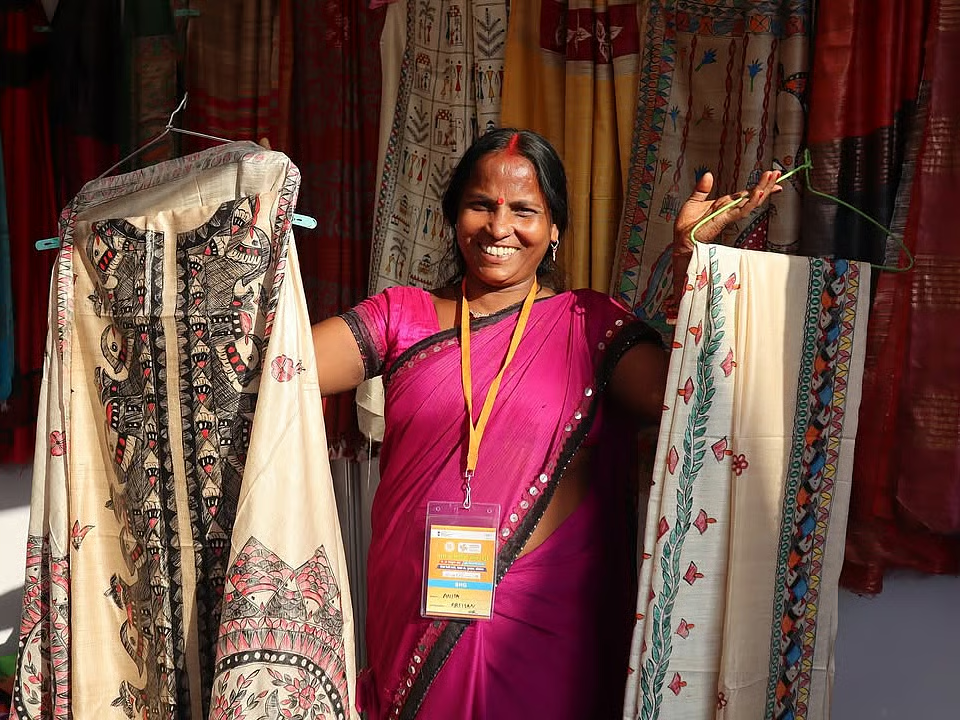

National craft and entrepreneurship events like SARAS Aajeevika Mela offer a powerful platform for artisans, self help groups and rural entrepreneurs to showcase products directly to urban buyers. Understanding the vendor sign up process and networking strategy can significantly improve your outcomes.
SARAS Aajeevika Mela is organized under the Deendayal Antyodaya Yojana National Rural Livelihoods Mission framework to promote products made by self help groups and rural producers. These exhibitions are held in major cities and provide access to high footfall markets. For small scale entrepreneurs from Tier Two and Tier Three regions, participation can lead to direct sales, bulk orders and long term retail tie ups. However, entry is structured and preparation is essential.
Understanding Eligibility and Registration Process
The first step to participate in SARAS Aajeevika Mela is confirming eligibility. Typically, artisans must be members of registered self help groups linked with State Rural Livelihood Missions. Individual private traders are generally not eligible unless nominated through official channels.
Registration usually happens through district level mission offices. Interested groups submit product details, certifications if applicable, bank account information and identity documentation. Selection committees evaluate product quality, uniqueness, pricing and regional representation before finalizing stalls.
Entrepreneurs should coordinate with their District Rural Development Agency or State Rural Livelihood Mission office well in advance. Slots are limited and preference may be given to groups with consistent production capacity and prior performance records.
Preparing Products for Exhibition Display
Participation in a national craft fair requires professional presentation. Products must be labeled clearly with pricing, material information and care instructions where relevant. Packaging should be durable yet appealing. Poor finishing or inconsistent quality reduces repeat orders.
Stock planning is critical. Estimate footfall based on event duration and location. Carry adequate inventory but avoid overstocking fragile items. Keep a separate catalog showcasing additional designs that may not be physically displayed.
Digital readiness matters. Many buyers now prefer digital payments. Ensure your stall accepts UPI and other cashless options. Maintain a simple billing system and keep records of daily sales. Accurate documentation builds credibility with event organizers and financial institutions.
Networking Strategies at Craft and Entrepreneurship Events
SARAS Aajeevika Mela is not just a retail platform. It is a networking hub. Successful vendors treat it as a business development opportunity. Introduce your products confidently to visitors. Share the story behind the craft, production process and social impact.
Exchange contact details with boutique owners, wholesalers and export consultants who visit such events. Carry business cards or printed brochures. If possible, create a basic social media presence to showcase your brand identity.
Interact with other exhibitors. Cross learning helps improve pricing strategies, packaging techniques and sourcing efficiency. Some vendors collaborate later for bulk raw material procurement to reduce costs.
Government officials and policymakers also attend these events. Building professional relationships may open doors to training programs, financial schemes and future exhibitions.
Pricing and Profit Strategy for Small Entrepreneurs
Pricing at a national exhibition should balance affordability and sustainability. Avoid underpricing simply to increase sales volume. Calculate raw material cost, labor input, transportation and stall related expenses before setting final prices.
Offer bundle discounts strategically to encourage higher purchase value. For example, craft gift sets or festival themed combinations often sell faster. Keep margin clarity in mind if you expect bulk orders after the event.
Collect feedback from customers about product quality and price perception. This data helps refine your business model for future events.
Post Event Follow Up and Scaling Opportunities
Many vendors make the mistake of focusing only on on site sales. The real value often emerges after the exhibition ends. Organize all collected contacts and follow up within one week. Send product catalogs, wholesale price lists or custom order details.
Evaluate your performance objectively. Track total sales, average ticket size and high demand items. Identify which designs attracted the most interest and plan production accordingly.
Participation in SARAS Aajeevika Mela can strengthen your eligibility for bank credit under livelihood schemes. Document your participation certificate and sales data. Financial institutions view exhibition experience as proof of market acceptance.
For Tier Two and rural entrepreneurs, repeated participation builds brand recognition. Consistency matters more than a single successful event.
Takeaways
• Confirm eligibility through State Rural Livelihood Mission offices before applying
• Prepare professional packaging and ensure digital payment readiness
• Use the event for networking, not just direct sales
• Follow up with contacts quickly to convert exhibition leads into long term orders
FAQs
Q1: Who can participate in SARAS Aajeevika Mela?
Primarily self help groups and rural producers linked with National Rural Livelihoods Mission through state level authorities.
Q2: Is there a registration fee for vendors?
Participation terms vary by event, but many stalls are allotted through official nomination processes under government schemes.
Q3: How can I increase sales during the exhibition?
Focus on product presentation, storytelling, competitive pricing and active engagement with visitors.
Q4: Can participation help in getting bank loans?
Yes. Documented exhibition participation and sales records strengthen credibility when applying for credit under livelihood programs.