
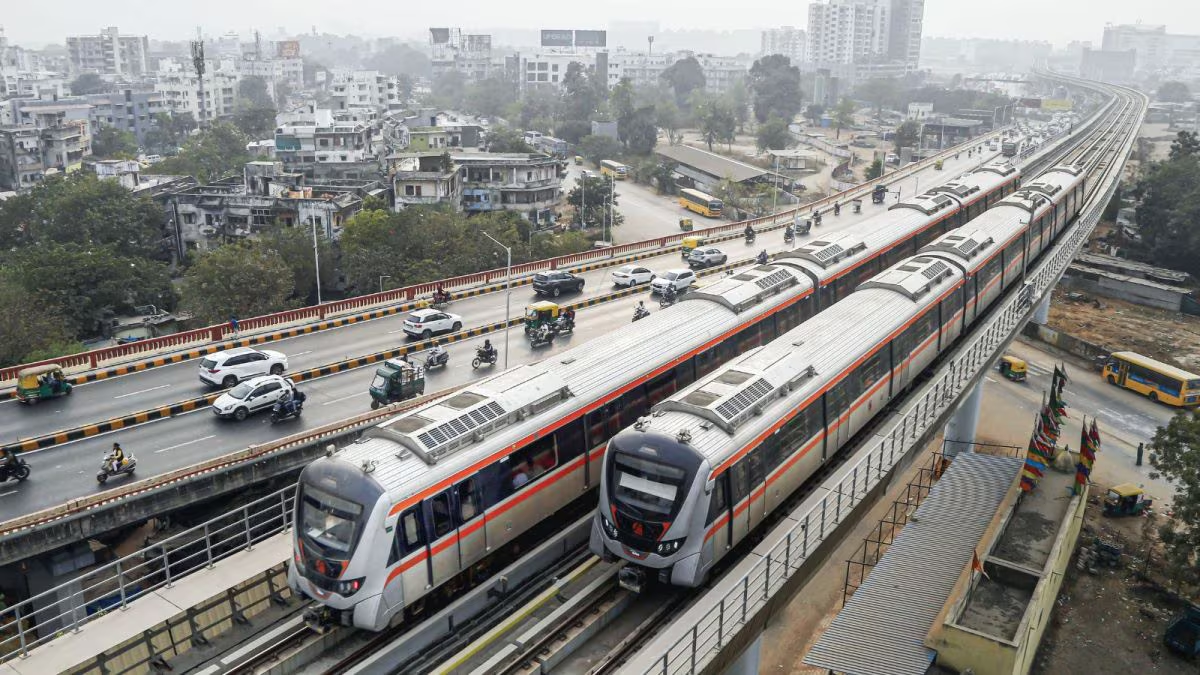

The Budget led infrastructure push has placed Assam and other Purvodaya states at the center of India’s next growth phase. With higher capital expenditure on roads, railways, logistics and energy, these eastern states are positioned to unlock long term economic opportunities.
The term Purvodaya refers to the government’s strategic focus on eastern India as a new engine of growth. In recent Union Budgets, capital expenditure has been prioritized to stimulate economic activity, crowd in private investment and strengthen supply chains. For Assam, along with states such as Odisha, Jharkhand, Bihar and West Bengal, this infrastructure thrust could reshape regional development patterns. Instead of remaining consumption driven economies, these states are gradually being integrated into production and logistics networks.
Road and Rail Connectivity Driving Regional Integration
One of the strongest components of the Budget led infrastructure push is transport connectivity. Increased allocations for national highways, railway line expansion and station redevelopment have a direct impact on eastern states. Assam, for instance, has witnessed steady expansion of road corridors connecting it to neighboring North Eastern states and mainland India.
Improved rail infrastructure reduces freight costs and enhances movement of agricultural produce, coal, tea, petroleum products and manufactured goods. Dedicated freight corridors and multimodal logistics planning strengthen trade routes between eastern states and ports on the eastern coast.
For Tier 2 cities such as Guwahati, Bhubaneswar, Ranchi and Patna, enhanced connectivity improves business confidence. Logistics efficiency encourages warehousing, cold storage investments and small scale manufacturing clusters near transport nodes.
Energy and Power Sector Expansion
Energy infrastructure is another major opportunity area. Eastern India has historically been rich in natural resources including coal and hydropower potential. Budget allocations toward transmission networks, renewable energy integration and grid modernization support industrial growth.
Assam benefits from oil and natural gas assets as well as hydroelectric potential in the broader North Eastern region. Improved power availability and transmission reliability reduce operational risks for industries.
In states such as Jharkhand and Odisha, mining linked industries gain from better railway evacuation capacity and stable power supply. This creates downstream opportunities in metal processing, construction materials and engineering goods.
Industrial Corridors and Manufacturing Potential
The infrastructure push is not limited to transport and energy. It aligns with industrial corridor development and production linked incentive schemes that encourage manufacturing diversification. Eastern states offer competitive land costs and growing urban labor pools.
Food processing, textiles, agro based industries and electronics assembly are sectors with expansion potential. Bihar and West Bengal have strong agricultural bases that can support value addition through processing clusters. Odisha’s port connectivity strengthens export potential for manufactured goods.
Assam and other North Eastern states can leverage improved connectivity to promote bamboo products, tea exports, tourism linked enterprises and small manufacturing units. Government backed industrial parks and skill development centers enhance this ecosystem.
Urban Development and Tier 2 City Growth
Budget capital expenditure also includes allocations for urban infrastructure such as water supply, sanitation, metro expansion in select cities and affordable housing. Tier 2 cities in Purvodaya states are experiencing gradual urbanization.
Improved civic infrastructure attracts educational institutions, healthcare facilities and service sector companies. Real estate activity often follows infrastructure upgrades, generating employment in construction and related services.
Guwahati, Bhubaneswar and Ranchi are already emerging as education and administrative hubs. With sustained infrastructure spending, these cities can evolve into regional service centers supporting nearby districts.
Private Investment and Multiplier Effect
Public infrastructure spending aims to create a multiplier effect. Better roads, railways and power supply reduce transaction costs for businesses, encouraging private sector investment. If state governments maintain ease of doing business reforms and streamline approvals, the benefits could accelerate.
Bank credit growth and MSME expansion are critical to capturing these opportunities. Small and medium enterprises in eastern states must align with new supply chain demands. Skill training programs linked to infrastructure projects can prepare local youth for technical and service roles.
However, outcomes depend on execution quality. Timely project completion, transparent procurement and effective maintenance are essential. Delays can dilute economic gains.
Challenges That Need Strategic Attention
Despite strong opportunity mapping, structural challenges persist. Flood vulnerability in Assam, land acquisition hurdles and uneven district level development can limit impact if not addressed.
Balanced growth requires inclusive planning. Rural connectivity, digital infrastructure and access to credit must complement large scale capital projects. Otherwise, benefits may remain concentrated in urban pockets.
Monitoring project progress and ensuring coordination between central and state agencies is crucial. Sustained policy continuity over multiple years will determine whether Purvodaya states fully capitalize on this infrastructure momentum.
Takeaways
• Budget led capital expenditure is strengthening transport and energy networks in eastern states
• Assam and other Purvodaya states can leverage improved logistics for industrial expansion
• Tier 2 cities stand to benefit from urban infrastructure upgrades and service sector growth
• Effective execution and private investment will shape long term economic impact
FAQs
Q1: What are Purvodaya states?
Purvodaya refers to eastern Indian states prioritized for accelerated development through infrastructure and policy support.
Q2: How does the Budget infrastructure push benefit Assam?
It improves connectivity, strengthens energy supply and enhances conditions for industrial and service sector growth.
Q3: Which sectors may grow in eastern states?
Food processing, mining linked industries, textiles, renewable energy and logistics related services show strong potential.
Q4: Are Tier 2 cities important in this strategy?
Yes. Tier 2 cities act as regional growth nodes linking rural areas to national supply chains.