
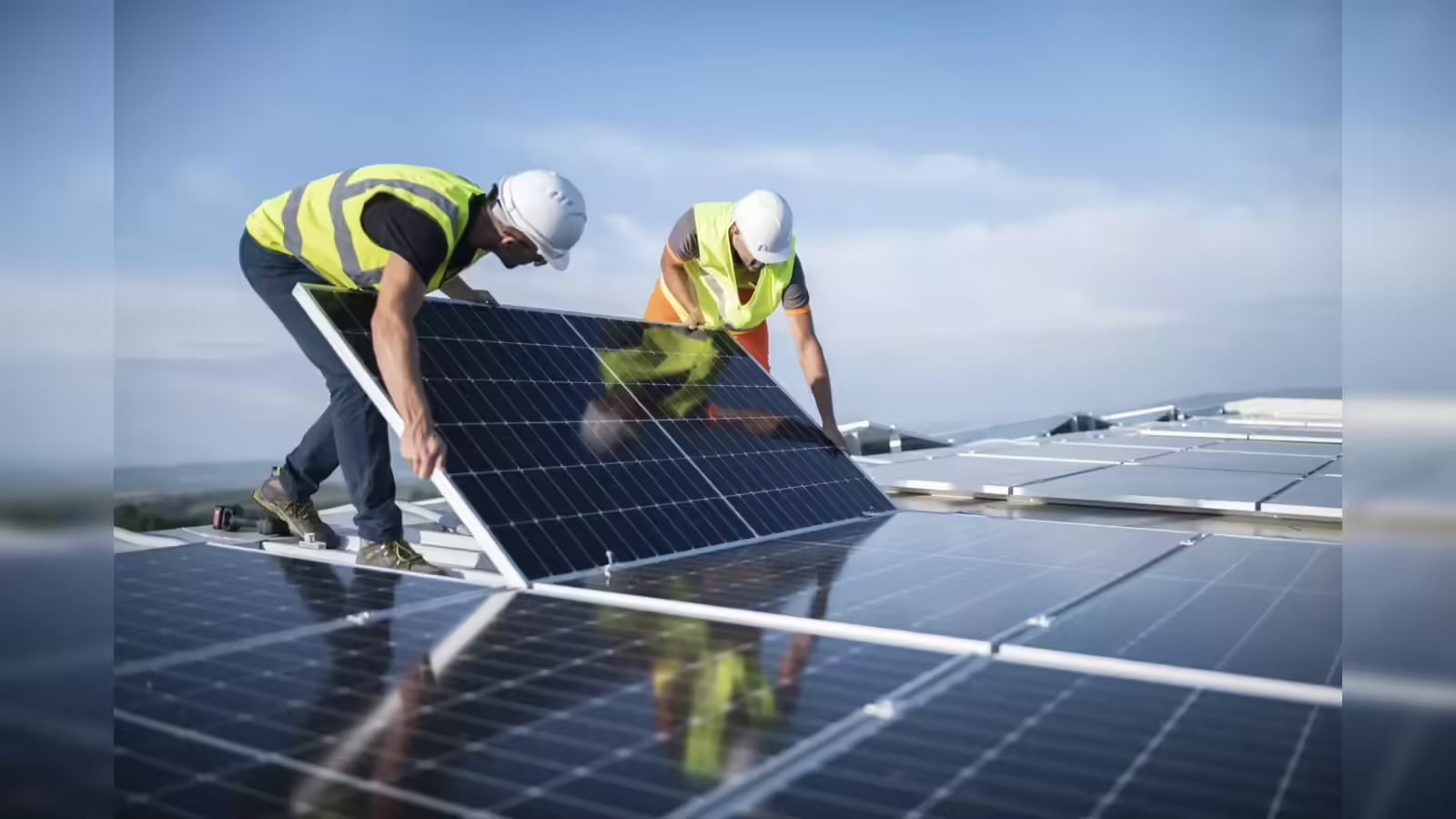

The PM Surya Ghar Subsidy 2026 application process has been updated to make rooftop solar adoption easier for households in small cities and towns. Here is a clear, step by step guide explaining eligibility, documents, registration process, and how subsidy is credited.
The PM Surya Ghar Subsidy 2026 allows eligible households to install rooftop solar panels with central financial assistance directly credited to their bank accounts. The scheme is designed to reduce electricity bills, promote renewable energy, and support residential consumers across Tier 2 and Tier 3 cities. With recent procedural refinements, the online portal now integrates vendor selection, net metering approvals, and subsidy tracking in one place.
Understanding who can apply and how to correctly complete each stage is critical to avoid delays or rejection.
Who Is Eligible for the Rooftop Solar Subsidy
The PM Surya Ghar scheme is meant for residential electricity consumers across India. Applicants must have a valid electricity connection in their name and sufficient rooftop space for solar installation.
Key eligibility criteria include:
Residential property ownership or legal occupancy rights
Valid electricity consumer number linked to a distribution company
Installation through an approved vendor listed on the national rooftop solar portal
Compliance with technical standards set by the Ministry of New and Renewable Energy
Subsidy amounts vary based on system capacity. Financial assistance is structured in slabs up to 3 kW and then for additional capacity up to a specified limit. The subsidy is provided only after installation and inspection approval.
Documents Required Before Starting Application
Before visiting the official solar rooftop portal, keep these documents ready to avoid interruption during registration:
Electricity bill with consumer number
Aadhaar card for identity verification
Bank account details for Direct Benefit Transfer
Mobile number linked to Aadhaar
Property ownership proof if required by the local distribution company
Applicants in smaller cities should also check with their local DISCOM regarding net metering policies and rooftop safety compliance norms.
Step by Step Application Process on National Solar Portal
The PM Surya Ghar online registration is centralized through the national rooftop solar portal.
Step 1: Register on the official portal using your state and electricity distribution company details.
Step 2: Enter consumer number and verify mobile OTP.
Step 3: Submit basic household details and select desired solar capacity.
Step 4: Choose an empanelled vendor from the approved list displayed for your area.
Step 5: Wait for feasibility approval from your DISCOM.
Once feasibility approval is granted, the selected vendor proceeds with installation.
After installation:
Submit installation details on the portal
Apply for net meter installation
DISCOM conducts physical inspection
Commissioning certificate is generated
Only after commissioning approval is uploaded does the subsidy amount get credited directly to the applicant’s bank account.
Subsidy Structure and Financial Assistance Explained
Under the current structure, subsidy is provided per kilowatt capacity up to defined limits. For systems up to 2 kW, households receive higher per unit subsidy. For capacity between 2 kW and 3 kW, a different rate applies. The maximum subsidy is capped for residential installations.
For example, a 3 kW rooftop solar system can significantly reduce monthly electricity bills in cities like Nagpur, Indore, Jaipur, or Coimbatore where average household consumption falls within 250 to 400 units per month.
The scheme aims to promote distributed solar energy and reduce dependence on grid power, especially in non metro regions where power tariffs are rising gradually.
Common Mistakes That Delay Subsidy Approval
Many applications get delayed due to avoidable errors.
Incorrect bank details leading to failed Direct Benefit Transfer
Choosing non empanelled vendors
Installing system before feasibility approval
Mismatched consumer number and Aadhaar details
Delay in net meter installation request
Applicants in Tier 2 and Tier 3 cities should regularly log into the portal to track application status instead of waiting for vendor updates alone.
Benefits for Small City Households
For families in smaller towns, rooftop solar offers long term financial and operational advantages.
Reduced electricity bills over 20 to 25 years
Lower exposure to tariff hikes
Increased property value
Contribution to clean energy targets
With improved digital processing and direct bank transfers, the PM Surya Ghar Subsidy 2026 aims to reduce middlemen and make adoption transparent and faster.
Takeaways
• The PM Surya Ghar Subsidy 2026 is available for residential consumers with valid electricity connections
• Application must be completed through the national rooftop solar portal with an approved vendor
• Subsidy is credited only after inspection and commissioning approval
• Correct documentation and feasibility clearance prevent delays
FAQs
Q1. Can tenants apply for the PM Surya Ghar subsidy?
Tenants can apply only if they have legal occupancy rights and the electricity connection is in their name, subject to DISCOM approval.
Q2. How long does it take to receive the subsidy amount?
After installation, inspection, and commissioning approval, subsidy is typically credited within a few weeks through Direct Benefit Transfer.
Q3. Is net metering compulsory under the scheme?
Yes, net metering approval from the local distribution company is necessary for grid connected rooftop solar systems.
Q4. Can I install more than 3 kW capacity?
Yes, larger systems can be installed, but subsidy is limited up to the capped residential capacity defined under current guidelines.