
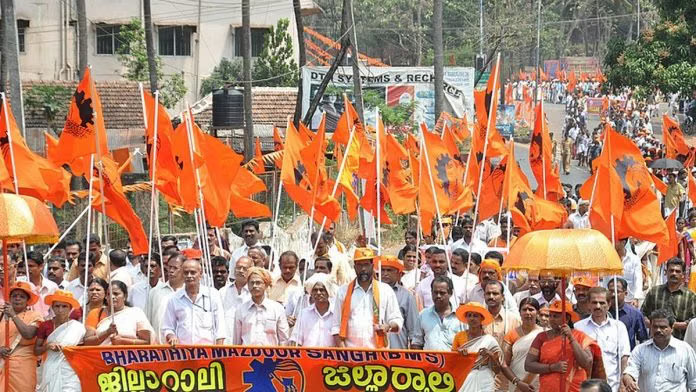

The BMS nationwide protest today has drawn attention across multiple states as workers mobilize around wage security, labor reforms, and social protection issues. The demonstration highlights growing concerns among employees and its potential ripple effect on local economies, especially in Tier 2 and Tier 3 cities.
The BMS nationwide protest today reflects organized opposition by workers aligned with the Bharatiya Mazdoor Sangh, one of India’s largest trade unions. The protest focuses on labor rights, employment stability, and policy implementation concerns. With participation reported across industrial clusters and semi urban regions, the movement underscores tensions between economic reforms and worker protections.
What Is the BMS Nationwide Protest About
The Bharatiya Mazdoor Sangh represents workers across manufacturing, transport, public sector units, and informal sectors. The protest centers on demands related to wage revisions, job security, and effective implementation of labor codes.
In recent years, India introduced consolidated labor codes aimed at simplifying compliance and improving ease of doing business. However, trade unions have raised concerns about certain provisions related to contract employment, social security coverage, and collective bargaining rights.
The protest also highlights inflation related pressures. Rising costs of essential goods, fuel, and housing have impacted disposable income for workers in smaller cities. Many unions are seeking stronger wage protection mechanisms and timely implementation of social welfare schemes.
Key Demands Raised by Workers
Among the primary demands are assurances regarding minimum wage enforcement and safeguards against arbitrary job loss. Workers have called for greater transparency in contractual hiring practices.
Social security coverage remains a core issue. Many employees in informal or gig based roles seek access to provident fund benefits, health insurance, and pension schemes. Trade unions argue that economic growth must translate into tangible benefits for labor.
Another concern involves privatization and restructuring in certain sectors. Employees fear potential job reductions or altered service conditions. The protest seeks policy dialogue to address these apprehensions.
These demands resonate strongly in Tier 2 and Tier 3 industrial towns where manufacturing and small scale enterprises provide major employment.
Impact on Tier 2 and Tier 3 Local Economies
Industrial hubs in smaller cities often rely heavily on labor intensive sectors such as textiles, auto components, steel processing, and logistics. When large scale protests occur, temporary disruptions in production and transport can follow.
Local markets may experience short term slowdowns if daily wage earners participate in demonstrations. Small businesses dependent on factory workers’ spending could see brief declines in footfall.
However, protests also signal deeper structural issues. If wage concerns and employment insecurity remain unresolved, long term consumption growth in these regions may weaken. Stable income flows are essential for sustaining local retail, housing demand, and services.
In some cities, unions coordinate peaceful demonstrations to minimize economic disruption. Authorities typically deploy security measures to maintain order and ensure public safety.
Government Response and Policy Context
Government officials have maintained that labor reforms aim to balance worker welfare with industrial competitiveness. The consolidated labor codes were introduced to streamline outdated laws and improve compliance clarity.
Officials often emphasize that social security frameworks are being expanded gradually. Digital platforms for employee registration and benefit tracking have been introduced to improve coverage.
Dialogue between trade unions and policymakers plays a critical role in resolving tensions. Past instances show that structured negotiations can lead to revised wage boards or clarifications in implementation rules.
The outcome of the current protest may depend on subsequent discussions and whether concrete assurances are provided to worker representatives.
Broader Implications for Businesses and Investors
For businesses operating in industrial clusters, labor stability is essential. Prolonged unrest can affect supply chains, investor confidence, and operational planning.
Companies may need to strengthen internal communication with employees and ensure compliance with statutory requirements. Transparent HR policies can reduce friction and build trust.
Investors typically monitor labor movements as indicators of policy sentiment. A constructive resolution often reassures markets, while extended uncertainty can create caution.
In the long term, balanced labor relations contribute to sustainable growth. Economic expansion that incorporates worker welfare tends to support consumption and social stability.
What Workers and Employers Should Watch Next
Both workers and employers should watch for official statements following the protest. Announcements regarding wage revisions, labor code clarifications, or new social security measures could emerge.
Employees should verify updates through official union communications. Employers should assess potential operational impacts and prepare contingency plans if further actions are announced.
Maintaining open channels for dialogue at the local level can prevent escalation. Industrial peace benefits all stakeholders.
Takeaways
• The BMS nationwide protest highlights wage and job security concerns
• Tier 2 industrial towns may see short term economic impact
• Labor code implementation remains a central issue
• Constructive dialogue is key to long term stability
FAQs
Q1. What is the main reason for the BMS nationwide protest
The protest focuses on wage protection, labor code implementation concerns, and social security coverage for workers.
Q2. Will the protest affect daily life in smaller cities
Some areas may experience temporary disruptions in transport or industrial activity, but authorities aim to maintain order.
Q3. Are all industries participating
Participation varies by region and sector, depending on union presence and local coordination.
Q4. Could this protest lead to policy changes
Policy discussions may follow if negotiations between unions and government result in revised guidelines or assurances.