
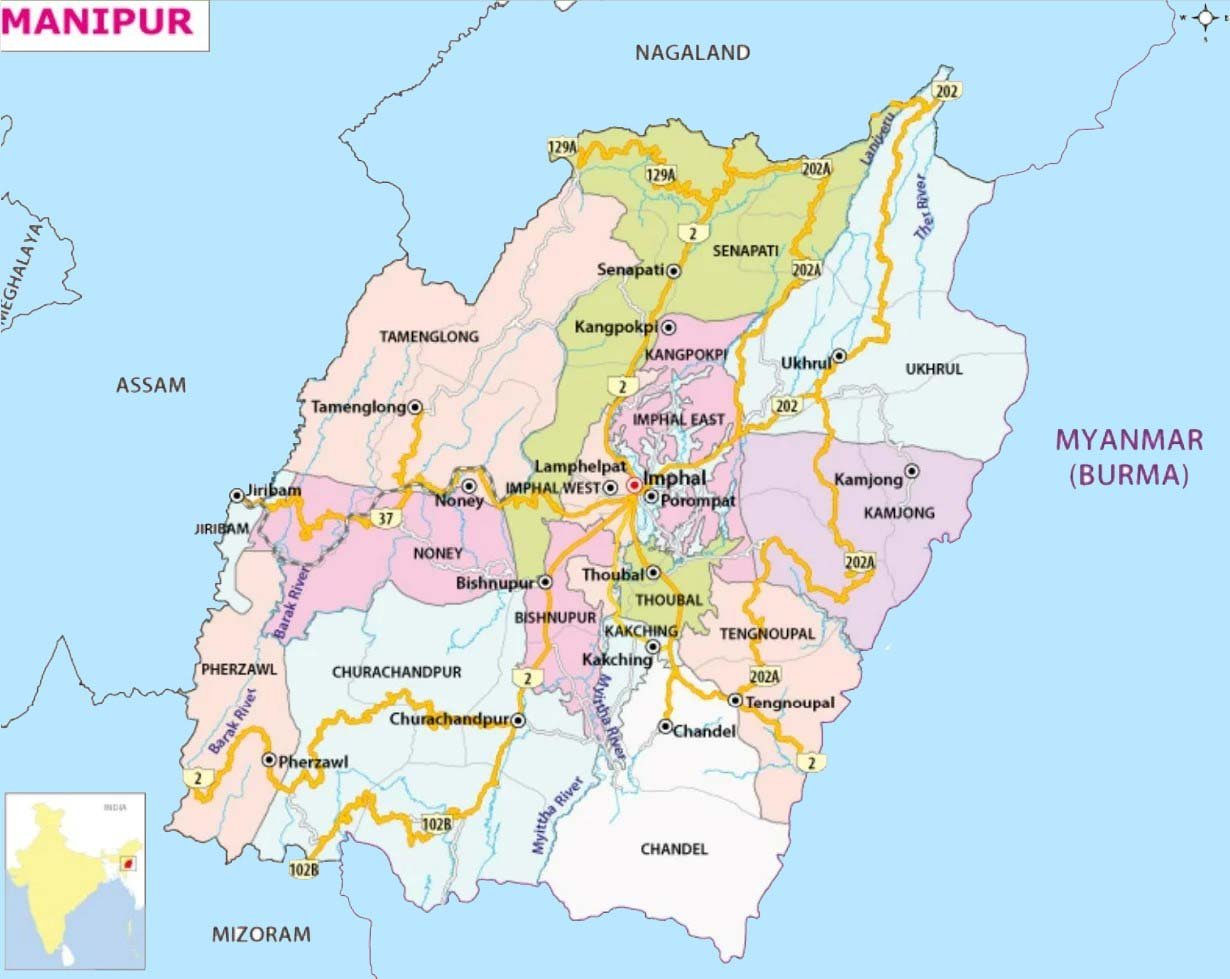

The Manipur political shift has triggered renewed focus on governance stability, security management, and economic revival in the state. With new leadership in place, attention is turning to how administrative priorities will shape regional development across infrastructure, investment, and social cohesion.
The Manipur political shift comes at a sensitive time for the northeastern state, which has faced ethnic tensions, economic disruptions, and security concerns in recent years. Leadership changes in such contexts are not merely symbolic. They directly influence administrative continuity, law and order strategy, and coordination with the central government. For businesses, investors, and citizens, the key question is how this transition will affect regional development and long term stability.
Governance Stability and Law and Order Priorities
One of the immediate implications of the political shift in Manipur is the approach toward restoring governance stability. Law and order has been central to the state’s recent challenges. Any new leadership must prioritize confidence building measures among communities.
Effective coordination between state administration, police forces, and central agencies is critical. Development initiatives cannot progress in an environment of insecurity. Infrastructure projects, educational institutions, and private investment depend on predictable governance.
Administrative reshuffles often accompany political transitions. While these can streamline decision making, frequent bureaucratic changes may delay project approvals. The balance between continuity and reform will determine the pace of recovery.
Impact on Infrastructure and Connectivity Projects
Regional development in Manipur heavily depends on connectivity. Road expansion, border trade corridors, and digital infrastructure are strategic priorities. The state’s geographic location makes it vital for India’s Act East policy and cross border trade potential.
New leadership may accelerate pending infrastructure projects if political alignment with the central government improves funding flow. Highways, rural roads, and logistics hubs can stimulate local employment and ease supply chain bottlenecks.
Digital connectivity is equally important. Expanding broadband and mobile networks enhances access to education, telemedicine, and e governance services, particularly in hill districts.
Economic Revival and Investment Climate
Political stability plays a direct role in investor confidence. Businesses evaluating expansion into northeastern states assess security conditions, policy clarity, and administrative efficiency.
The new leadership in Manipur will likely focus on reviving local industries such as handloom, handicrafts, agriculture, and small manufacturing. Tourism, which has strong potential due to natural and cultural heritage, requires sustained peace and improved transport connectivity.
Incentive schemes for micro, small, and medium enterprises could stimulate grassroots economic activity. Skill development programs aligned with regional strengths may reduce youth unemployment.
Community Relations and Social Cohesion
Manipur’s political shift must also address social cohesion. Development cannot be inclusive if community divisions persist. Confidence building dialogues and rehabilitation programs are essential for rebuilding trust.
Educational institutions and civil society organizations often act as bridges in post conflict scenarios. Leadership tone and communication strategy significantly influence public perception.
Transparent grievance redressal mechanisms and fair distribution of development resources across districts will determine whether growth benefits all communities.
Role of Central Government Coordination
Northeastern states often rely on central funding for major projects. A political shift that enhances coordination with national leadership can unlock faster approvals for infrastructure and welfare schemes.
Schemes related to rural housing, health insurance, and livelihood generation depend on efficient state level execution. New leadership will need to ensure administrative capacity matches funding allocations.
Strategic alignment with national policies such as border trade facilitation and logistics modernization can position Manipur as a gateway state rather than a peripheral region.
Long Term Development Trajectory
Political transitions create uncertainty in the short term but can also reset development priorities. If governance reform focuses on transparency, fiscal discipline, and community inclusion, long term gains are possible.
Sustained peace is the foundation for any growth model. Without stable conditions, even well funded projects struggle to deliver results.
For Manipur, the next few years will determine whether the political shift translates into tangible improvements in infrastructure, employment, and investor confidence.
Takeaways
• Governance stability is critical for restoring development momentum
• Infrastructure and connectivity remain central to regional growth
• Investor confidence depends on security and policy clarity
• Inclusive development requires strong community engagement
FAQs
Q1. How does political change affect regional development
Leadership transitions influence policy direction, administrative efficiency, and investor perception.
Q2. Will infrastructure projects be delayed due to the shift
Short term administrative adjustments may occur, but sustained coordination can accelerate progress.
Q3. Why is connectivity important for Manipur
Improved roads and digital networks enhance trade, tourism, and service delivery.
Q4. Can new leadership improve investor confidence
Yes, provided it ensures stability, transparent governance, and consistent policy implementation.