

Small businesses in Tier-2 cities are increasingly joining ONDC to expand online without relying on large marketplaces. This guide explains how ONDC works, how to register, and how local sellers can start receiving orders and scale digitally in 2026.
The ONDC platform for small businesses has opened new opportunities for sellers in Tier-2 cities to go digital without high commissions or platform dependency. In 2026, ONDC continues to grow as a government-backed network connecting buyers and sellers across multiple apps, making it easier for local businesses to compete online.
What Is ONDC and How It Works for Local Sellers
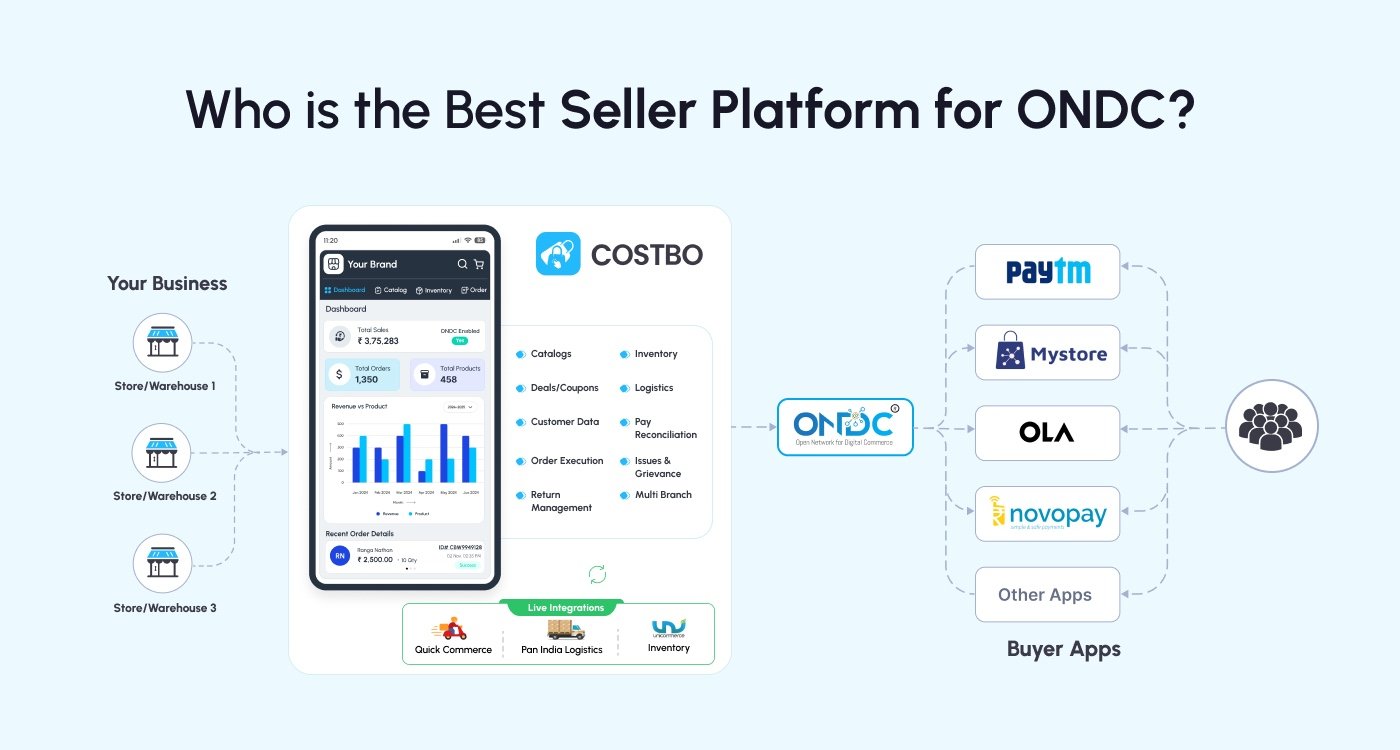
ONDC, or Open Network for Digital Commerce, is not a single app but a network that connects sellers, buyers, and logistics providers. Unlike traditional platforms, it allows businesses to be discovered across multiple buyer apps without being locked into one ecosystem.
For Tier-2 sellers, this means a local shop in Nagpur or Indore can list products once and reach customers using different apps. The network structure reduces dependency on dominant marketplaces and gives sellers more control over pricing and visibility.
ONDC is especially useful for grocery stores, restaurants, handicraft sellers, and small retailers looking to expand beyond walk-in customers.
ONDC Registration Process for Small Businesses in 2026
To start selling on ONDC, businesses need to register through an approved seller app or onboarding partner. These platforms handle catalog creation, compliance, and integration with the network.
The process begins with basic KYC verification, including PAN, Aadhaar, and bank account details. Businesses must also provide GST details if applicable. After verification, sellers can upload product listings, set prices, and define service areas.
Once onboarding is complete, products become visible across buyer apps connected to ONDC. This allows businesses to start receiving orders without building their own website or app.
Setting Up Product Listings and Pricing Strategy on ONDC
Creating effective product listings is critical for visibility. Sellers should upload clear product images, accurate descriptions, and competitive pricing. Since ONDC allows multiple sellers to compete for the same product, pricing plays a key role in winning orders.
For Tier-2 businesses, local demand patterns should guide pricing decisions. For example, daily essentials, regional products, and fast-moving items tend to perform better than niche inventory.
Inventory management is also important. Sellers must update stock regularly to avoid cancellations, which can impact ratings and visibility on the network.
Logistics and Delivery Options for Tier-2 Sellers
ONDC integrates with multiple logistics providers, giving sellers flexibility in choosing delivery partners. Businesses can either use third-party logistics or manage deliveries independently if operating within a limited area.
In smaller cities, hyperlocal delivery is often more efficient. Many sellers partner with local delivery agents or use network-integrated logistics services for last-mile fulfillment.
Delivery timelines, charges, and service quality directly impact customer experience. Sellers who maintain reliable delivery standards are more likely to receive repeat orders.
Benefits of ONDC for Tier-2 and Tier-3 Businesses
One of the biggest advantages of ONDC is reduced commission costs compared to traditional marketplaces. This allows sellers to offer better prices while maintaining margins.
The open network model also increases discoverability. A small business is no longer limited to a single platform’s algorithm. Instead, it can reach customers across multiple apps simultaneously.
Another key benefit is digital inclusion. Businesses that previously relied only on offline sales can now access online demand without heavy investment in technology or marketing.
Challenges Small Businesses Should Prepare For
While ONDC offers opportunities, there are challenges to consider. Digital onboarding requires basic technical understanding, and sellers may need support initially to manage listings and orders.
Competition can also be intense, especially for common products. Sellers must differentiate through pricing, quality, and service reliability.
Payment settlements and order management systems may vary depending on the seller app used. Understanding these systems is essential to avoid operational issues.
How Tier-2 Sellers Can Scale on ONDC in 2026
To grow on ONDC, businesses should focus on consistency and customer experience. Fast order processing, accurate listings, and responsive service help build trust and improve ratings.
Expanding product range based on demand trends can also increase sales. Sellers should analyze which products perform well and adjust inventory accordingly.
Local branding and word-of-mouth marketing still play a role. Combining offline reputation with online presence can give Tier-2 businesses a competitive edge.
Takeaways
ONDC allows small businesses to sell online without platform dependency
Registration requires basic KYC, bank details, and product listings
Pricing, inventory, and delivery quality directly impact success
Tier-2 sellers can scale by combining local demand with digital reach
FAQs
Do I need a website to sell on ONDC?
No, businesses can sell through seller apps connected to ONDC without creating their own website.
Is GST mandatory for ONDC sellers?
GST is required for certain categories, but small sellers may operate without it depending on turnover and product type.
How do I receive payments on ONDC?
Payments are processed through the seller app and transferred to the registered bank account.
Can small towns benefit from ONDC?
Yes, ONDC is designed to include Tier-2 and Tier-3 businesses, helping them reach a wider online audience.