
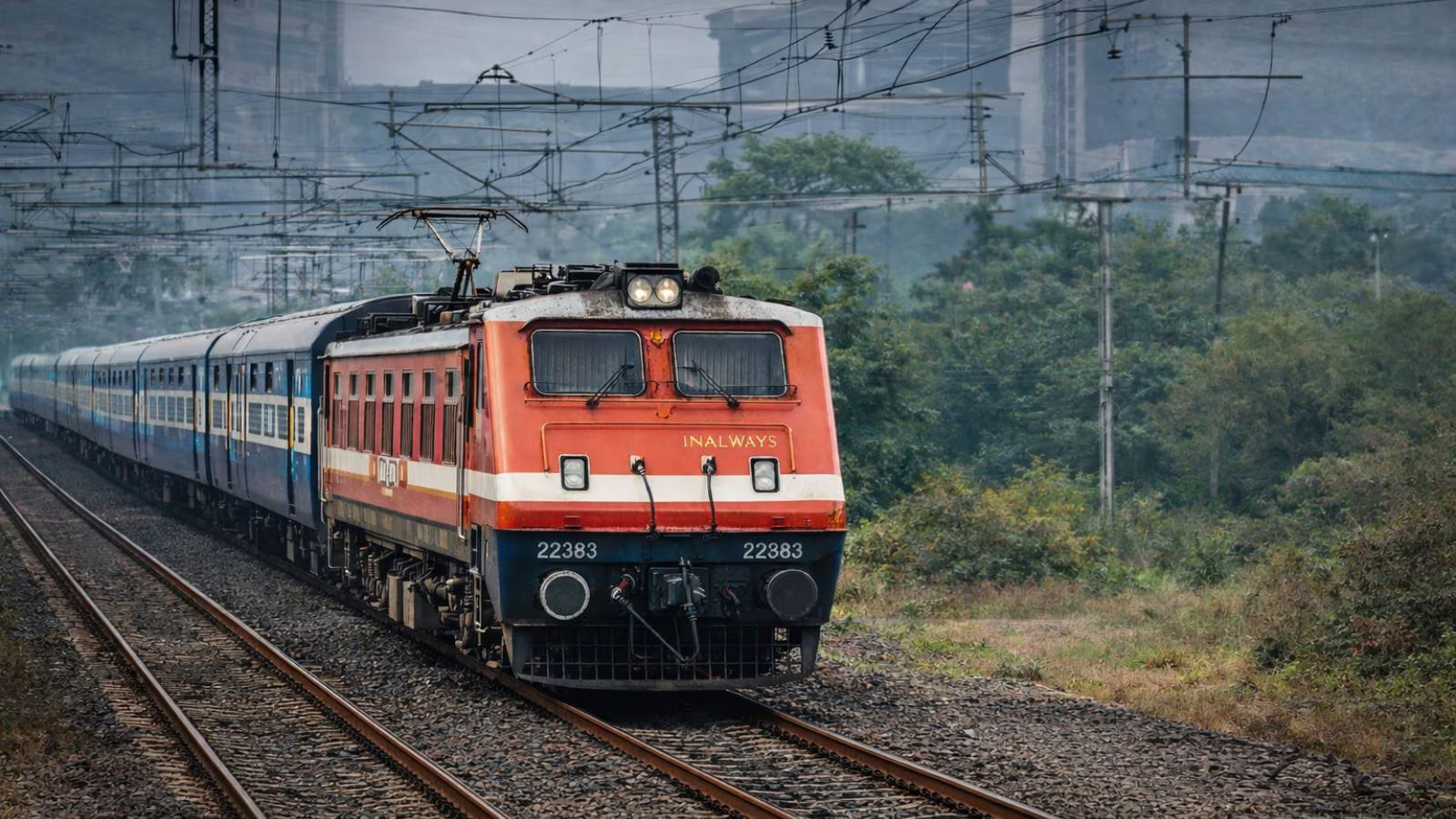

Railway infrastructure push in Tier-3 regions is gaining momentum in 2026, with new routes and station upgrades announced across multiple states. The expansion aims to improve connectivity, boost regional economies, and support passenger and freight movement in smaller cities.
Railway infrastructure push in Tier-3 regions reflects a broader modernization strategy led by Indian Railways. With increased budget allocation and policy focus, smaller towns are now seeing new railway lines, electrification projects, and station redevelopment initiatives.
Why Tier-3 Regions Are Getting Railway Focus in 2026
The shift towards Tier-3 railway development is driven by the need to balance growth beyond metros. Smaller towns often face limited connectivity, which restricts economic opportunities and mobility.
Government planning now prioritizes regional integration. Expanding rail networks in Tier-3 areas helps connect them to industrial corridors, logistics hubs, and larger cities. This also supports schemes focused on rural development and regional equity.
Improved connectivity reduces travel time and costs for passengers while enhancing freight efficiency for local industries.
New Railway Routes Improving Regional Connectivity
Several new railway routes are being announced and developed to connect previously underserved regions. These routes aim to link smaller towns with district headquarters and major junctions.
In states like Uttar Pradesh, Bihar, Maharashtra, and Odisha, new lines are under construction or approval stages. These include both passenger-focused routes and freight corridors.
The expansion also includes doubling of existing tracks and electrification projects, which improve capacity and reduce dependence on diesel engines.
Station Upgrades Under Modernization Programs
Station redevelopment is a major component of the railway push. Under modernization initiatives, many Tier-3 stations are being upgraded with better passenger amenities.
Upgrades include improved waiting areas, digital display systems, escalators, clean platforms, and enhanced security systems. Some stations are being redesigned with modern architecture and commercial spaces.
These changes aim to provide metro-like facilities in smaller towns, improving the overall travel experience.
Impact on Local Economy and Employment
Railway development has a direct impact on local economies. Construction projects generate jobs, while improved connectivity supports business growth.
Local industries benefit from easier transportation of goods. Agricultural produce, textiles, and small manufacturing units gain access to larger markets.
Tourism also gets a boost as better rail connectivity makes smaller destinations more accessible to travelers.
Freight Movement and Logistics Efficiency Gains
A key objective of railway expansion is to improve freight movement. Dedicated routes and upgraded tracks enable faster and more reliable transportation of goods.
For Tier-3 regions, this means reduced logistics costs and improved supply chain efficiency. Industries located in smaller towns can compete more effectively with those in larger cities.
Integration with industrial corridors and logistics parks further enhances these benefits.
Challenges in Railway Infrastructure Expansion
Despite progress, several challenges remain. Land acquisition delays and environmental clearances can slow down project execution.
Funding constraints and coordination between central and state agencies also impact timelines. In some areas, outdated infrastructure requires significant upgrades before expansion can proceed.
Ensuring consistent maintenance and service quality in newly developed areas is another critical factor.
Role of Technology in Railway Modernization
Technology is playing a key role in railway upgrades. Digital ticketing, real-time tracking systems, and automated signaling are being implemented across new and upgraded routes.
Electrification projects are reducing carbon emissions and improving efficiency. Smart station management systems are also being introduced to enhance passenger services.
These advancements are helping Indian Railways transition towards a more modern and sustainable network.
What This Means for Future Regional Development
The railway infrastructure push in Tier-3 regions is expected to drive long-term economic growth. Improved connectivity encourages investment, supports job creation, and enhances quality of life.
As projects are completed, smaller towns could emerge as new economic hubs. This aligns with the broader goal of balanced regional development across India.
The focus on Tier-3 areas marks a strategic shift that could reshape the country’s transport and economic landscape.
Takeaways
- Railway expansion is improving connectivity in Tier-3 regions
- New routes and station upgrades enhance passenger and freight movement
- Local economies benefit through better market access and job creation
- Challenges include land acquisition and project execution delays
FAQs
1. Why is railway infrastructure expanding in Tier-3 regions?
To improve connectivity, support economic growth, and reduce regional disparities.
2. What upgrades are being made to railway stations?
Stations are getting modern amenities, digital systems, and improved infrastructure.
3. How does railway expansion help local businesses?
It reduces transportation costs and improves access to larger markets.
4. Are new railway routes being electrified?
Yes, many new and existing routes are being electrified for better efficiency.