
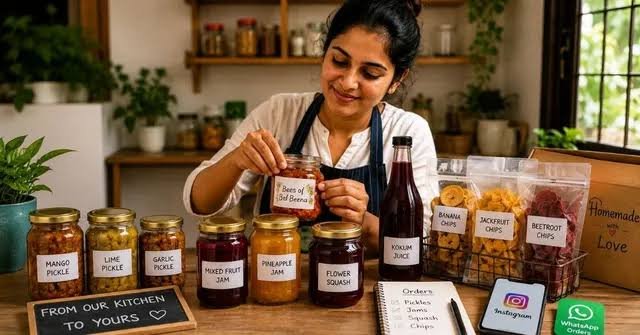

Starting a home-based food business in India is more accessible than ever, thanks to growing demand for homemade meals and online delivery platforms. Learn how to register with FSSAI, meet legal requirements, and build a successful food business from home.
Starting a home-based food business in India with FSSAI registration has become an attractive option for aspiring entrepreneurs, homemakers, students, and working professionals. The rise of food delivery platforms, social media marketing, and increasing demand for hygienic homemade food has created opportunities for small food businesses across metro cities as well as Tier 2 and Tier 3 towns. However, before selling food commercially, business owners must understand the legal requirements, including obtaining the appropriate Food Safety and Standards Authority of India (FSSAI) registration.
Having the required registration not only ensures compliance with food safety laws but also builds customer confidence in your products.
Why FSSAI Registration Is Essential for Home Food Businesses
The Food Safety and Standards Authority of India regulates food businesses across the country to ensure that food sold to consumers meets prescribed safety and hygiene standards.
Anyone preparing food for commercial sale, whether from a dedicated kitchen or from home, is generally required to obtain the applicable FSSAI registration or licence based on the scale and turnover of the business.
For most small home-based businesses with modest annual turnover, Basic FSSAI Registration is sufficient. As businesses expand and annual turnover increases, operators may need to upgrade to a State Licence or Central Licence, depending on the eligibility criteria prescribed by FSSAI.
Obtaining FSSAI registration also allows businesses to legally display the FSSAI registration number on food packaging and promotional materials, increasing customer trust and credibility.
Decide Your Food Business Model Before Registering
Before beginning the registration process, entrepreneurs should decide what type of food they intend to sell.
Some popular home-based food businesses include homemade snacks, bakery products, pickles, sweets, chocolates, tiffin services, regional cuisines, healthy meal subscriptions, beverages, and festive gift hampers.
Understanding your target customers helps determine packaging requirements, delivery methods, pricing, and marketing strategies.
Many successful home food businesses begin by serving local neighbourhoods before expanding through food delivery apps, WhatsApp Business, Instagram, Facebook Marketplace, or their own websites.
Choosing a niche with consistent demand can improve long-term sustainability while allowing businesses to maintain product quality.
Step-by-Step Process for FSSAI Registration
The first step is to determine which category of FSSAI registration applies to your business based on expected annual turnover and business operations.
Applicants can complete the registration process online through the official Food Safety Compliance System (FoSCoS) portal managed by FSSAI.
During registration, applicants are generally required to provide basic business details, identity proof, address proof, passport-size photographs, and information about the food products they intend to manufacture or sell.
Some applications may require additional documentation depending on the nature and scale of the business.
After successful submission and verification, eligible applicants receive an FSSAI registration certificate along with a registration number that should be displayed at the place of business and printed on packaged food wherever applicable.
Applicants should ensure that all information provided is accurate to avoid delays during processing.
Maintain Hygiene and Food Safety Standards
Obtaining FSSAI registration is only the beginning. Maintaining food safety standards is equally important for long-term business success.
Food should always be prepared in a clean environment using fresh ingredients sourced from reliable suppliers. Raw materials should be stored properly to prevent contamination.
Cooking utensils, preparation surfaces, refrigerators, and storage containers should be cleaned regularly.
Food handlers should maintain good personal hygiene by washing hands frequently, wearing clean clothing, and avoiding food preparation while suffering from infectious illnesses.
Proper packaging also plays an important role. Food should be packed in suitable food-grade materials that protect product quality during transportation and storage.
Consistent hygiene practices help reduce food safety risks while improving customer satisfaction and repeat orders.
Marketing Your Home Food Business Successfully
A good product alone is not enough to attract customers in today’s competitive market.
Many successful home chefs use Instagram, Facebook, WhatsApp Business, and local community groups to showcase their dishes. High-quality food photography, customer reviews, transparent pricing, and prompt responses help build credibility.
Encouraging satisfied customers to share testimonials can significantly improve visibility through word-of-mouth marketing.
Businesses can also participate in local food exhibitions, community events, weekend markets, and housing society festivals to introduce their products to new customers.
As orders increase, maintaining consistent taste, packaging quality, and timely delivery becomes essential for building a loyal customer base.
Common Mistakes New Entrepreneurs Should Avoid
Many first-time entrepreneurs focus only on cooking while overlooking legal compliance and business management.
Selling food without the required FSSAI registration may lead to regulatory action if registration is legally required for the business.
Another common mistake is underpricing products without calculating ingredient costs, packaging expenses, delivery charges, electricity, and labour.
Poor packaging, inconsistent quality, delayed deliveries, and lack of customer communication can also affect business reputation.
Entrepreneurs should maintain proper records of sales, expenses, supplier invoices, and customer feedback. These records help monitor business performance and prepare for future expansion.
With careful planning, legal compliance, and consistent quality, a home-based food business can gradually grow into a sustainable enterprise.
Takeaways
- Obtain the appropriate FSSAI registration before selling food commercially.
- Maintain high standards of hygiene, packaging, and food safety throughout operations.
- Use social media and local marketing to build customer trust and attract repeat buyers.
- Calculate business costs carefully to ensure sustainable pricing and long-term profitability.
Frequently Asked Questions
Q1. Is FSSAI registration mandatory for a home-based food business?
In most cases, yes. Individuals selling food commercially are generally required to obtain the appropriate FSSAI registration or licence based on their business turnover and operations.
Q2. Can I apply for FSSAI registration online?
Yes. Applications can be submitted online through the official FoSCoS portal managed by FSSAI.
Q3. Can I sell homemade food through online delivery platforms?
Yes. Many home-based businesses sell through food delivery platforms, social media, and direct customer orders, provided they comply with applicable legal and food safety requirements.
Q4. How long does FSSAI registration remain valid?
FSSAI registration is issued for a chosen validity period and must be renewed before its expiry to continue operating legally.
(Internal Keyword Suggestions: home-based food business India, FSSAI registration guide, FoSCoS registration, homemade food business, food business licence India, FSSAI for home kitchen, start food business from home, food safety rules India, small food business ideas, home chef business, online food business India, FSSAI registration process)