
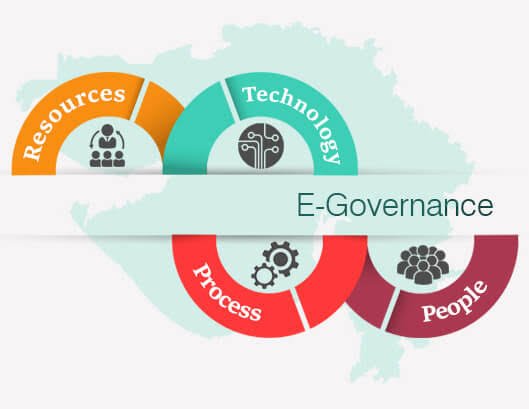

State governments across India are expanding digital citizen services to reduce paperwork, shorten waiting times, and improve access to welfare schemes. From online certificates to AI-powered governance and integrated service portals, residents are experiencing faster and more transparent public service delivery.
This is a time-sensitive news topic. Recent developments show several state governments are introducing new digital governance initiatives while expanding existing citizen service platforms. The article below follows a news reporting style based on the latest verified developments.
State governments across India are rapidly strengthening digital citizen services, making it easier for residents to access certificates, welfare schemes, utility services, pensions, licenses, and government documents online. The latest phase of Digital India is focused on reducing physical visits to government offices while improving transparency, efficiency, and service delivery. With platforms such as UMANG, DigiLocker, state e-District portals, and AI-enabled governance systems expanding their reach, citizens in Tier 2 and Tier 3 cities are expected to benefit significantly from faster public services.
Digital Governance Expands Beyond Metro Cities
Digital governance is no longer limited to major metropolitan areas. Several states are strengthening district-level and local digital infrastructure so that residents in smaller cities and rural areas can access government services without travelling long distances.
Common Service Centres continue to play an important role for citizens who may not have access to smartphones or reliable internet. At the same time, many state departments are integrating their services with national digital platforms to provide a more consistent user experience.
The National e-Governance Division has also encouraged states to adopt interoperable digital platforms, and several states have been recognised for large-scale DigiLocker integration with government services.
More Services Available Through UMANG and DigiLocker
One of the biggest changes for residents is the growing availability of government services through unified digital platforms.
According to recent updates, UMANG now offers more than 2,500 government services, allowing citizens to access Central and State Government services through a single application. DigiLocker has also crossed hundreds of millions of registered users, enabling secure digital storage and sharing of official documents such as driving licences, educational certificates, vehicle registration certificates, and other government-issued records.
This integration reduces the need to carry physical documents during verification and speeds up application processing for various government schemes and public services.
For citizens applying for scholarships, welfare benefits, or official certificates, digital document verification can significantly reduce paperwork and processing delays.
States Introduce AI and Smart Technology for Better Public Services
Several state governments are also adopting artificial intelligence and advanced analytics to improve governance.
Kerala has recently partnered with an AI and analytics company to strengthen the delivery of social welfare programmes by improving targeting, accountability, and administrative efficiency. The initiative reflects a broader trend where states are using technology to improve citizen services rather than relying solely on manual processes.
Other states are expanding digital platforms for public administration, employee management, land records, pension services, and online licensing.
Recent digital governance initiatives across states also include integrated online trade licences, digital payroll systems, and enhanced citizen service portals that reduce manual intervention.
Faster Services for Certificates, Welfare Schemes and Public Records
Residents are expected to notice improvements in everyday government interactions.
Many services that previously required multiple office visits can now be completed online, including applications for income certificates, caste certificates, domicile certificates, pensions, utility payments, property-related services, and welfare schemes, depending on the respective state.
Digital verification using Aadhaar-linked systems and electronic document sharing has shortened processing time in several departments while improving transparency.
Award-winning e-governance initiatives introduced across states and local bodies demonstrate how technology is helping improve service delivery at the grassroots level through digital transformation.
What Citizens Should Do to Benefit from Digital Services
While digital services are expanding, citizens should also ensure they are prepared to use them effectively.
Residents should keep Aadhaar, mobile numbers, bank account information, and essential documents updated where required. Using official government websites and verified mobile applications helps avoid fraud and misinformation.
Citizens should also avoid sharing OTPs, passwords, or personal financial information with unknown callers claiming to provide government assistance.
Those unfamiliar with online services can continue to seek support through authorised Common Service Centres, which remain an important bridge between citizens and digital governance, particularly in rural and semi-urban India.
Digital Public Services Continue to Evolve
India’s digital governance ecosystem is entering a new phase where states are increasingly focusing on integrated platforms, paperless documentation, AI-assisted administration, and citizen-centric service delivery.
Although implementation differs across states, the overall direction is clear. Governments are working to make public services faster, more transparent, and easier to access through digital channels. For residents, especially those living outside major metropolitan areas, these improvements have the potential to reduce travel, save time, and simplify interactions with government departments.
Takeaways
- State governments are expanding digital citizen services through integrated online platforms.
- UMANG and DigiLocker continue to add more government services and digital document support.
- AI and digital technologies are being adopted to improve welfare delivery and administrative efficiency.
- Tier 2 and Tier 3 cities are expected to benefit from faster, paperless, and more transparent government services.
FAQ
Q1. What are digital citizen services?
Digital citizen services allow people to access government services such as certificates, licences, welfare schemes, and document verification through online portals and mobile applications.
Q2. Which platforms provide multiple government services in India?
UMANG and DigiLocker are among the major government-backed platforms that provide access to a wide range of Central and State Government services and digital documents.
Q3. How do digital services benefit residents of smaller cities?
They reduce travel, minimise paperwork, shorten waiting times, and improve access to government services without requiring repeated visits to government offices.
Q4. Are digital government services completely replacing offline services?
No. While many services are available online, offline assistance continues through government offices and authorised Common Service Centres for citizens who need support.