
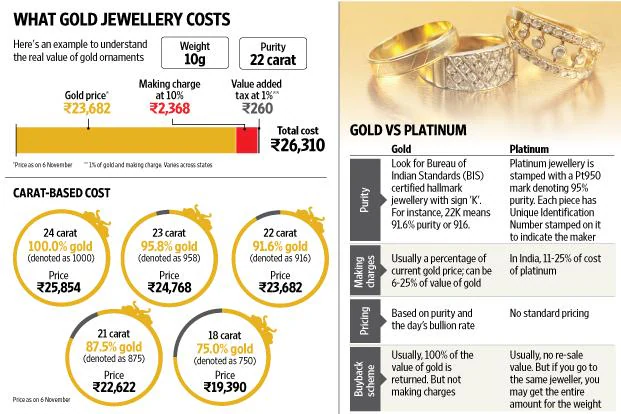

Comparing gold prices before buying jewellery in India can help buyers understand whether they are paying a fair amount for the gold, making charges, taxes and other costs. Checking the rate per gram alone is not enough because the final jewellery bill includes several separate components.
Why Comparing Gold Prices Matters Before Buying Jewellery
Gold jewellery is priced differently from investment gold because the final bill includes more than the value of the metal. Two jewellers may quote different prices for similar jewellery even when both use the same purity of gold.
The main components generally include the gold value, making charges, applicable taxes and, depending on the product and seller, other disclosed costs. The weight of gemstones or other non-gold elements can also affect the final calculation.
This makes it important to compare the complete price rather than choosing a jewellery store solely because it advertises a lower gold rate.
For buyers in Tier-2 and Tier-3 cities, comparing prices can be particularly useful because jewellery purchases are often linked to weddings, festivals and family occasions, when budgets can be substantial.
Check the Gold Rate Per Gram First
The first step is to check the current gold rate for the purity you intend to purchase.
Jewellery is commonly sold in 22-karat gold, while 24-karat gold represents a higher purity and is generally used for investment products rather than most traditional jewellery. The rate should therefore be compared on a like-for-like basis.
For example, comparing one jeweller’s 22K rate with another jeweller’s 24K rate can create a misleading impression of which store is cheaper.
Buyers should ask the jeweller for the rate being applied on the day of purchase and confirm the purity mentioned on the invoice.
Gold prices can change frequently because domestic prices are influenced by international gold prices, currency movements, taxes, duties and market conditions. Therefore, a rate seen online on an earlier day may not match the rate applicable when the purchase is made.
Compare 22K and 24K Gold Correctly
Purity is one of the most important factors when comparing gold jewellery prices.
24K gold is considered pure gold, although commercially available gold may still be described according to applicable fineness standards. 22K jewellery generally contains 91.6% gold, with the remaining portion consisting of other metals that provide greater strength and durability.
This is why 22K jewellery is widely used for ornaments. Pure gold is relatively soft and can be less suitable for everyday jewellery that needs structural strength.
When comparing two products, make sure both are being compared at the same purity. A lower quoted rate may simply reflect a lower gold purity.
The hallmark on the jewellery provides an important indication of purity and authenticity. Buyers should check the relevant hallmarking details before completing the purchase.
Understand BIS Hallmarking Before Paying
The Bureau of Indian Standards, or BIS, operates India’s hallmarking system for precious metal articles. Hallmarked jewellery provides information about the purity of the precious metal and other identification details under the applicable system.
Consumers should look for the required hallmarking information rather than relying only on verbal assurances from a salesperson.
BIS also provides consumer information and verification facilities related to hallmarking. Buyers can use official BIS resources to understand current hallmarking requirements and verify relevant details.
The hallmark does not eliminate the need to examine the bill. Buyers should still ensure that the invoice clearly records the product details, purity and applicable charges.
Compare Making Charges, Not Just Gold Rates
Making charges can make a major difference to the final jewellery price.
These charges cover the labour and manufacturing involved in creating the ornament. They may be calculated as a percentage of the gold value or through other pricing structures depending on the jeweller and product.
A store offering a slightly lower gold rate may still produce a more expensive final bill if its making charges are significantly higher.
For example, suppose two stores quote similar 22K gold rates. If Store A charges a lower making charge while Store B applies a substantially higher charge, the final amount can differ even though the headline gold rates look almost identical.
Buyers should therefore ask for the making charge before deciding which design offers better value.
Check Wastage Charges Carefully
Some jewellery pricing structures include charges described as wastage, loss or similar manufacturing-related costs. The exact terminology and calculation can vary between sellers and product types.
Do not assume that a lower making charge automatically means a lower overall cost.
Ask the jeweller to explain every charge appearing on the quotation. If a charge is calculated as a percentage, ask for the percentage and the base amount used for the calculation.
Getting an itemised quotation before payment makes comparison easier. It also reduces the possibility of misunderstanding the final price.
Check the Weight of Gold and Stones
The total weight shown on a jewellery scale does not necessarily represent the weight of gold.
A necklace containing gemstones, diamonds, enamel or other materials can have a significant amount of non-gold weight. Buyers should ask how much of the total weight is actually gold.
This matters because the gold component is generally valued using the applicable gold rate, while stones and other materials may be priced separately.
For studded jewellery, ask for the weight and valuation of the stones separately where applicable. A clear breakdown helps the buyer understand what they are actually paying for.
The same principle applies to lightweight jewellery. A small difference in gold weight can affect the final bill, especially when gold prices are high.
Understand GST on Gold Jewellery
Goods and Services Tax, or GST, is another component buyers need to account for when comparing jewellery prices.
The GST treatment should be checked against the current rules applicable to the purchase. Buyers should not compare one store’s pre-tax quotation with another store’s tax-inclusive final price.
The invoice should clearly show the applicable tax components.
Because tax rules and rates can change, consumers should verify the current applicable GST treatment through official government or tax resources rather than relying on old social media posts or informal calculations.
Compare the Final Bill Instead of the Display Rate
The most useful comparison is the final payable amount for the same or closely comparable jewellery.
Ask two or three jewellers for an itemised quotation containing the gold rate, purity, net gold weight, making charges, stone charges if applicable, taxes and final amount.
Then compare the quotations line by line.
This method is more reliable than comparing a promotional headline such as the day’s gold rate. A store may advertise a competitive gold rate but apply higher charges elsewhere in the bill.
Buyers should also check whether the quotation is based on the exact same design and gold weight. Comparing a simple chain with a highly intricate design will not provide a meaningful assessment of making charges.
Check Buyback and Exchange Policies
The purchase price is not the only financial consideration. Buyers should also understand what happens if they later want to exchange or sell the jewellery.
Jewellers may have different policies for exchange, buyback, deductions and valuation of stones or making charges. These terms can affect the amount a consumer receives in a future transaction.
Ask for the policy in writing and retain the original invoice.
A jewellery purchase can involve a substantial amount of money, so documentation matters. Keep the invoice, hallmark details and other relevant purchase records safely.
Do not assume that the entire amount paid for making charges will be recovered when the jewellery is sold or exchanged.
Avoid Comparing Prices Through Unverified Online Posts
Gold prices frequently appear on websites, social media pages and messaging groups. However, not every quoted rate is current, accurate or applicable to jewellery purchases.
A rate may refer to a different purity, a wholesale market price, a previous trading session or a price excluding additional charges.
For accurate comparisons, use reliable market information and confirm the actual jewellery rate directly with the seller.
Buyers should also be cautious about extremely low prices advertised online. A significantly cheaper quote may involve differences in purity, weight, charges or product specifications.
Key Takeaways
- Compare the same gold purity and weight when checking prices between jewellers.
- Look beyond the gold rate and compare making charges, stone costs, taxes and other disclosed charges.
- Check BIS hallmarking information and make sure the invoice clearly records the jewellery details.
- Compare the final payable amount, not just the promotional gold rate displayed by a store.
Frequently Asked Questions
How can I compare gold jewellery prices between two jewellers?
Ask both jewellers for an itemised quotation showing purity, gold rate, net gold weight, making charges, stone charges, applicable taxes and the final payable amount. Compare these components rather than only the quoted rate per gram.
Is 22K gold the same as 24K gold?
No. 22K gold generally contains about 91.6% gold, while 24K represents a higher level of purity. Most traditional gold jewellery is commonly made using 22K gold because additional metals improve strength.
What should I check on a gold jewellery bill?
Check the jewellery description, purity, net gold weight, applicable gold rate, making charges, stone or other material charges where applicable, taxes and the final amount. Also retain the invoice for future exchange or buyback purposes.
Does a lower gold rate always mean cheaper jewellery?
No. A lower gold rate can be offset by higher making charges, wastage-related charges or other costs. The best comparison is the complete final bill for jewellery with similar purity, weight and design.
(Internal keywords: gold price comparison India, how to compare gold jewellery prices, gold jewellery buying guide, 22K gold price India, BIS hallmark gold jewellery, gold making charges, gold wastage charges, jewellery GST India, how to check gold purity, gold jewellery bill calculation)