
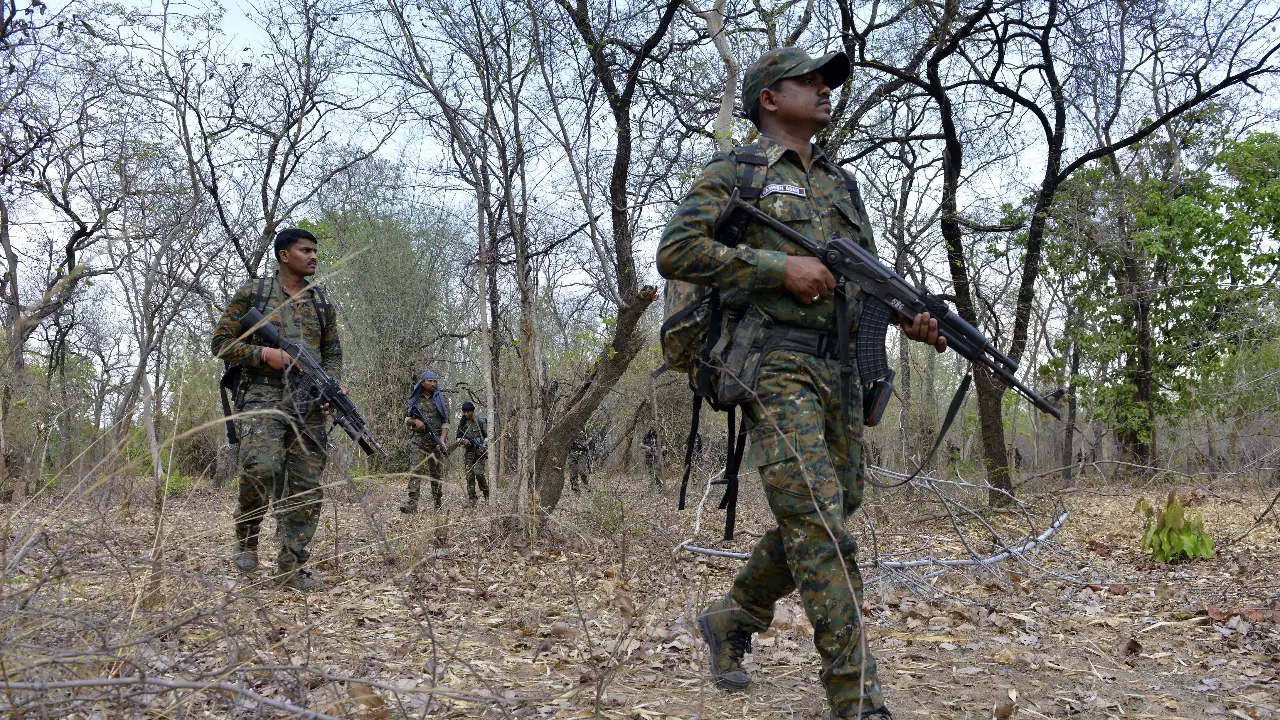

Gadchiroli’s anti-Maoist operations have entered a new phase, combining security deployment, intelligence-led action and expansion of state presence in areas once affected by Left-Wing Extremism. Recent developments suggest the region is moving from conflict management towards longer-term security and development.
Gadchiroli Security Operations Enter a New Phase
Gadchiroli has long been one of Maharashtra’s key areas affected by Left-Wing Extremism, commonly referred to as Naxalism or Maoist insurgency. The district’s dense forests and location near the Maharashtra-Chhattisgarh border have historically made security operations difficult.
That picture has changed significantly in recent years. Security forces have expanded their presence in areas that were previously difficult to access, while intelligence-based operations and the establishment of new security posts have reduced the space available to Maoist groups.
Recent developments in August 2026 offer a clear example of this shift. Police and paramilitary forces have carried out operations targeting Maoist infrastructure in the wider Abujmarh region, with authorities reporting the destruction of three arms manufacturing units and recovery of weapons, ammunition, manufacturing equipment and cash.
The significance goes beyond individual recoveries. The broader strategy increasingly involves preventing Maoist groups from rebuilding their operational networks while extending regular government presence into previously isolated areas.
Anti-Maoist Operations Target Infrastructure, Not Just Cadres
Earlier counter-insurgency operations often focused heavily on encounters and searches for armed cadres. The current approach in Gadchiroli is increasingly visible through efforts to disrupt the infrastructure that allows insurgent groups to operate.
The reported action in Abujmarh illustrates this approach. According to the Times of India report, operations conducted between May and August 2026 targeted Maoist weapons manufacturing facilities and resulted in the recovery of arms, ammunition and equipment.
Destroying such facilities can affect the ability of an armed group to manufacture, repair or stock weapons locally. It can also force cadres to depend more heavily on movement and supply networks that may be easier for security agencies to detect.
For a forested region such as Gadchiroli, disrupting logistics can be as important as conducting direct searches.
The objective is therefore broader than eliminating individual fighters. It involves reducing the organisational capacity that allows an insurgency to remain active over a long period.
New Police Posts Are Changing Remote Areas
One of the most visible changes is the establishment of permanent security infrastructure in areas previously dominated by Maoist influence.
A recent report from the Gadchiroli-Nagpur region highlighted the significance of new police posts in Tumarkothi, Binagunda, Bangadi and Phulnar. These villages are located in the dense forest region of Abujmarh along the Maharashtra-Chhattisgarh border.
The report noted that police posts established in the previous year have become symbols of the state’s growing presence in the area. For decades, such locations were associated with Maoist activity and limited access for government agencies.
The change is important because a permanent security presence can make it easier for other government services to operate.
Road construction, schools, healthcare, communications and welfare programmes become more practical when security conditions improve. In that sense, a police post can have consequences beyond policing.
It can become part of the infrastructure through which the state reconnects remote villages with the wider administrative system.
From Security to Development in Gadchiroli
The connection between security and development is particularly important in Gadchiroli.
The district has significant forest resources, tribal communities and mineral wealth, but difficult terrain and decades of insurgency have complicated infrastructure development.
Recent state planning measures indicate that authorities are increasingly preparing for economic activity beyond the traditional security framework. Maharashtra has declared Gadchiroli a separate planning region and established the Gadchiroli Regional Planning Authority to oversee land use and infrastructure planning.
This comes as industrial and infrastructure activity in the district expands.
A reduction in Maoist influence can make it easier to plan roads, commercial areas, public facilities and industrial projects. But development in a tribal and ecologically sensitive region also requires careful planning, particularly around land rights, livelihoods and environmental concerns.
The larger question is therefore not simply whether security forces can establish control. It is whether improved security can translate into sustainable benefits for local communities.
Gadchiroli Police Personnel Receive Gallantry Recognition
The changing security environment has also been reflected in official recognition for personnel involved in anti-Maoist operations.
Twenty Gadchiroli police officers and personnel were awarded the President’s Police Medal for Gallantry in August 2026 for their roles in successful anti-Maoist operations. The recognised operations included encounters at Kedmara in Bhamragarh taluka in 2023 and Kantranagatta in 2024.
The awards highlight the operational risks faced by personnel working in difficult forest terrain.
Gadchiroli’s specialised C-60 commandos have played a particularly important role in the district’s counter-insurgency operations. Their local familiarity and specialised training have made them a key component of operations in forested areas.
The continued recognition of personnel also reflects how the anti-Maoist campaign has become a long-term security effort rather than a short-term deployment.
The Human Impact Cannot Be Ignored
A decline in Maoist activity does not automatically resolve every problem faced by people living in affected districts.
Communities that experienced violence, displacement, intimidation or prolonged insecurity can continue to face difficulties even after security conditions improve.
The Indian Express has reported on residents in Gadchiroli who suffered from Maoist violence and continue to seek rehabilitation and support. The report highlighted concerns among victims who say they have struggled to access promised benefits and rebuild their lives.
This is an important part of the larger transition.
A successful security strategy needs to be followed by effective administration, rehabilitation and access to basic services. Otherwise, the benefits of reduced violence may not reach all sections of the population equally.
For remote tribal communities, the quality and accessibility of government services can matter as much as the presence of security forces.
Why Gadchiroli Matters Beyond Maharashtra
Gadchiroli’s experience is relevant to the wider central Indian security landscape because Maoist influence historically crossed state boundaries.
The district sits close to Chhattisgarh and connects to forested areas that have previously served as movement corridors for Maoist groups. Security developments in one state can therefore influence operations and mobility across neighbouring regions.
The increasing presence of security forces in border and forest areas can make it harder for armed groups to maintain safe zones.
At the same time, coordination between state police forces and central security agencies remains important because insurgent networks are not necessarily restricted by administrative boundaries.
The reported operations in the Abujmarh area demonstrate the importance of viewing the region as a connected security environment rather than treating each district separately.
What the New Security Environment Means for Central India
The most significant change in Gadchiroli is the gradual shift from an area defined primarily by insurgency towards one where security, administration and economic planning are increasingly operating together.
New police posts extend the state’s physical presence. Intelligence-led operations target Maoist infrastructure. Recognition for security personnel reflects sustained operational activity. At the same time, new planning institutions point towards a future in which infrastructure and economic development become more prominent.
But the transition will not be complete simply because Maoist activity declines.
The long-term test will be whether remote communities receive reliable roads, schools, healthcare, communications, employment opportunities and welfare services while development respects the rights and interests of local tribal populations.
Security can create the conditions for development. It cannot replace development.
Gadchiroli Anti-Maoist Operations: Key Takeaways
- Security operations are increasingly targeting Maoist infrastructure, weapons production and logistics rather than focusing only on armed encounters.
- New police posts are expanding the state’s permanent presence in remote forest areas along the Maharashtra-Chhattisgarh border.
- Improved security is creating greater scope for infrastructure, industrial activity and long-term regional planning in Gadchiroli.
- Rehabilitation, public services and community participation will be important in determining whether the security gains translate into lasting stability.
FAQ
Why is Gadchiroli important in India’s anti-Maoist strategy?
Gadchiroli has historically been one of Maharashtra’s major Left-Wing Extremism affected districts and shares a forested border region with Chhattisgarh. Its geography and past Maoist activity have made it strategically important for counter-insurgency operations.
What are the C-60 commandos?
C-60 is a specialised Maharashtra Police commando force associated with counter-insurgency operations, particularly in Gadchiroli. Its personnel operate in challenging forest terrain and have been involved in numerous anti-Maoist operations.
Are anti-Maoist operations also affecting development in Gadchiroli?
Improved security can make it easier for government agencies to establish infrastructure and deliver services in remote areas. Recent planning measures, including the creation of the Gadchiroli Regional Planning Authority, indicate a stronger focus on long-term infrastructure and economic planning.
What will determine Gadchiroli’s long-term stability?
Security is one part of the transition. Sustainable stability will also depend on effective governance, rehabilitation of affected communities, reliable public services, employment opportunities and development that takes the needs and rights of local tribal communities into account.