
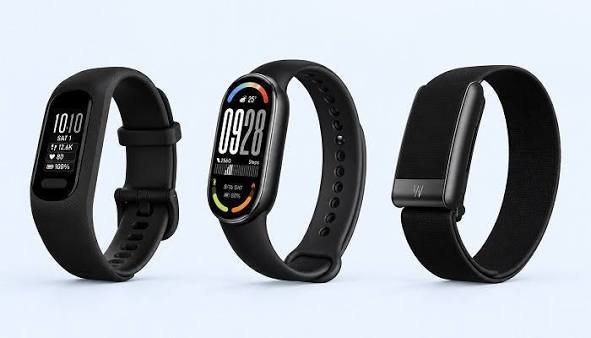

Affordable smart bands are changing how people monitor everyday fitness, sleep and physical activity. With features such as heart-rate tracking, step counting and smartphone notifications, these wearable devices are becoming accessible to Indian consumers. However, their usefulness depends on measurement accuracy, privacy and how people interpret the information.
Affordable Smart Bands: Why Are More People Interested?
Smart bands have gradually moved beyond being simple step-counting accessories. Modern fitness bands combine sensors, mobile applications and activity-tracking software to provide users with information about their daily routines.
For Indian consumers, affordability is an important factor. Not everyone wants to spend thousands of rupees on a premium smartwatch, particularly when their primary requirements involve monitoring steps, checking workout activity and maintaining a regular fitness routine.
Affordable smart bands offer several basic features in a relatively compact design. Many models can track walking, running, heart rate, sleep patterns and daily activity levels. Some also provide reminders to move, smartphone notifications and workout summaries.
The growing interest in preventive health and personal fitness has contributed to the popularity of wearable technology. Students, working professionals and people with sedentary lifestyles are increasingly interested in understanding how much they move during the day and whether they maintain consistent sleep schedules.
However, the real value of these devices is not determined by the number of features advertised. Their usefulness depends on whether the information helps users make practical improvements to their daily habits.
How Smart Bands Track Everyday Health Activities
Most affordable smart bands use small sensors to collect information about movement and certain body measurements.
An accelerometer detects changes in movement and helps estimate steps, physical activity and exercise patterns. Some devices also use gyroscopes to identify movement and orientation more accurately.
Optical heart-rate sensors commonly use a technology called photoplethysmography (PPG). These sensors shine light onto the skin and measure changes in reflected light associated with blood circulation.
The collected information is processed through software algorithms and displayed through a companion smartphone application.
Depending on the model, users may be able to access:
- Daily step counts and distance estimates.
- Heart-rate measurements.
- Sleep duration and estimated sleep stages.
- Workout duration and activity summaries.
- Blood oxygen saturation estimates.
- Sedentary reminders and movement goals.
- Calorie expenditure estimates.
Not every affordable smart band includes all these features. Sensor quality, software capabilities and supported functions vary across manufacturers and models.
It is also important to understand that many health-related readings are estimates rather than direct clinical measurements.
Heart Rate Monitoring: How Reliable Are Affordable Fitness Bands?
Heart-rate monitoring is one of the most commonly advertised features of affordable smart bands.
It can help users observe how their heart rate changes during rest, walking and exercise. For someone beginning a fitness routine, this information may provide a basic understanding of how physical activity affects the body.
However, optical heart-rate sensors have limitations.
Movement, loose straps, poor skin contact and sensor positioning can affect readings. Accuracy may also vary between devices and activities.
Research published in the journal Digital Health reviewing consumer wearable measurement accuracy found that results vary across devices and measurement categories. Although some wearables perform reasonably well for certain measurements, they should not automatically be considered equivalent to clinical instruments.
A smart band may therefore be useful for observing general heart-rate patterns over time, but an unusual reading should not be treated as a medical diagnosis.
People experiencing chest pain, breathlessness, dizziness or fainting should seek appropriate medical attention rather than relying on wearable notifications.
Sleep Tracking Features Are Becoming Popular
Sleep tracking is another feature attracting interest among consumers.
Many affordable smart bands estimate sleep duration by analysing movement and heart-rate patterns during the night. Their applications may divide sleep into different stages, including light sleep, deep sleep and REM sleep.
This information can help users identify broad patterns in their sleeping habits.
For example, someone who regularly sleeps late may notice that their total sleep duration is shorter on working days. A person who frequently wakes during the night may also become more aware of irregular sleep routines.
However, sleep-stage information should be interpreted carefully.
Most consumer fitness bands do not directly measure brain activity, which is an important component of clinical sleep studies. Instead, they use algorithms to estimate sleep stages based on available sensor data.
Consequently, a sleep score should not be treated as a definitive assessment of sleep quality or used to diagnose conditions such as sleep apnoea.
For people experiencing persistent sleep difficulties, professional medical evaluation remains important.
Can Smart Bands Help People Become More Physically Active?
One of the strongest practical advantages of affordable smart bands is their ability to encourage regular movement.
People working at desks, attending online classes or spending long hours travelling may not always realise how inactive they have become during the day.
Step counters and movement reminders provide simple ways to monitor activity.
For example, a working professional can use a fitness band to check whether they have spent most of the day sitting. Students can use movement reminders to take short breaks between study sessions.
Daily activity targets may also help beginners develop consistent exercise habits.
The World Health Organization recommends that adults undertake at least 150 to 300 minutes of moderate-intensity aerobic physical activity per week, or an equivalent amount of vigorous-intensity activity.
A smart band can help users monitor their activity duration and maintain a routine. However, reaching a particular step count does not automatically mean that someone has met all recommended physical activity requirements.
Exercise intensity, strength training and overall movement patterns also matter.
Affordable Smart Bands Versus Premium Smartwatches
Consumers often compare affordable fitness bands with premium smartwatches before making a purchase.
Although both categories include health-tracking features, their primary purposes can differ.
Affordable smart bands generally focus on essential fitness monitoring, lightweight construction and longer battery life. Premium smartwatches usually offer larger displays, additional applications, communication features and more advanced sensors.
The following differences can help buyers understand what they are paying for.
1. Price and Accessibility
Fitness bands are generally more affordable than premium smartwatches. This makes them suitable for people who want basic activity monitoring without spending heavily.
2. Battery Life
Many fitness bands can operate for several days between charges, depending on display settings, notifications and sensor usage. Smartwatches with larger displays and additional features may require more frequent charging.
3. Health Monitoring
Both categories can track basic fitness information. However, advanced health features depend on the specific device, sensor quality, software and regulatory status rather than simply its price.
4. Smart Features
Premium smartwatches often support additional applications, voice assistants, calling features and other connected services. Fitness bands usually focus on essential notifications and activity tracking.
For consumers primarily interested in walking, workouts and general activity monitoring, an affordable fitness band may be sufficient.
What Indian Buyers Should Check Before Purchasing a Smart Band
The growing number of wearable devices available in India makes it important to compare products carefully.
A low price alone should not determine the purchase. Buyers should examine the hardware, software support and reliability of the companion application.
Some important factors include:
Sensor Performance: Check whether the manufacturer provides meaningful information about heart-rate tracking and other measurements. Avoid assuming that a device is medically accurate simply because it advertises multiple health features.
Battery Life: Compare the claimed battery life with real-world reviews. Features such as continuous heart-rate monitoring, frequent notifications and display brightness can affect battery performance.
Smartphone Compatibility: Check whether the fitness band supports the smartphone’s operating system and whether its companion application is available through official app stores.
Comfort and Design: A fitness band should be comfortable enough for daily use, particularly if the user intends to wear it while sleeping.
Software Updates: Regular updates can improve functionality and address security issues. Buyers should consider whether the manufacturer has a history of maintaining its devices.
Data Privacy: Health and activity information can be sensitive. Review the application’s privacy policy, data-sharing practices and account security options before connecting a wearable to a personal smartphone.
Smart Band Health Readings: What Should Users Not Trust Blindly?
Affordable wearables can provide useful information, but not every measurement should be interpreted as a medical result.
Blood oxygen saturation, calorie expenditure, stress scores and sleep stages are examples of metrics that may involve considerable estimation.
Some devices advertise blood-pressure monitoring. However, consumers should not assume that a wristband provides clinically reliable blood-pressure measurements without appropriate validation.
Similarly, mainstream non-invasive fitness bands should not be assumed to measure blood glucose accurately. People who need glucose monitoring should use medically appropriate testing methods recommended by healthcare professionals.
A systematic review of consumer wearable accuracy published in the journal Digital Health also identified considerable variation across measurement categories.
The findings reinforce the importance of understanding what a particular device can and cannot measure.
Users should focus on general patterns rather than reacting to every unusual number. If a wearable repeatedly indicates an abnormal reading, especially alongside physical symptoms, medical advice should be sought.
Privacy and Security Concerns Around Health Wearables
Smart bands collect information about daily activity, sleep and sometimes other health-related measurements. Much of this information is transferred to a connected smartphone application through Bluetooth.
This creates another consideration for consumers: personal data protection.
Before purchasing a wearable, users should understand what information the manufacturer collects, where it is stored and whether it is shared with third parties.
Some useful precautions include:
- Download companion applications only from official sources.
- Use strong passwords for wearable accounts.
- Review application permissions regularly.
- Avoid sharing health information publicly.
- Check whether the application provides data deletion options.
- Install firmware and application security updates.
Consumers should also remember that a device’s health information is not automatically protected in the same way as information maintained by a hospital or healthcare provider.
Understanding privacy policies is therefore an important part of choosing a wearable device.
Are Affordable Smart Bands Worth Buying in 2026?
Affordable smart bands can be useful for people who want to understand their daily activity without investing in expensive wearable technology.
Their biggest advantage is convenience. A lightweight device worn throughout the day can provide reminders, activity summaries and basic health-related trends.
For beginners, this information may encourage regular walking, more consistent exercise and better awareness of sleep routines.
However, consumers should avoid buying a smart band with the expectation that it will detect diseases or replace medical equipment.
The usefulness of a wearable depends more on how consistently someone uses the information than on how many measurements appear on the screen.
For people with specific medical requirements, a fitness band should be selected only after understanding its limitations and discussing relevant monitoring needs with a healthcare professional.
Ultimately, affordable smart bands are best viewed as everyday wellness companions rather than personal diagnostic devices.
Conclusion
Affordable smart bands are making basic fitness tracking more accessible to Indian consumers. Their ability to monitor activity, estimate sleep patterns and provide movement reminders can support healthier everyday routines.
However, sensor limitations, estimated measurements and data privacy concerns remain important considerations. These devices cannot replace professional medical advice or clinically validated monitoring equipment.
For consumers looking to improve their fitness habits, an affordable smart band can be a practical starting point, provided they understand its capabilities and limitations.
Key Takeaways
- Affordable smart bands provide basic activity tracking, heart-rate monitoring, sleep estimates and movement reminders.
- Wearable measurements can help identify general patterns but should not be treated as medical diagnoses.
- Buyers should compare sensor performance, battery life, smartphone compatibility, software support and privacy policies.
- Smart bands are most useful for building consistent fitness habits rather than replacing professional healthcare monitoring.
Frequently Asked Questions (FAQs)
1. Are affordable smart bands useful for health monitoring?
Yes. They can help users monitor daily steps, physical activity, approximate heart-rate patterns and estimated sleep duration. However, they are primarily wellness devices and should not be used to diagnose medical conditions.
2. Can a smart band accurately measure blood pressure?
Not necessarily. Many affordable fitness bands do not provide clinically validated blood-pressure measurements. People who need accurate blood-pressure monitoring should use an appropriate validated upper-arm monitor or follow medical advice.
3. Can smart bands track sleep quality?
Smart bands can estimate sleep duration and stages using movement and heart-rate information. However, these estimates are not equivalent to clinical sleep studies and should not be used to diagnose sleep disorders.
4. What should I check before buying an affordable smart band?
Compare sensor performance, battery life, smartphone compatibility, comfort, software updates and data privacy. Choose a device based on your actual fitness requirements rather than the number of advertised health features.