
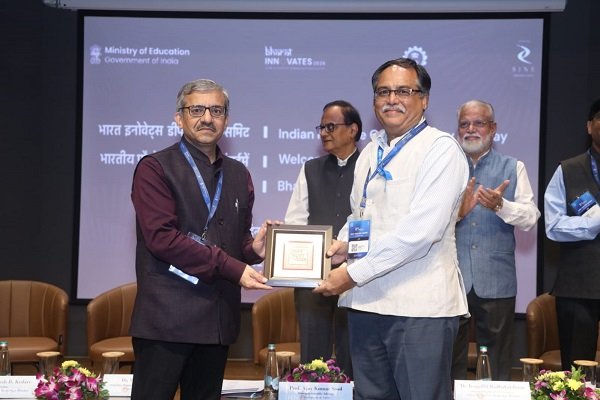

Bharat Innovates 2026 has brought attention to how IIT-led startups are accelerating India’s deep-tech ecosystem. With strong research backing and investor interest, these ventures are moving beyond software into advanced technologies like AI, robotics, and semiconductor innovation.
Bharat Innovates 2026 reflects a time-sensitive shift in India’s innovation landscape, where IIT-led startups are shaping the country’s deep-tech future. The event showcases how academic research is translating into scalable businesses with global relevance.
Bharat Innovates 2026 and the Rise of Deep-Tech Startups
Bharat Innovates 2026 positions itself as a platform connecting academia, industry, and investors. The focus is clear. Move India from a service-driven economy to a product and innovation-led ecosystem.
Deep-tech startups differ from traditional startups. They are built on scientific research and engineering breakthroughs rather than simple business models. IITs play a central role here due to their access to advanced labs, talent, and research funding.
In recent years, IIT incubators have supported startups working in artificial intelligence, clean energy, space technology, and advanced manufacturing. The event highlights how these startups are moving from prototypes to commercial applications.
Role of IIT Incubators in Deep-Tech Innovation Ecosystem
IIT incubators have become critical in nurturing early-stage deep-tech startups in India. Institutions like IIT Bombay, IIT Delhi, and IIT Madras have established dedicated incubation centers that provide funding, mentorship, and infrastructure.
These incubators reduce the risk associated with deep-tech ventures, which typically require longer development cycles. Startups get access to lab facilities, faculty guidance, and industry partnerships.
Government-backed initiatives such as Atal Innovation Mission and Startup India have further strengthened these ecosystems. Many IIT startups begin within campus incubators and later scale through venture capital funding.
The structured support system is one reason why IIT-led startups are gaining credibility among global investors.
Key Deep-Tech Sectors Emerging from IIT Startups
Artificial intelligence remains one of the strongest sectors, with startups building solutions for healthcare diagnostics, financial risk analysis, and automation. Robotics and automation are also gaining traction, especially in manufacturing and logistics.
Another important area is clean technology. Startups are developing energy storage solutions, electric mobility components, and sustainable materials. These align with India’s long-term sustainability goals.
Space technology is emerging as a new frontier. With policy support for private players, IIT-linked startups are exploring satellite technology and space-based services.
Semiconductor design and electronics manufacturing are also receiving attention, especially as India aims to reduce dependence on imports.
Funding Trends and Investor Interest in Deep-Tech India
One of the key highlights of Bharat Innovates 2026 is the increasing investor interest in deep-tech startups. Unlike earlier years, funding is no longer limited to consumer internet companies.
Venture capital firms and government funds are now backing startups that solve complex technical problems. Although deep-tech requires higher capital and longer timelines, it offers strong long-term value.
Public and private partnerships are playing a major role. Government grants often support early research, while private investors step in during scaling stages.
The presence of investors at the event indicates growing confidence in India’s ability to build globally competitive technology companies.
Challenges Faced by IIT-Led Deep-Tech Startups
Despite the progress, deep-tech startups face unique challenges. Long development cycles mean delayed revenue generation, which can strain financial resources.
Regulatory approvals can also slow down innovation, especially in sectors like healthcare and aerospace. Startups must navigate complex compliance frameworks before launching products.
Talent retention is another issue. While IITs produce high-quality graduates, many still prefer stable corporate jobs over startup risks.
Infrastructure gaps in manufacturing and testing facilities can also limit scaling. Addressing these challenges is essential for sustaining growth in the deep-tech ecosystem.
What This Means for India’s Innovation and Economic Future
Bharat Innovates 2026 signals a broader shift in India’s economic strategy. The focus is moving from service exports to technology creation and intellectual property development.
IIT-led startups are at the center of this transition. Their ability to combine research with real-world applications positions them as key drivers of future growth.
For India, success in deep-tech can reduce dependence on foreign technology and strengthen domestic capabilities. It can also create high-value jobs and attract global investments.
The long-term impact will depend on continued support from government, academia, and industry. If sustained, this momentum could redefine India’s position in the global innovation landscape.
Takeaways
• IIT-led startups are driving India’s shift toward deep-tech innovation
• Bharat Innovates 2026 highlights strong investor interest in research-based ventures
• Key sectors include AI, robotics, clean tech, and semiconductor design
• Challenges like funding cycles and infrastructure still need attention
FAQs
What is Bharat Innovates 2026?
It is an innovation-focused event showcasing startups, especially from IITs, working on advanced technology solutions.
What are deep-tech startups?
They are startups based on scientific research and engineering innovations, often requiring longer development time.
Why are IITs important for deep-tech in India?
IITs provide research infrastructure, talent, and incubation support essential for building deep-tech companies.
Is funding increasing for deep-tech startups in India?
Yes, both government and private investors are showing growing interest in this sector.