
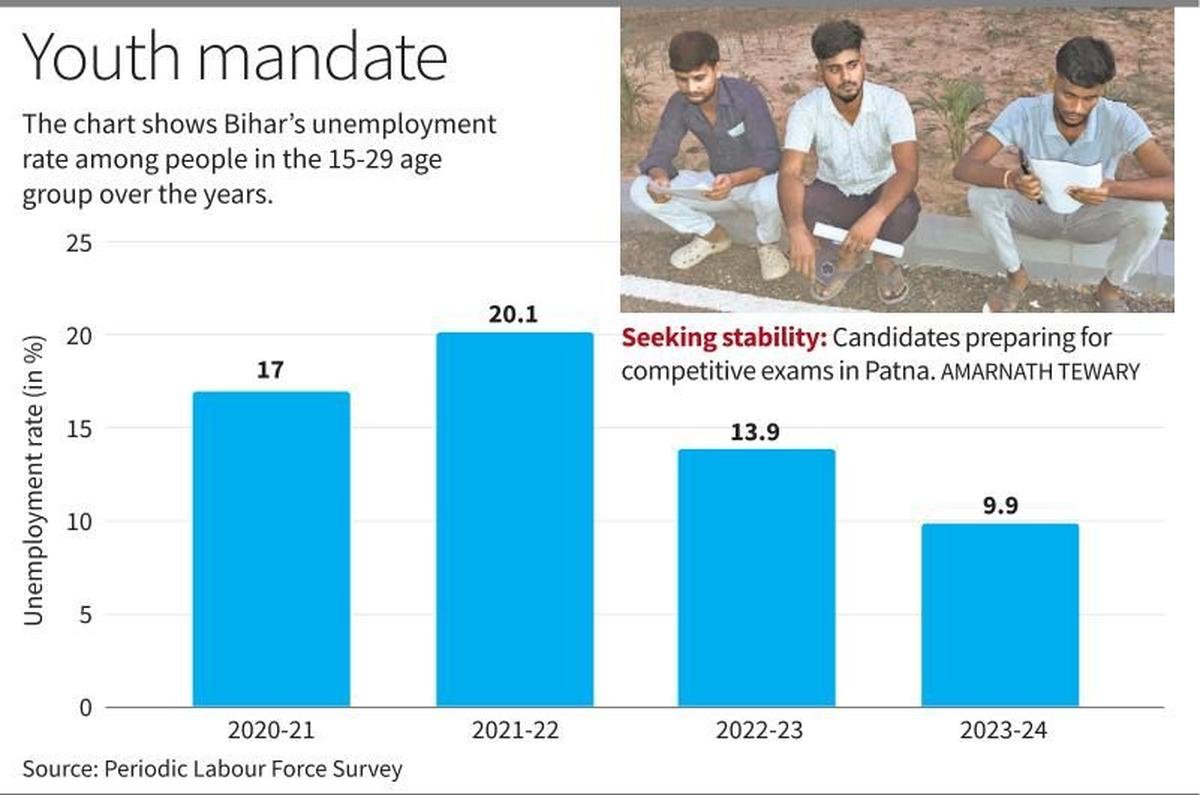

Bihar’s new age economy is becoming a central theme in the state’s development narrative as policymakers push digital skills, modern industries and entrepreneurship to expand opportunities for young people. The shift reflects a move from traditional labour driven sectors toward technology enabled growth and diversified employment pathways.
Why Bihar’s new age economy matters and why the topic is informational
This is an evergreen informational topic because Bihar’s economic transformation is gradual and built on long term structural changes. The main keyword Bihar’s new age economy fits naturally as the state works to reduce dependence on agriculture and low wage unorganised sectors. The new age economy framework focuses on digital capabilities, innovation, skilled services and modern manufacturing. It reflects national trends but carries strong regional relevance due to Bihar’s demographic strengths. With one of India’s youngest populations, aligning economic policy with youth aspirations is critical. The new model aims to position the state as a competitive contributor to India’s digital workforce and non metro entrepreneurship landscape.
Key components of Bihar’s new age strategy and secondary economic sectors
The state’s economic roadmap includes multiple pillars that support sustainable modern growth. The secondary keyword digital economy fits well here because large segments of the plan revolve around digital infrastructure, broadband expansion and technology adoption for public services. Skill development missions target IT training, coding, digital marketing, logistics management and modern retail operations. Parallel efforts promote clean energy, food processing, e governance and tourism. Each of these sectors offers a structured path for young job seekers. The focus on cluster based development such as textile hubs, agro processing units and startup incubation centres broadens sector access for youth across districts. The shift aims to reduce migration pressure by creating job ecosystems within the state.
Employment potential for skilled and semi skilled youth
Bihar’s youth population is large, ambitious and increasingly aware of opportunities beyond traditional employment. The secondary keyword youth employment fits naturally in this section as the new age economy promises a diversified job pipeline. IT enabled services, logistics, retail supply chains, customer support and digital operations are generating new demand for talent. Companies offering remote or hybrid roles find Bihar attractive due to its labour availability and improving connectivity. Skill programmes that train candidates in data operations, digital literacy and communication help bridge the gap between rural job seekers and national employers. Semi skilled roles in warehousing, e commerce distribution, electric mobility servicing and hospitality are also expanding as private players enter the state’s developing markets.
Role of entrepreneurship and local innovation in Bihar’s transition
Entrepreneurship plays a major role in advancing Bihar’s economic transformation. The secondary keyword Bihar startups fits naturally here because incubators, university innovation centres and government assistance programmes support early stage ventures across districts. Young founders are building ideas in agriculture technology, healthcare delivery, fintech, education tools and local commerce platforms. These startups solve regional problems such as market access for farmers, telemedicine for underserved areas and skill based micro entrepreneurship. The rise of small tech enabled ventures encourages job creation from within communities. Combined with credit schemes and digital payment infrastructure, entrepreneurship gives youth control over career progression and income stability. It also strengthens local economies by retaining talent within the state.
How improved infrastructure supports the new age economy
Infrastructure upgrades are fundamental to Bihar’s long term economic success. Enhanced road networks, logistics corridors and wider mobile connectivity create stronger foundations for business expansion. BharatNet supported broadband access extends digital services to rural areas, improving the reach of online education, telehealth and e governance. These improvements reinforce the secondary keyword economic development because better infrastructure attracts private investment and simplifies company operations. Education and training institutions benefit from modern facilities that support high quality learning. Additionally, tourism and cultural sectors receive a boost from better connectivity, generating employment in hospitality, transport and local crafts. As these improvements compound, Bihar becomes more competitive for domestic and international investors.
Challenges and the need for continuous skill upgrades
Despite progress, Bihar’s new age economy must address several challenges. Skill gaps remain significant in rural districts where exposure to digital tools is still limited. Employers look for candidates with communication skills, problem solving abilities and basic technical proficiency. Continuous upskilling is essential for youth to match modern job requirements. Another challenge is ensuring equal access to opportunities for women, who often face mobility and social limitations. Creating safe workplaces, targeted training and flexible job structures helps overcome these barriers. Startups and companies must also invest in leadership development to retain talent locally. Addressing these concerns ensures that Bihar’s economic pathway remains inclusive and sustainable.
Takeaways
Bihar’s new age economy focuses on digital skills, innovation and modern services.
Youth employment opportunities expand across IT, logistics, retail and startups.
Entrepreneurship is becoming a major driver of local job creation.
Infrastructure upgrades and skill programmes strengthen long term economic growth.
FAQs
What is meant by Bihar’s new age economy?
It refers to the state’s shift toward digital services, modern industries, innovation and skill based employment to reduce dependence on traditional low income sectors.
How does this shift help Bihar’s youth?
It creates a broader range of jobs in IT services, logistics, customer operations, retail management and tech enabled sectors while supporting entrepreneurship.
Are startups playing a major role in this transformation?
Yes. Local startups are solving regional problems and generating new employment by leveraging digital tools and government backed incubation programmes.
What challenges remain for Bihar’s economic transition?
Skill gaps, uneven digital access and limited workplace opportunities for women require focused interventions to ensure inclusive and sustained growth.