
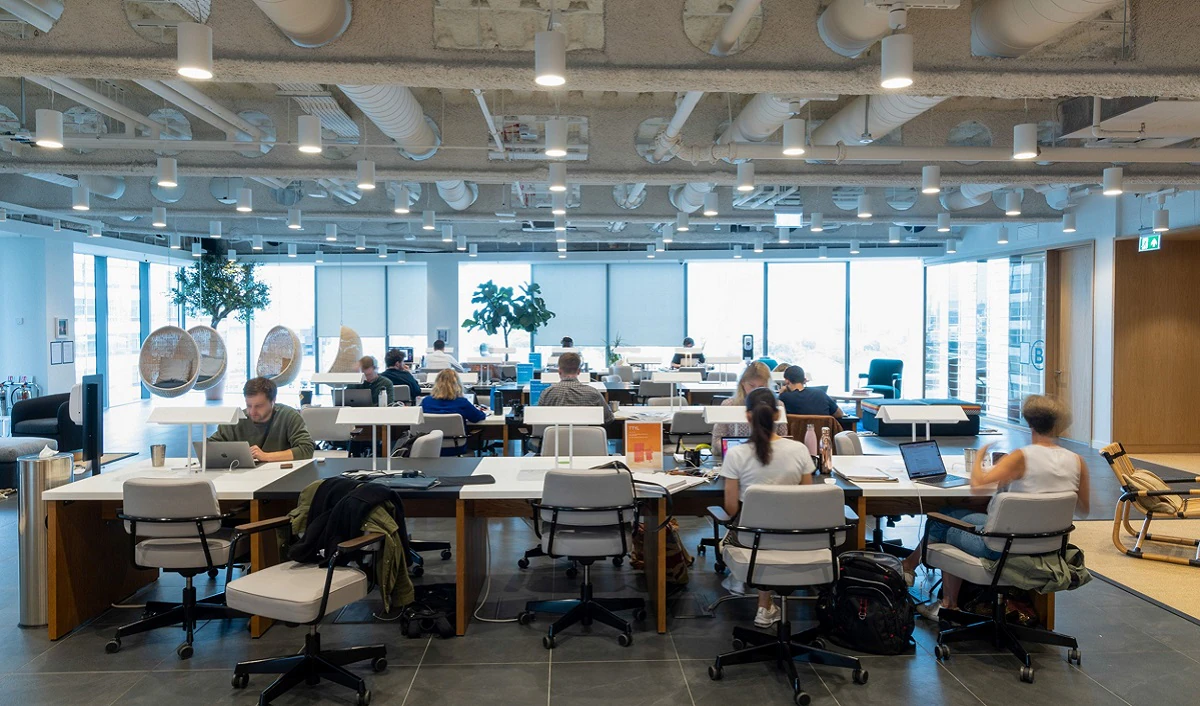

Tier-2 cities across India are witnessing a sharp rise in co-working spaces as remote and hybrid work models stabilize. Growing demand from freelancers, startups, and companies is reshaping office culture beyond metro cities.
The rise of co-working spaces in Tier-2 cities has become a clear trend in 2026 as remote work transitions into a long-term model. Businesses and professionals are increasingly choosing flexible office setups in smaller cities due to lower costs and improved infrastructure.
Why Co-Working Demand Is Rising in Tier-2 Cities
The shift towards hybrid work has reduced dependence on traditional office spaces in metro cities. As a result, employees are relocating to Tier-2 cities where the cost of living is lower and quality of life is better.
This migration has created demand for professional workspaces that offer reliable internet, meeting rooms, and office infrastructure. Co-working spaces fill this gap by providing flexible plans without long-term commitments.
Cities like Nagpur, Indore, Jaipur, and Coimbatore are seeing steady growth in demand. These locations offer a balance between affordability and connectivity, making them attractive for both individuals and companies.
Role of Remote Work in Expanding Flexible Office Spaces
Remote work is no longer a temporary adjustment. Companies are adopting hybrid models where employees split time between home and office. This has increased the need for decentralized workspaces.
Instead of maintaining large offices in metros, businesses are exploring smaller co-working setups across multiple cities. This reduces operational costs while maintaining employee productivity.
Freelancers and independent professionals also prefer co-working spaces over working from home due to fewer distractions and better networking opportunities. This shift is driving consistent occupancy in Tier-2 co-working hubs.
Cost Advantage and Business Benefits for Startups
One of the biggest reasons for the growth of co-working spaces in Tier-2 cities is cost efficiency. Rental costs in these cities are significantly lower compared to metro locations.
Startups can access fully equipped offices without heavy upfront investment. Facilities such as high-speed internet, power backup, and shared amenities are included in membership plans.
This allows small businesses to operate professionally without committing to long-term leases. It also enables easy scaling as teams grow or shrink based on business needs.
Infrastructure Growth Supporting Co-Working Expansion
Improved digital infrastructure has played a key role in this trend. Faster internet connectivity, better transport systems, and growing urban development have made Tier-2 cities more business-friendly.
Commercial real estate developers are also adapting to this demand by converting traditional office spaces into co-working hubs. This has increased supply and improved quality standards across cities.
Local governments are encouraging startup ecosystems, which further supports the growth of shared workspaces. Incubators and innovation hubs often collaborate with co-working providers to create business clusters.
Impact on Local Economy and Employment
The expansion of co-working spaces is contributing to local economic growth. It generates employment in operations, facility management, and support services.
Increased business activity also benefits nearby retail stores, cafes, and service providers. Areas with co-working hubs often see higher footfall and commercial development.
For professionals, access to structured work environments improves productivity and creates networking opportunities. This helps build local entrepreneurial ecosystems in smaller cities.
Challenges Facing Co-Working Operators in Smaller Cities
Despite the growth, co-working operators face certain challenges in Tier-2 markets. Demand can fluctuate based on economic conditions and company policies regarding remote work.
Awareness is still developing in some regions, where traditional office setups are preferred. Operators need to invest in marketing and community building to attract users.
Maintaining occupancy rates and pricing competitiveness is also crucial. Overexpansion without sustained demand can lead to underutilized spaces.
Future Outlook for Co-Working in Tier-2 India
The outlook for co-working spaces in Tier-2 cities remains strong as hybrid work becomes standard. Companies are likely to continue decentralizing operations, creating long-term demand for flexible offices.
Technology-driven workspace management, community events, and specialized work environments will shape the next phase of growth. Providers that focus on user experience and flexibility are expected to perform better.
As more professionals choose to live outside metro cities, co-working spaces will play a central role in supporting this shift.
Takeaways
Co-working spaces are expanding rapidly in Tier-2 cities due to remote work trends
Lower costs and better lifestyle are driving migration away from metros
Startups and freelancers benefit from flexible and affordable office setups
Infrastructure growth is supporting long-term demand in smaller cities
FAQs
Why are co-working spaces growing in Tier-2 cities?
Growth is driven by remote work, lower costs, and increasing migration from metro cities.
Which cities are seeing the highest demand?
Cities like Nagpur, Indore, Jaipur, and Coimbatore are experiencing strong growth.
Are co-working spaces cheaper than traditional offices?
Yes, they offer lower costs with flexible plans and no long-term commitments.
Is this trend expected to continue?
Yes, hybrid work models are likely to sustain demand for co-working spaces in the future.