
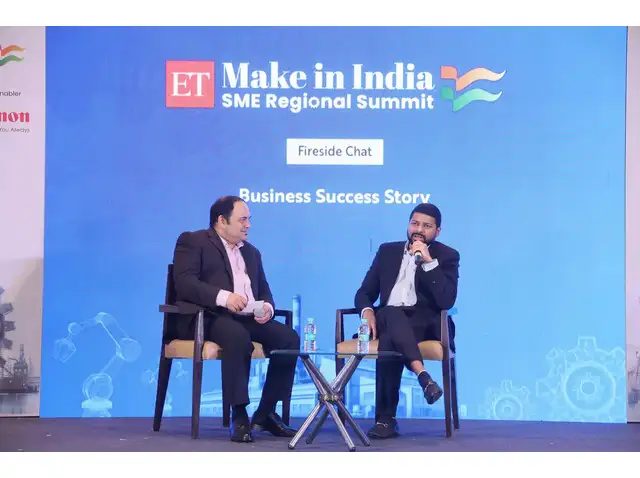

The Dehradun SME Summit under the Make in India initiative highlights a growing shift toward regional business development in India. The event focused on empowering small businesses with funding access, policy support, and networking opportunities beyond metro cities.
The Dehradun SME Summit reflects how MSMEs are becoming central to India’s economic strategy. With increasing government attention on Tier 2 cities, small businesses are now gaining access to resources that were earlier concentrated in major urban hubs.
Dehradun SME Summit and Its Role in Regional Business Growth
The Dehradun SME Summit brought together policymakers, industry leaders, and entrepreneurs to discuss the future of small businesses in India. Events like these are part of a broader effort to decentralize economic growth and strengthen regional ecosystems.
Traditionally, startup and business events were limited to cities like Bengaluru, Mumbai, and Delhi. The shift to Dehradun indicates a deliberate move to include emerging cities in the national growth narrative.
For local entrepreneurs, this creates direct exposure to funding opportunities, mentorship, and policy updates. It also signals that government and private stakeholders are actively investing in regional business potential.
Key Announcements and Focus Areas from the SME Summit
One of the major focus areas of the summit was improving access to credit for MSMEs. Banks and financial institutions are being encouraged to simplify lending processes and expand collateral-free loan schemes.
Another important theme was technology adoption. Small businesses were urged to adopt digital tools for operations, marketing, and financial management. This aligns with India’s broader push toward digital transformation.
Skill development and workforce training were also highlighted. Many MSMEs face challenges in hiring skilled workers, and the summit addressed the need for industry-aligned training programs.
Infrastructure support, including industrial clusters and logistics improvements, was discussed as a key enabler for scaling small businesses in regions like Uttarakhand.
Impact on MSMEs and Local Entrepreneurs in Tier 2 Cities
The Dehradun SME Summit has direct implications for MSMEs operating in Tier 2 and Tier 3 cities. Increased policy attention means better access to schemes, subsidies, and financial support.
Local entrepreneurs can now tap into networks that were previously inaccessible. This includes connections with investors, suppliers, and larger enterprises for partnerships.
The focus on regional manufacturing and services also creates new opportunities for businesses in sectors like food processing, handicrafts, tourism, and light manufacturing.
For many small businesses, the biggest advantage is visibility. Being part of such events helps them position themselves for growth and expansion.
Government Initiatives Supporting MSME Growth in India
The summit aligns with ongoing government initiatives such as Make in India, Startup India, and MSME support schemes. These programs aim to reduce regulatory barriers and encourage entrepreneurship.
MSME registration through the Udyam portal has simplified access to benefits. Businesses can now apply for subsidies, credit guarantees, and market support more efficiently.
Production Linked Incentive schemes and state-level incentives are also contributing to manufacturing growth. While these are often associated with larger industries, smaller businesses benefit indirectly through supply chains.
The government is also promoting cluster-based development, where small businesses operate within shared infrastructure, reducing costs and improving efficiency.
Challenges That Still Need Attention for Small Businesses
Despite the positive momentum, several challenges remain. Access to timely credit is still a concern for many MSMEs, especially those without strong financial records.
Regulatory compliance can be complex, particularly for first-time entrepreneurs. While digital platforms have simplified processes, awareness and understanding remain gaps.
Infrastructure in some Tier 2 regions still needs improvement. Logistics, transportation, and supply chain issues can limit business expansion.
Market competition is another factor. Small businesses must compete with established brands and imported products, making differentiation essential.
What This Means for the Future of India’s SME Ecosystem
The Dehradun SME Summit indicates a long-term shift in how India approaches economic development. By focusing on regional hubs, the country is creating a more balanced growth model.
For small businesses, this means more opportunities but also higher expectations. Entrepreneurs need to be prepared to adopt technology, maintain quality standards, and scale operations efficiently.
The growing ecosystem in Tier 2 cities is likely to attract more investment and talent. This could lead to the emergence of new business hubs beyond traditional metros.
Overall, the summit reinforces the idea that MSMEs are not just support players but key drivers of India’s economic growth.
Takeaways
• Regional summits like Dehradun are expanding opportunities for MSMEs
• Access to credit and technology adoption are key focus areas
• Tier 2 cities are becoming important business and startup hubs
• Challenges like compliance and infrastructure still need attention
FAQs
What is the Dehradun SME Summit?
It is a regional business event under the Make in India initiative focused on supporting small and medium enterprises.
How does the summit benefit small businesses?
It provides access to funding information, policy updates, and networking opportunities with industry stakeholders.
Are MSMEs in Tier 2 cities gaining more support now?
Yes, government and private initiatives are increasingly focusing on regional business development.
What are the key challenges for MSMEs in India?
Common challenges include access to credit, regulatory compliance, and infrastructure limitations.