
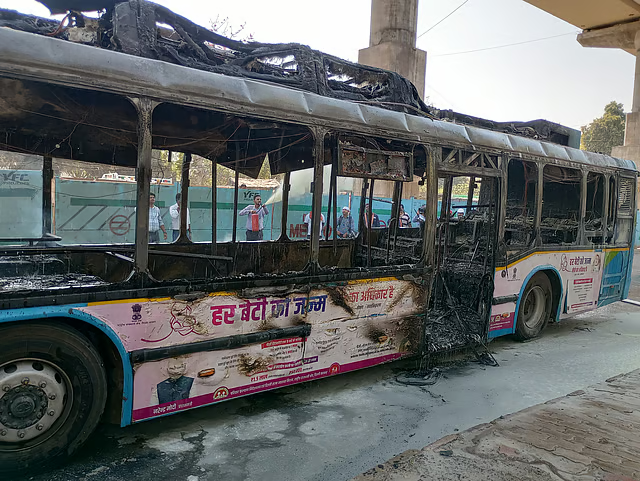

A recent Delhi bus accident has once again highlighted serious gaps in passenger safety across urban transport systems. The incident has raised questions about enforcement, driver accountability, and infrastructure readiness in India’s rapidly growing cities.
The topic is time-sensitive and news-driven, as the accident has triggered fresh public and administrative concern over road safety standards.
Delhi Bus Accident Brings Safety Issues Back Into Focus
The Delhi bus accident has renewed attention on the risks associated with daily public transport in urban areas. Incidents involving buses are not uncommon in India, but each case highlights recurring issues that remain unresolved.
Preliminary reports in such cases often point to factors like overspeeding, driver negligence, or poor road conditions. In a densely populated city like Delhi, even a minor lapse can lead to serious consequences due to high traffic volume.
The incident has once again prompted authorities to review safety protocols, especially in public transport systems that carry thousands of passengers daily.
Urban Transport Safety Challenges in Indian Cities
Passenger safety in urban transport systems remains a complex challenge. Cities like Delhi, Mumbai, and Bengaluru operate large bus networks that are essential for daily commuting, especially for middle and lower income groups.
However, issues such as overcrowding, lack of regular vehicle maintenance, and inconsistent driver training continue to affect safety standards. In many cases, buses operate under tight schedules, increasing pressure on drivers to complete routes quickly.
Infrastructure also plays a role. Poorly designed intersections, lack of dedicated bus lanes, and unpredictable traffic conditions increase the risk of accidents.
These challenges are not limited to metro cities and are often more severe in Tier-2 cities with less developed transport systems.
Role of Driver Training and Accountability
Driver behavior is a critical factor in ensuring passenger safety. Many accidents are linked to speeding, sudden lane changes, or failure to follow traffic rules.
While transport authorities conduct training programs, the effectiveness of these initiatives varies. Continuous monitoring and strict enforcement are required to ensure compliance.
Fatigue is another concern. Long working hours without adequate rest can impact a driver’s reaction time and decision-making ability.
Introducing regular performance checks and stricter penalties for violations can help improve accountability and reduce accident risks.
Infrastructure and Policy Gaps Affecting Safety
Urban transport safety is closely linked to infrastructure quality and policy implementation. In many cities, roads are not designed to handle the current volume of traffic.
Dedicated bus lanes, proper signage, and well-maintained roads can significantly reduce accident risks. However, implementation often lags due to budget constraints or planning delays.
Policy gaps also exist in terms of regular vehicle inspections and enforcement of safety standards. While rules are in place, inconsistent monitoring reduces their effectiveness.
Improving coordination between traffic police, transport departments, and city planners is essential for long-term safety improvements.
Impact on Daily Commuters and Public Confidence
Incidents like the Delhi bus accident directly affect public confidence in urban transport systems. For many commuters, buses are the most affordable and accessible mode of travel.
Safety concerns can lead to hesitation in using public transport, pushing more people toward private vehicles. This, in turn, increases traffic congestion and pollution.
For daily wage workers and students, alternatives may not always be feasible, making them more vulnerable to safety risks.
Ensuring reliable and safe public transport is crucial for maintaining trust and supporting sustainable urban mobility.
Steps Authorities Are Likely to Take After the Incident
Following such accidents, authorities typically initiate investigations to determine the cause and identify accountability. This may include reviewing driver records, vehicle condition, and route conditions.
Short-term measures often include increased inspections, stricter enforcement of traffic rules, and temporary route adjustments if needed.
In the long term, authorities may focus on improving driver training programs, upgrading infrastructure, and implementing technology-based monitoring systems.
Public awareness campaigns may also be introduced to encourage safer commuting practices.
Takeaways
• The Delhi bus accident has highlighted ongoing safety challenges in urban transport
• Driver behavior, infrastructure gaps, and enforcement issues remain key concerns
• Passenger safety directly impacts public trust in transport systems
• Long-term solutions require coordinated efforts across multiple agencies
FAQs
What caused the recent Delhi bus accident?
The exact cause depends on investigation reports, but common factors include driver error, speeding, or road conditions.
Are bus accidents common in Indian cities?
While not daily occurrences, such incidents happen periodically due to traffic density and systemic challenges.
What can be done to improve passenger safety?
Better driver training, stricter enforcement, improved infrastructure, and regular vehicle maintenance can help.
How does this affect daily commuters?
It raises safety concerns and may reduce confidence in public transport systems.