
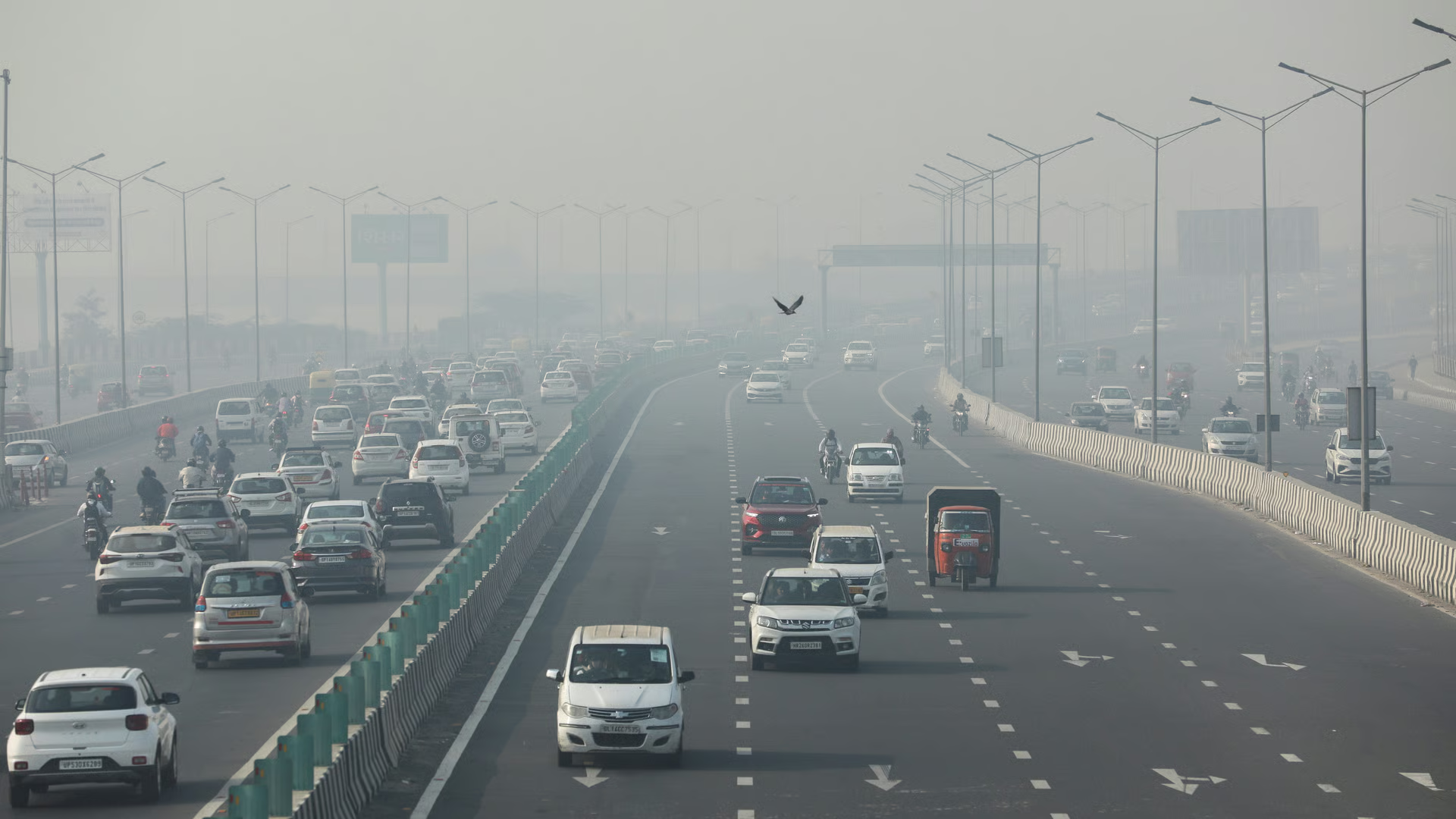

Delhi’s pollution paradox has resurfaced after recent rainfall failed to significantly reduce smog levels across the city. Despite expectations that rain would cleanse the air, pollution remained stubbornly high, raising concerns about winter air quality trends in Delhi and other northern Indian cities.
This article explains why rainfall did not deliver relief, what factors are overpowering short term weather effects, and what this means for pollution management in northern India’s urban centres.
What happened after the recent rainfall in Delhi
Delhi experienced light to moderate rainfall that typically helps wash out particulate matter from the atmosphere. However, air quality levels showed only temporary or marginal improvement before deteriorating again.
The rainfall was not sustained or intense enough to remove fine particulate matter, especially PM2.5. While rain can settle larger particles, finer pollutants remain suspended when atmospheric conditions trap them close to the ground. As a result, smog returned quickly once rainfall stopped.
This outcome highlights the limits of relying on weather events as a pollution control mechanism.
Understanding the science behind the pollution paradox
Delhi’s pollution paradox occurs when expected natural cleansers like rain or wind fail to improve air quality due to unfavourable atmospheric conditions. During winter, temperature inversion becomes common. Cooler air near the ground gets trapped under warmer air above, preventing vertical dispersion of pollutants.
Low wind speed worsens the situation by allowing emissions to accumulate. Even after rainfall, stagnant air prevents fresh pollutants from dispersing. Moisture can also increase secondary pollutant formation under certain conditions, further degrading air quality.
This combination explains why rainfall alone is insufficient during peak winter pollution periods.
Role of emission sources overpowering weather relief
Rainfall can only reduce existing pollutants, not stop new emissions. In Delhi, multiple emission sources continue unabated even during rainy days. Vehicular traffic remains high, construction activities often resume quickly, and residential heating increases during cold weather.
Crop residue burning in surrounding states contributes significantly to background pollution levels. These emissions travel long distances and replenish particulate matter soon after rain events.
When emission input exceeds the removal capacity of weather systems, pollution levels rebound rapidly.
Why northern Indian cities face similar risks
The pollution paradox is not unique to Delhi. Cities across northern India share similar geography and winter climate patterns. Low wind speeds, landlocked locations, and dense urban activity create conditions where pollutants accumulate.
Tier-2 cities near industrial corridors or agricultural belts face increasing air quality challenges. As these cities expand, emissions rise faster than mitigation infrastructure. Rainfall patterns across the region are also becoming more erratic, reducing their effectiveness as pollution relief.
This suggests that northern Indian cities cannot depend on seasonal weather changes to manage air quality.
Impact on public health and daily life
Persistent smog after rainfall increases health risks because residents often lower their guard, assuming air quality has improved. Continued exposure to PM2.5 aggravates respiratory conditions, cardiovascular risks, and eye irritation.
Schools and outdoor activities remain affected as air quality fluctuates unpredictably. Healthcare systems face increased patient load during prolonged pollution episodes.
The pollution paradox creates uncertainty, making it harder for residents to plan daily routines safely.
Implications for pollution control policy
The failure of rainfall to reduce smog exposes gaps in current pollution management strategies. Emergency measures triggered by pollution peaks often focus on short term restrictions rather than sustained emission reduction.
This situation reinforces the need for structural interventions such as consistent enforcement of construction norms, traffic management, and cleaner fuel adoption. Policy frameworks must account for meteorological limits rather than assuming weather will intervene.
Cities need pollution response systems that function independently of seasonal relief expectations.
Lessons for urban planning and governance
Urban planning decisions directly influence pollution outcomes. Dense construction without adequate green buffers, limited public transport alternatives, and fragmented industrial zoning worsen air quality resilience.
Northern cities must integrate air flow corridors, reduce dust generating activities, and strengthen public transport networks. Governance coordination between states is critical, as pollution sources extend beyond city boundaries.
The pollution paradox underscores that local action alone is insufficient without regional coordination.
What residents should realistically expect going forward
Residents should not expect rain alone to bring lasting air quality improvement during winter months. Pollution episodes may persist despite intermittent rainfall.
Monitoring daily air quality data remains essential. Protective measures such as limiting outdoor exposure during peak pollution hours remain relevant even after rain.
Understanding the limits of weather based relief helps residents make informed health decisions.
Long term outlook for northern Indian air quality
Climate variability is increasing uncertainty around rainfall patterns. Reliance on natural dispersion mechanisms will become less effective over time.
Without aggressive emission reduction and regional cooperation, pollution paradox events are likely to become more frequent. Northern Indian cities must shift focus from reactive responses to preventive, year round pollution control strategies.
The current episode serves as a warning rather than an anomaly.
Takeaways
- Rainfall alone cannot counter Delhi’s winter pollution
- Temperature inversion and low wind trap pollutants near ground
- Continuous emissions quickly reverse temporary weather relief
- Northern cities face similar air quality risks without structural reforms
FAQs
Why did rain not reduce Delhi’s pollution significantly?
Because fine particles remained trapped due to low wind speed and temperature inversion.
Does rainfall ever help improve air quality?
Yes, sustained and heavy rainfall combined with wind can improve air quality temporarily.
Are other northern cities facing the same issue?
Yes, similar weather and emission patterns affect many northern Indian cities.
What is the long term solution to this pollution paradox?
Reducing emissions at source and improving regional coordination, not relying on weather.