
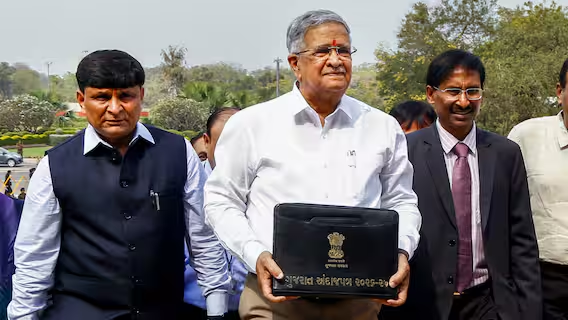

Gujarat Budget 2026 has taken an ambitious turn with a significant allocation toward urban development and games infrastructure. The financial blueprint emphasizes modern cities, upgraded civic services and expanded sports facilities to position the state for long term growth.
Gujarat Budget 2026 places strong focus on strengthening urban infrastructure and expanding sports infrastructure across key cities. With rapid urbanization and growing population clusters in Ahmedabad, Surat, Vadodara and Rajkot, the state government has outlined higher spending on roads, public transport, water systems and modern sports complexes.
Urban Infrastructure Allocation Gains Momentum
The Gujarat Budget 2026 urban infrastructure push reflects the increasing demand for better civic amenities. As more industries and service sector jobs concentrate in urban clusters, cities require upgraded transport networks, drainage systems and housing support.
Large allocations are expected to support road widening projects, flyovers, smart traffic management and public transport upgrades. Improved urban mobility reduces congestion and supports economic productivity. Investment in water supply networks and sewage treatment infrastructure is also crucial as cities expand outward.
Municipal corporations in major cities are likely to receive enhanced funding to accelerate pending projects. Strengthening digital governance platforms for property tax, building permissions and citizen services also forms part of the broader modernization effort.
Focus on Games Infrastructure and Sports Ecosystem
A key highlight of Gujarat Budget 2026 is the increased allocation for games infrastructure. The state has been positioning itself as a sports destination, hosting national and international events in recent years.
Investment in multi sport complexes, stadium upgrades and training centers is designed to nurture grassroots talent while attracting large scale tournaments. Modern sports facilities create opportunities for athletes, coaches and event organizers.
Developing sports infrastructure also supports allied sectors such as sports management, hospitality and tourism. For cities like Ahmedabad, which already host major sporting venues, additional investment can strengthen the state’s capacity to conduct high profile competitions.
Economic Impact of Urban and Sports Spending
Urban and games infrastructure allocation is not only about civic improvement. It has direct economic implications. Construction activity generates employment across engineering, contracting and supply sectors. Long term urban upgrades enhance property values and investor confidence.
Improved roads and transit systems lower logistics costs for businesses. Industrial zones benefit from smoother connectivity to ports and highways. For service sector companies, efficient urban transport improves employee mobility.
Sports infrastructure can stimulate event driven economic activity. Hosting tournaments drives hotel occupancy, retail spending and tourism inflow. Over time, sports cities often develop specialized training academies and sports related startups.
Urban Mobility and Public Transport Expansion
Gujarat’s growing metropolitan regions require robust public transport solutions. Budget allocations are expected to support metro expansion, bus rapid transit upgrades and integrated mobility systems.
Investments in electric buses and charging infrastructure align with broader sustainability goals. Cleaner transport options reduce urban pollution and support climate commitments.
Smart traffic management systems, including adaptive signals and surveillance, help manage peak hour congestion. Such measures improve commuter experience and enhance road safety.
For Tier 2 cities within Gujarat, improved bus terminals, ring roads and bypass corridors may reduce traffic pressure in city centers while facilitating smoother goods movement.
Strengthening Tier 2 and Emerging Urban Centers
While major cities often receive attention, Gujarat Budget 2026 is expected to allocate funds for emerging urban centers as well. Rapid growth in smaller cities requires proactive planning to prevent infrastructure gaps.
Developing drainage systems, affordable housing schemes and local sports grounds in Tier 2 areas ensures balanced development. Smaller cities that invest early in civic infrastructure are better positioned to attract private investment.
Regional sports academies and district level stadiums can nurture young talent without forcing migration to larger cities. This approach supports inclusive growth.
Fiscal Sustainability and Long Term Planning
Ambitious infrastructure budgets must balance growth with fiscal discipline. Capital expenditure on urban and sports projects typically spans multiple financial years. Careful project management is essential to avoid cost overruns.
Public private partnerships may play a role in delivering certain facilities. Collaborations with private operators can accelerate project completion while distributing financial risk.
Monitoring mechanisms and transparent implementation frameworks ensure that allocated funds translate into visible outcomes. Periodic progress reviews are crucial to maintain momentum.
Public Expectations and Governance
Citizens expect visible improvements when budgets prioritize infrastructure. Timely execution, quality construction and minimal disruption during projects are critical.
Urban infrastructure projects often require coordination between municipal bodies, state departments and utility agencies. Clear communication with residents reduces confusion during construction phases.
For sports infrastructure, transparent access policies and maintenance plans determine long term usability. Facilities must remain accessible to athletes and the public beyond major events.
Takeaways
• Gujarat Budget 2026 increases allocation for urban and sports infrastructure
• Upgraded roads, transport and civic systems aim to support rapid urban growth
• Investment in games infrastructure strengthens the sports ecosystem and tourism
• Effective implementation and fiscal discipline are key to long term impact
FAQs
Q1. Why is urban infrastructure a priority in Gujarat Budget 2026?
Rapid urbanization and economic expansion require improved transport, water supply and civic services to sustain growth.
Q2. How does games infrastructure benefit the state economy?
Modern sports facilities attract events, create jobs and support tourism and allied industries.
Q3. Will smaller cities benefit from the budget allocation?
Yes, funding is expected to support Tier 2 and emerging urban centers to ensure balanced development.
Q4. How are such large projects typically funded?
Funding may include state budget allocations, multiyear capital expenditure planning and public private partnerships.