
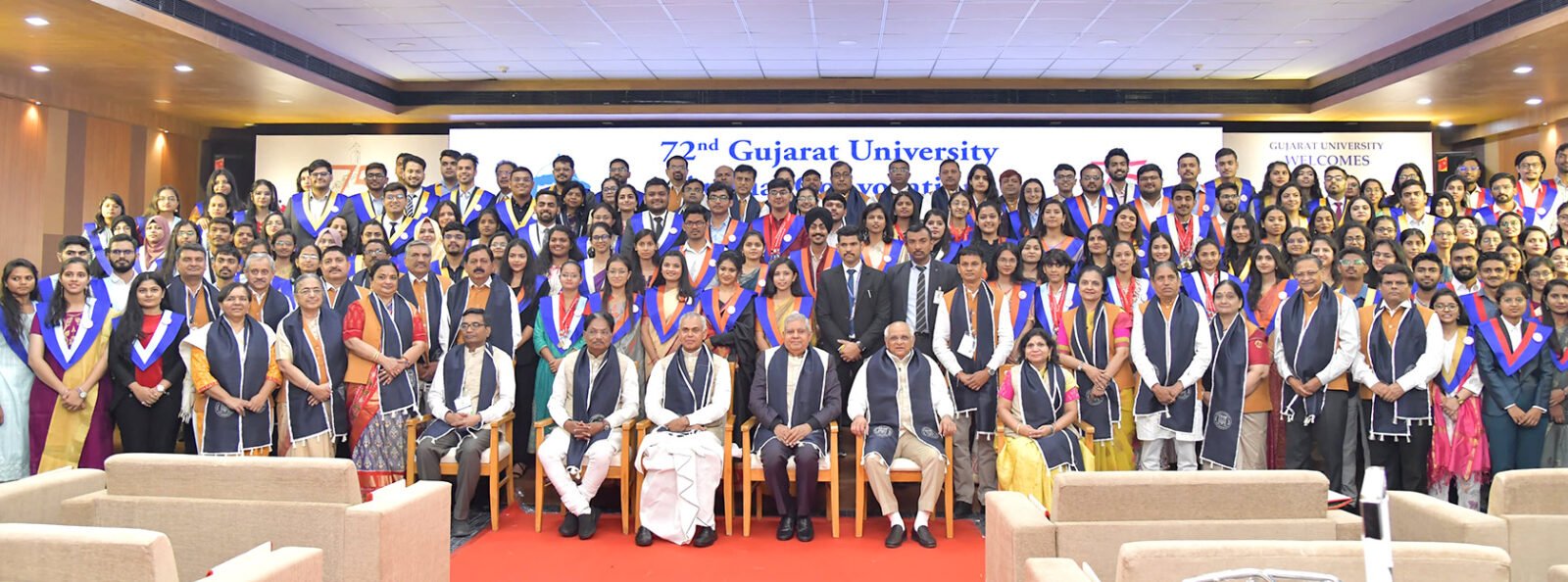

Gujarat University Convocation 2026 is a time sensitive academic event that goes beyond ceremonial importance, directly affecting local graduates and the job market in Ahmedabad. This article explains what the convocation signals for employability, hiring trends, and the city’s evolving education to industry pipeline.
The Gujarat University Convocation 2026 marks the formal entry of thousands of graduates into an already competitive job market. For Ahmedabad, this event matters because it reflects talent supply, skill readiness, and how effectively local education aligns with current industry demand. The timing is critical as hiring sentiment remains cautious across sectors.
Why Gujarat University Convocation 2026 Matters This Year
The convocation arrives at a moment when job creation has slowed and employers are selective. Unlike boom years where degrees translated quickly into placements, 2026 presents a more complex reality. Graduates now enter a market that values practical exposure, digital skills, and adaptability over academic scores alone.
Gujarat University produces graduates across commerce, science, arts, law, and management streams. This broad output impacts Ahmedabad’s workforce composition directly. The convocation serves as a snapshot of the talent pool entering the market simultaneously, increasing short term competition for entry level roles.
Impact on Local Graduates Entering the Workforce
For graduates, the convocation represents closure of academic life and immediate exposure to employment pressure. Many students completing degrees in 2026 are facing longer job search cycles compared to previous batches. Campus placements have become more role specific, leaving a section of graduates dependent on off campus hiring.
This shift has changed graduate behavior. More students are pursuing internships, certifications, and short term skill programs even after completing degrees. The convocation therefore no longer signals job readiness by default. It marks the start of a transition phase where employability must be actively built.
How Ahmedabad’s Job Market Absorbs New Graduates
Ahmedabad’s economy is diversified across manufacturing, pharmaceuticals, textiles, finance, education, and emerging technology services. While traditional sectors continue steady hiring, white collar job growth has moderated.
Local employers are focusing on cost efficiency and skill fit. Entry level hiring is happening, but at controlled volumes. Graduates with exposure to data tools, compliance knowledge, digital marketing, accounting software, or operations analytics are seeing better traction than those with generic degrees.
Small and mid sized enterprises in Ahmedabad are playing a larger role in absorption compared to large corporations. These firms value adaptability and multi skill capability over specialization alone.
Sector Wise Signals From the 2026 Graduate Batch
Commerce and management graduates face the most competition due to high supply. Roles in accounting, auditing support, and sales operations remain available but require tool based proficiency.
Science graduates see mixed outcomes. Those from applied streams such as biotechnology, environmental science, and analytics aligned courses perform better than pure theory backgrounds.
Arts graduates increasingly move towards content, communication, teaching, and public administration preparation. Law graduates benefit from Ahmedabad’s active industrial and commercial legal ecosystem, though entry requires patience and networking.
Engineering graduates face selective demand. Core engineering roles remain limited, while applied software, automation support, and infrastructure related roles offer moderate opportunities.
What This Means for Employers and Recruiters
For employers, the convocation expands the local talent pool at a time when lateral hiring is expensive. Companies can access fresh talent willing to learn, provided training costs are managed.
Recruiters are adjusting screening methods. Instead of degree based filtering, they focus on internships, live projects, and practical assessments. This benefits candidates who invested in skill building alongside academics.
Local companies also benefit from reduced attrition risks. Graduates hired locally are more likely to stay longer, improving workforce stability.
Long Term Signals for Ahmedabad’s Education Ecosystem
The 2026 convocation highlights the need for stronger academia industry collaboration. Curriculum alignment, mandatory internships, and skill certifications integrated into degree programs are no longer optional.
Ahmedabad’s position as an education hub depends on outcomes, not enrollment numbers. Universities that demonstrate higher employability rates will attract better students and stronger corporate partnerships.
The convocation acts as a checkpoint. It shows where the system works and where it needs reform.
Takeaways
The 2026 convocation adds significant talent supply to a cautious job market
Graduates face longer job search cycles and higher skill expectations
Local SMEs play a key role in absorbing fresh graduates
Employability now depends more on skills than degrees alone
FAQ
Does the convocation guarantee job placement for graduates
No. It marks degree completion, not employment assurance.
Which graduates have better job prospects in Ahmedabad
Those with applied skills, internships, and tool based knowledge.
Is Ahmedabad’s job market saturated for freshers
Competitive but not closed. Skill alignment improves chances.
Should graduates consider opportunities outside Ahmedabad
Yes, flexibility across cities improves employment speed.