
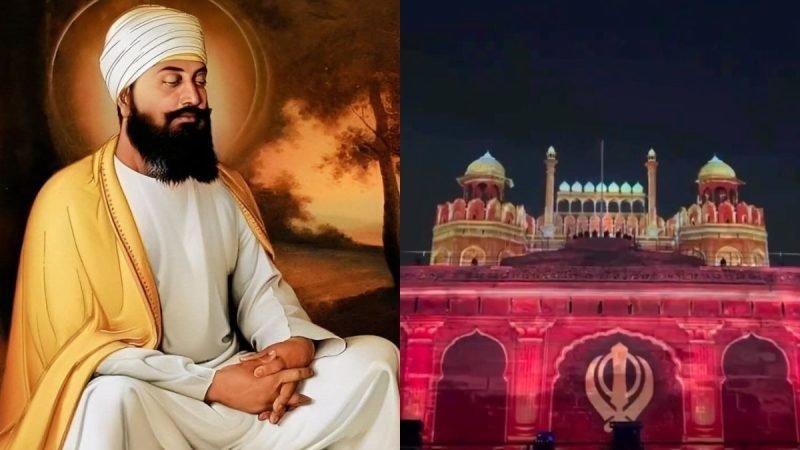

The biography and legacy of Guru Tegh Bahadur hold national significance, and his 350th martyrdom anniversary matters far beyond Punjab because his sacrifice shaped India’s understanding of religious freedom and moral courage. This topic blends history with current relevance, making it both informational and connected to a time sensitive commemoration.
Guru Tegh Bahadur, the ninth Sikh Guru, is remembered for defending the right of individuals to practice their faith without coercion. His martyrdom in 1675 marked a defining moment in Indian history. The 350th year of this event has prompted renewed reflection across India on his leadership, values and the universal principles he stood for. Understanding his life helps explain why multiple states observe the anniversary and why communities nationwide participate in the remembrance.
Early life, upbringing and spiritual foundation
Guru Tegh Bahadur was born in 1621 in Amritsar as Tyag Mal, the youngest son of Guru Hargobind. From a young age, he trained in martial skills and spiritual disciplines. He earned the name Tegh Bahadur for his bravery in battle, symbolising a blend of courage and compassion. His life was influenced by teachings that valued justice, equality and service to humanity.
He spent years traveling across northern and eastern India, spreading the Sikh message and providing guidance to communities facing social and political hardship. His travels helped transform remote areas into important Sikh centres, deepening his connection with people far beyond Punjab. These journeys also shaped his understanding of the struggles faced by ordinary citizens under oppressive systems.
Leadership during a period of political tension
Guru Tegh Bahadur became the ninth Sikh Guru in 1664. His leadership coincided with a period of growing religious pressure under the Mughal Empire. Communities such as Kashmiri Pandits approached him seeking protection from forced conversions.
Historians widely view this moment as the turning point that shaped his legacy. Guru Tegh Bahadur accepted the responsibility of defending their freedom of belief, not because they were Sikh, but because he believed no authority should dictate another’s conscience. This universal principle is the core reason his martyrdom resonates today across communities and states.
Martyrdom and its place in India’s collective memory
In 1675, Guru Tegh Bahadur was executed in Delhi after refusing to convert and defending the rights of others. His death symbolised resistance to tyranny and the assertion of human dignity. The event is unforgettable in Indian history because it represents a rare example of a leader sacrificing his life for people outside his own faith.
His martyrdom site in Delhi remains a central place of remembrance, drawing people from across the country. On the 350th anniversary, cities beyond Punjab marked the day with gatherings, prayers and educational programmes explaining his contributions. The milestone offers a moment to examine how his ideals remain relevant in modern India.
Impact on India’s social and cultural fabric
Guru Tegh Bahadur’s teachings emphasised resilience, humility and unity. Many of his hymns are included in the Guru Granth Sahib and continue to guide millions. His message appealed to farmers, traders, labourers and scholars, shaping Sikh thought and influencing broader Indian moral culture.
His legacy also includes the foundation of Anandpur Sahib, a major Sikh centre and a symbol of collective strength. The values he championed, such as protection of the vulnerable and freedom of choice, continue to inspire civic movements and social leaders across India.
Why the 350th anniversary matters beyond Punjab
The anniversary carries special national relevance because the principles he defended are universal. States like Delhi, Uttar Pradesh and Haryana observe the occasion with public events because his legacy touches themes that stand above regional identity.
His martyrdom is not only a chapter of Sikh history but a moment in India’s democratic journey. It aligns with the idea that diverse beliefs can coexist peacefully. The 350th anniversary encourages reflection on civic rights, the role of moral leadership and the responsibility of society to protect freedom of faith.
Educational institutions across India use the anniversary to teach students about historical courage and ethical leadership. Communities outside Punjab participate because they recognise the broader message his life represents.
Continuing relevance in contemporary India
In a period of rapid social change, Guru Tegh Bahadur’s commitment to defending individual rights remains relevant. His life encourages values based governance and highlights the importance of standing for justice even in difficult circumstances.
Anniversaries of this scale create opportunities for interfaith dialogue and public awareness. They remind citizens that harmony, tolerance and collective responsibility form the foundation of a strong society. His legacy continues to influence public thought, making the commemoration meaningful nationwide.
Takeaways
Guru Tegh Bahadur’s life represents moral courage and universal freedom
His martyrdom is a national symbol, not limited to Sikh history
The 350th anniversary prompts renewed awareness across multiple states
His teachings remain relevant for modern India’s social and ethical values
FAQ
Why is Guru Tegh Bahadur called the protector of religious freedom
He defended the rights of communities facing coercion and chose martyrdom rather than abandon the principle of free belief.
Why do states outside Punjab mark the anniversary
His sacrifice is seen as a national symbol of justice and human rights, making the observance relevant across India.
What is his main contribution to Sikh philosophy
Through teachings and hymns, he emphasised resilience, humility, equality and the duty to protect the oppressed.
Why is the 350th anniversary considered significant
It marks a major historical milestone, encouraging deeper reflection on his legacy and its relevance to contemporary society.