
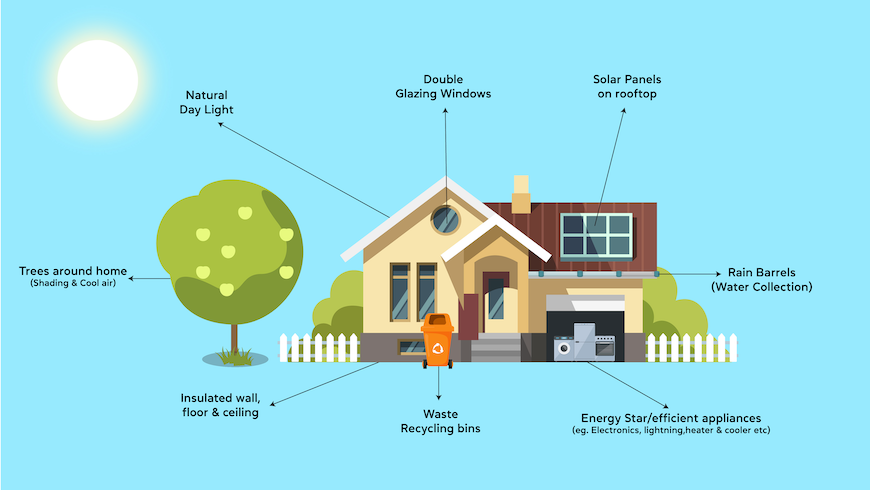

Energy efficient household appliances help families in Tier 3 cities manage rising electricity costs while improving daily comfort. Making informed choices requires understanding appliance ratings, long term savings and practical considerations that match smaller home layouts and regional power conditions.
Families in Tier 3 cities often face fluctuating voltage, limited service networks and higher monthly bills due to older appliances. Choosing energy efficient products reduces consumption without compromising performance. A careful selection process ensures reliability, lower maintenance expenses and consistent savings across multiple years.
Check star ratings and understand long term electricity savings
Energy star ratings remain the most reliable indicator of appliance efficiency. Higher star ratings consume less electricity and deliver predictable savings. For example, a five star refrigerator or air conditioner consumes significantly less energy than a three star model even if both offer similar capacity. Although higher rated appliances may cost more initially, the difference is usually recovered within two to three years through reduced electricity bills.
Families should also consider the annual energy consumption value printed on the label. This figure helps compare appliances of different brands and capacities. For Tier 3 households with moderate usage patterns, selecting appliances with lower annual consumption leads to consistent savings especially during peak summer months when air conditioners and refrigerators run for longer hours.
Match appliance capacity with family size and home layout
Choosing the right capacity is essential for maximizing energy efficiency. Undersized or oversized appliances waste power and deliver poor performance. A refrigerator used by a family of five should have a higher storage capacity than one used by a couple. However, buying a much larger refrigerator than required increases energy consumption unnecessarily.
For washing machines, drum capacity must match the number of weekly laundry loads. Smaller homes benefit from front load machines because they use less water and energy per wash. Air conditioners should be selected based on room size, ceiling height and sunlight exposure. A one ton unit works well for small bedrooms while larger rooms require higher capacity. Correct sizing prevents overuse and maintains efficiency.
Choose inverter technology for stable performance in variable conditions
Inverter based appliances adjust power consumption according to usage requirements. This technology is particularly useful in Tier 3 cities where voltage fluctuations are common. Inverter refrigerators maintain cooling consistently while consuming less power during off peak hours. Inverter air conditioners vary compressor speed to avoid sudden spikes in consumption.
Using inverter technology also reduces wear and tear. Motors run at controlled speeds which extends the lifespan of the appliance. Although inverter models cost more, the performance stability and reduced electricity consumption make them a cost effective choice for families looking to upgrade.
Evaluate durability, repair access and after sales support
Energy efficiency is meaningful only when combined with durable build quality and accessible service support. Families in Tier 3 cities should check whether the brand offers reliable service coverage in their district. Servicing delays reduce the lifespan of appliances and increase energy consumption when faults go unattended.
Durability indicators include motor quality, compressor reliability and structural build. Features like copper coils in air conditioners or stainless steel drums in washing machines improve long term performance. Appliances that require fewer repairs maintain their efficiency levels for a longer period. Families should also consider warranty duration and availability of extended service packages.
Compare initial cost with lifetime operating cost
While budget plays an important role, the cheapest appliance is rarely the most efficient. Families should calculate lifetime cost by combining the purchase price, annual electricity consumption and expected maintenance expenses. A slightly higher priced appliance with strong energy efficiency often results in lower total cost of ownership.
For instance, choosing a higher rated refrigerator reduces annual consumption significantly. Over a decade, the savings outweigh the additional upfront cost. Similarly, energy efficient ceiling fans and LED lighting contribute to lower household electricity bills when used consistently.
Assess smart features that improve efficiency and convenience
Newer appliances offer smart features that help families monitor and reduce consumption. Smart plug compatibility, programmable timers and cooling modes are common examples. These features allow households to schedule appliance usage during off peak hours or limit runtime automatically.
Smart features are beneficial but should not replace core efficiency metrics. The priority should remain on star ratings, inverter technology and build quality. Smart functions serve as an add on that enhances convenience and user control.
Takeaways
Higher star ratings reduce long term electricity costs for families
Correct capacity selection improves energy efficiency and daily performance
Inverter technology offers better stability in fluctuating power conditions
Strong service networks ensure appliances maintain efficiency over time
FAQs
Do energy efficient appliances cost more upfront
Yes, but the initial price difference is offset by lower electricity bills and reduced maintenance cost across several years.
Is inverter technology suitable for all households
It is suitable for most families, especially in areas with variable voltage. Inverter appliances run more efficiently and adjust power use automatically.
How can families check if an appliance will fit their home layout
Measuring available space and comparing it with product dimensions helps. Room size and sunlight exposure should be considered when buying air conditioners.
Do smart features make a big difference in energy savings
Smart features help optimise usage but should not replace basic efficiency metrics. Core savings come from star ratings and inverter technology.