
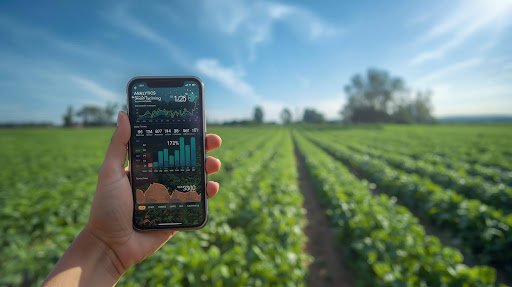

Agri-tech apps are becoming powerful tools for Indian farmers who want to improve crop yields in 2026. These mobile platforms provide real time weather updates, crop advisory, soil insights, and market information that help farmers make better decisions during the farming cycle.
With smartphone access expanding across rural India, many farmers now use digital agriculture tools to manage irrigation, pest control, and crop planning. Agri-tech apps are helping reduce risks, improve productivity, and connect farmers directly with buyers and agricultural experts.
Growing Role of Agri-Tech Apps in Indian Agriculture
Agri-tech apps have become increasingly important in Indian agriculture as farmers seek better productivity and higher income. These mobile applications combine satellite data, weather forecasting, and agricultural research to provide actionable advice directly to farmers.
Farmers can now receive daily crop recommendations based on weather conditions, soil quality, and crop stage. For example, apps can notify farmers about the best time for irrigation or fertilizer application depending on rainfall predictions.
Digital agriculture platforms also help farmers detect crop diseases early. Many apps allow users to upload photos of plant leaves, after which artificial intelligence tools analyze the image and suggest treatment methods.
This level of data driven decision making helps farmers avoid costly mistakes and respond quickly to environmental changes that affect crop growth.
Weather Forecasting and Crop Planning Tools
Weather forecasting is one of the most valuable features provided by agri-tech apps. Unpredictable rainfall patterns and climate variability often impact farming outcomes across India.
Modern agricultural apps provide hyperlocal weather forecasts that help farmers plan irrigation, pesticide spraying, and harvesting schedules. These forecasts are typically updated several times a day to reflect changing conditions.
For example, farmers can delay pesticide spraying if rain is expected within the next few hours. This prevents chemical wash off and reduces unnecessary costs.
Crop planning tools within these apps also guide farmers on suitable crops for a particular region and season. Based on soil type, rainfall, and temperature patterns, the platform may recommend crop varieties that perform better in specific local conditions.
This guidance helps farmers select crops that are more resilient and productive.
Soil Health Monitoring and Fertilizer Management
Soil health plays a crucial role in determining crop yield. Many agri-tech platforms now integrate soil testing data to provide customized fertilizer recommendations.
Farmers can enter soil test results into the app or connect with government soil health programs that upload the information automatically. The app then suggests balanced nutrient management practices based on the soil condition.
Instead of applying fertilizers blindly, farmers receive precise guidance on nutrient requirements. This approach reduces excessive fertilizer use and lowers production costs.
Some digital agriculture tools also provide reminders for fertilizer application at different crop growth stages. These reminders ensure that crops receive nutrients when they are most needed.
Over time, better soil management improves crop quality and yield consistency.
Pest and Disease Detection Through Smart Technology
Crop pests and plant diseases cause significant losses in agriculture each year. Agri-tech apps are helping farmers identify and manage these problems earlier than traditional methods.
Many platforms use image recognition technology that allows farmers to upload pictures of affected crops. The system analyzes the symptoms and suggests possible diseases or pest attacks along with recommended treatment options.
Farmers can also receive alerts when specific pests are spreading in nearby regions. These alerts are based on agricultural monitoring systems that track outbreaks across different farming areas.
Early detection allows farmers to take preventive measures before the infestation spreads across the entire field. This reduces crop damage and saves input costs.
Access to Market Prices and Direct Selling Platforms
Agri-tech apps are not limited to crop management. Many also provide real time market price information that helps farmers sell their produce at better rates.
Farmers can check commodity prices across different agricultural markets before deciding where to sell their harvest. This information prevents them from accepting low prices due to lack of market awareness.
Some digital agriculture platforms also connect farmers directly with buyers such as wholesalers, food processors, or retailers. By reducing the number of intermediaries, farmers can often secure better prices for their produce.
In addition, some apps offer logistics support and digital payment options that simplify the selling process.
Government Integration and Agricultural Advisory Services
Several agri-tech apps integrate government agricultural programs and advisory services. Farmers can access information about subsidies, crop insurance schemes, and financial assistance programs through these platforms.
Agricultural experts and extension officers often provide guidance through helplines or chat features inside the apps. Farmers can ask questions related to crop health, irrigation practices, or pest control and receive professional advice.
This digital advisory model helps extend agricultural knowledge to rural areas where access to experts may be limited.
By combining technology with expert guidance, these platforms are helping farmers adopt more scientific farming practices.
Takeaways
Agri-tech apps provide farmers with weather forecasts, crop advice, and pest alerts that improve decision making.
Soil health monitoring tools help farmers apply fertilizers more efficiently and reduce production costs.
Digital platforms provide market price updates that help farmers sell crops at better rates.
Access to agricultural experts and government schemes through apps improves farming knowledge and support.
FAQs
Are agri-tech apps useful for small farmers in India?
Yes. Many agri-tech apps are designed specifically for small and medium farmers and provide localized information that helps improve productivity.
Do farmers need advanced technology skills to use these apps?
No. Most agricultural apps are designed with simple interfaces and support regional languages to make them easy to use.
Can agri-tech apps help reduce farming costs?
Yes. By providing precise recommendations for fertilizer use, pest control, and irrigation, these apps help farmers avoid unnecessary expenses.
Do agri-tech apps provide market price information?
Many apps offer real time updates on agricultural market prices and sometimes connect farmers directly with buyers.