
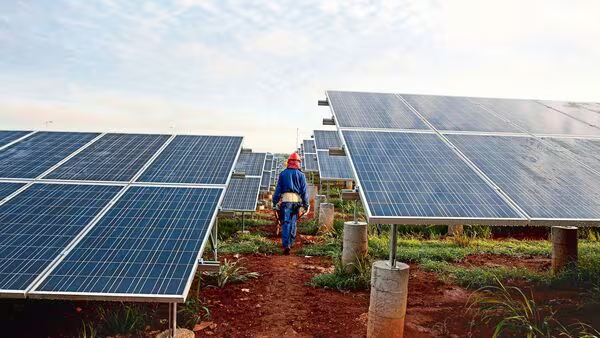

India’s first integrated solar ingot wafer plant in Andhra Pradesh appears early because this article explains how the facility could reshape domestic manufacturing and influence solar panel prices nationwide as India pushes aggressively toward renewable energy independence.
The plant marks a crucial milestone. Until now, India relied heavily on imported wafers and cells, especially from China, which increased input costs and restricted pricing control for panel manufacturers. A domestic integrated facility changes cost structures, supply chain stability and long term pricing trends.
Why Domestic Ingot Wafer Production Matters For India’s Solar Goals
Secondary keyword: solar manufacturing India
Solar panel manufacturing involves multiple stages. Ingot and wafer production is the most capital intensive part and has been India’s weakest link. With the new plant operational in Andhra Pradesh, India begins building upstream capability that supports cell and module makers.
Domestic wafer availability reduces dependence on imports and shortens supply chains. Manufacturers will not need to wait for international shipping cycles or deal with fluctuating global prices. This strategic shift strengthens India’s goal of reaching high domestic content in solar modules outlined in national renewable programs.
Local production also ensures quality consistency, which has been a long standing demand from project developers who require reliable modules for utility scale solar farms.
How The Plant Could Reduce Solar Panel Prices Nationwide
Secondary keyword: solar panel price impact
Wafers account for a significant portion of the cost of a solar panel. When wafers are imported, prices are influenced by global commodity cycles, logistics fees, foreign exchange fluctuations and geopolitical barriers. A domestic ingot wafer plant removes several of these cost layers.
Lower input costs lead to reduced panel manufacturing costs. This can gradually bring down the retail price of solar modules for residential, commercial and agricultural users. Developers bidding for large solar projects may also lower tariffs due to improved pricing certainty.
However, the price reduction will not be immediate. As production scales and the plant achieves consistent output, cost benefits will gradually reflect across supply chains. The impact will likely be visible over the next few years.
Boost For India’s Solar Manufacturers And Export Ambitions
Secondary keyword: solar industry competitiveness
Indian solar manufacturers have struggled to compete globally because they import key components. By adding upstream capabilities, the new plant improves competitiveness and gives manufacturers greater control over product specifications.
This also supports India’s efforts to build a full solar value chain domestically. With ingot and wafer production established, India can aim to produce globally competitive modules and reduce reliance on duty protections.
The facility may also open export opportunities. Countries looking to diversify away from China need alternative supply chains, and India is well positioned to fill part of this gap if capacity expands.
Impact On Rooftop Solar Adoption In Residential And Rural Markets
Secondary keyword: rooftop solar affordability
Lower panel prices directly influence adoption. Households, small businesses and farms often delay installation due to upfront costs. With domestic wafers lowering module costs over time, rooftop solar becomes more financially attractive.
Agricultural users who install solar pumps or small off grid systems will benefit significantly. Lower equipment costs shorten payback periods, encouraging faster adoption across rural India.
Government subsidy schemes become more effective when baseline prices fall. The combination of domestic manufacturing and fiscal incentives can accelerate India’s rooftop solar target.
Job Creation And Regional Industrial Growth In Andhra Pradesh
Secondary keyword: renewable energy jobs
The integrated plant creates skilled and semi skilled jobs in material processing, engineering, quality control and logistics. Regional educational institutes may introduce specialised training programs to supply the workforce required.
Ancillary industries such as glass processing, chemical supplies and equipment servicing may grow around the facility. This positions Andhra Pradesh as a manufacturing hub within the national renewable energy ecosystem.
The plant also signals investor confidence, encouraging further industrial investments in the region.
Challenges That May Influence Price Stability
Secondary keyword: solar supply chain risks
While the plant is a major milestone, key challenges remain. Ingot wafer production requires consistent raw material quality, high purity polysilicon and strong process efficiency. If raw material input costs rise, panel prices will not fall as sharply as projected.
Energy requirements for manufacturing are significant. Electricity costs or supply disruptions could affect overall production expenses. Additionally, scaling to compete with global wafer suppliers will take time.
Manufacturers must ensure technology compatibility between domestic wafers and high efficiency cell designs such as TOPCon or heterojunction cells. Misalignment could limit early adoption.
Long Term Implications For India’s Renewable Energy Leadership
Secondary keyword: renewable independence India
The plant strengthens India’s position in the global renewable market. Domestic production supports energy security, stabilises project costs and enables long term planning for solar developers. It reduces vulnerability to global supply shocks and contributes to national climate targets.
As more integrated facilities become operational, India can gradually transition from a module assembly economy to a full spectrum solar manufacturing nation. This transformation shifts the country from import dependence to technological self reliance.
Takeaways
Domestic ingot wafer production reduces India’s reliance on imported solar components
Lower input costs may gradually bring down solar panel prices nationwide
The plant boosts competitiveness, job creation and upstream industrial growth
Long term renewable independence strengthens India’s energy security and export potential
FAQs
Will solar panel prices drop immediately after the plant becomes operational
Not immediately. Prices will decline gradually as production scales and supply chains stabilise.
Does this plant make India fully self reliant in solar manufacturing
It is a major step but full self reliance requires expansion in polysilicon, cells and other components.
Which sectors will benefit most from lower panel prices
Rooftop solar users, small businesses, farmers and residential consumers will see the largest gains.
Can India become a global solar exporter
Yes, if upstream capacity expands and manufacturing matches global efficiency standards.