
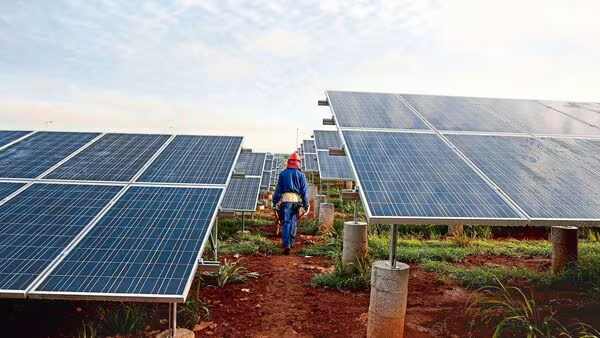

Solar powered agriculture pumps under Maharashtra’s Magel Tyala Saur Krushipump scheme are reshaping farm life in semi urban and rural zones by reducing electricity dependency, improving water access and lowering operational costs. For agrarian households facing irregular power supply, the scheme offers stability and long term economic benefits.
Why solar pumps matter for farmers in Maharashtra
Many farmers in Maharashtra rely on electric or diesel pumps to irrigate fields. Power cuts, voltage drops and high fuel expenses often reduce crop yields and increase uncertainty. Solar agriculture pumps provide a consistent water source without depending on the grid. The Magel Tyala Saur Krushipump scheme aims to subsidise these pumps so small and mid sized farmers can adopt them without prohibitive upfront costs.
Solar pumps give farmers control over irrigation timing. Early morning watering, drip irrigation cycles and multi crop practices become easier because pumping schedules no longer depend on grid availability. This flexibility improves agricultural productivity and reduces the strain of waiting for power during critical crop stages.
How the scheme supports households through subsidies and structured rollout
The scheme offers financial support covering a major portion of the pump cost. Farmers usually contribute a smaller share while the government covers the rest. This structure ensures affordability for low income households. The scheme prioritises farmers without reliable electricity connections, giving them an alternative that reduces long term spending on diesel.
Applications are processed through local agriculture offices and the power utility, allowing officials to verify land ownership, water source availability and pump requirements. Once approved, pumps are installed by authorised vendors. This structured rollout ensures consistent quality and post installation service.
Farmers also receive training on using and maintaining pumps, which helps prevent breakdowns. The focus on standardised procurement reduces the risk of substandard installations that could damage equipment or deliver poor performance.
Daily farm operations become more predictable and efficient
Water availability becomes stable once solar pumps are installed. Farmers no longer depend on erratic electricity supply windows or night time pumping schedules. This shift enables systematic irrigation based on crop requirements. For horticulture, vegetables and sugarcane, consistent irrigation improves yield quality and reduces water stress.
Women in farming households experience direct benefits as well. In many regions, women manage irrigation when men engage in off farm work. Solar pumps reduce the physical effort required to carry water or operate manual pumps. Time saved is often used for household management or supplementary income activities.
Farmers practising micro irrigation systems such as drip or sprinkler setups gain further efficiency. Solar pumps deliver steady pressure, improving the performance of these systems and reducing water wastage.
Cost savings create long term financial stability
Diesel pumps are expensive to operate. Fuel price fluctuations and transport costs add financial strain. Grid powered pumps do not incur fuel expenses but expose farmers to unpredictable supply and voltage damage. Solar pumps eliminate both issues. After installation, operational costs are minimal.
Over several seasons, savings accumulate. Farmers can redirect funds toward seed quality, fertilisers, machinery or livestock. Reduced dependency on borrowed capital for diesel expenses improves financial health. For small farmers operating on tight margins, these savings reduce risk and increase resilience.
The scheme also contributes indirectly to lower maintenance costs. Solar pumps designed for rural use require infrequent servicing. Vendors trained under the scheme handle repairs, ensuring continuity.
Environmental benefits support long term sustainability
Solar irrigation reduces reliance on fossil fuels and lowers carbon emissions. For regions facing groundwater stress, solar pumps can be paired with regulated irrigation systems to reduce over extraction. Because pumping hours depend on sunlight, excessive pumping becomes naturally limited, encouraging sustainable water use.
Many farmers report improved soil structure due to more consistent irrigation. Controlled pumping prevents waterlogging and reduces nutrient leaching. Over time, this improves soil fertility and crop performance.
Renewable energy adoption at the farm level also strengthens Maharashtra’s broader clean energy goals. Distributed solar systems reduce demand on rural power infrastructure, allowing utilities to manage loads better.
Social and community level transformation in semi urban and rural zones
The presence of solar pumps influences more than individual farms. Neighbouring farmers observe performance and gradually adopt the technology, creating clusters of clean energy based irrigation. Communities experience reduced noise and air pollution compared to diesel pumps.
Local businesses benefit too. Vendor networks, maintenance technicians and solar component suppliers see increased demand. Youth in rural areas explore training opportunities in solar installation and maintenance, creating new employment paths.
Women’s self help groups participate in awareness programmes and sometimes manage community owned solar pumps. This collective management model supports equitable water distribution and strengthens community cohesion.
Challenges farmers still face despite the scheme’s success
While benefits are clear, some challenges remain. Delays in application approvals or installation may affect farmers who need immediate irrigation support. In areas with high water table decline, solar pumps may deliver limited output unless wells are deepened. Cloudy weather during monsoon reduces solar generation, though many farmers combine solar pumps with storage tanks to counter this.
Maintenance gaps occur when farmers rely on unauthorised mechanics. Ensuring access to certified technicians remains important. Financing the farmer’s contribution can also be difficult for low income households without credit support.
Long term outlook for solar powered irrigation in Maharashtra
The scheme is likely to expand further as demand increases and solar technology becomes more efficient. Battery backed systems and hybrid controllers may allow pumping during low sunlight hours. Integration with smart irrigation sensors could improve water management.
As more farmers adopt solar pumps, dependence on grid supply will reduce, easing pressure on rural electricity networks. Over time, solar powered irrigation can reshape agricultural sustainability across the state.
Takeaways
Solar pumps provide predictable irrigation and reduce dependence on unreliable grid supply
Subsidies under the scheme make clean energy irrigation accessible for small farmers
Cost savings improve financial stability and enable better farm planning
Community adoption creates environmental and economic benefits in rural zones
FAQs
Can solar pumps work during cloudy weather
Output may reduce, but pumps often continue operating at lower capacity. Many farmers store water in tanks to manage short dips.
Are solar pumps suitable for deep borewells
Yes, but appropriate pump capacity must be selected. Assessment by authorised vendors ensures correct sizing.
Do farmers need technical skills to maintain solar pumps
Basic maintenance is simple, and vendors provide training. Most systems require periodic cleaning and occasional checks.
Is the scheme available to farmers with existing electricity connections
Yes, though priority is often given to farmers with unreliable or no grid supply.