
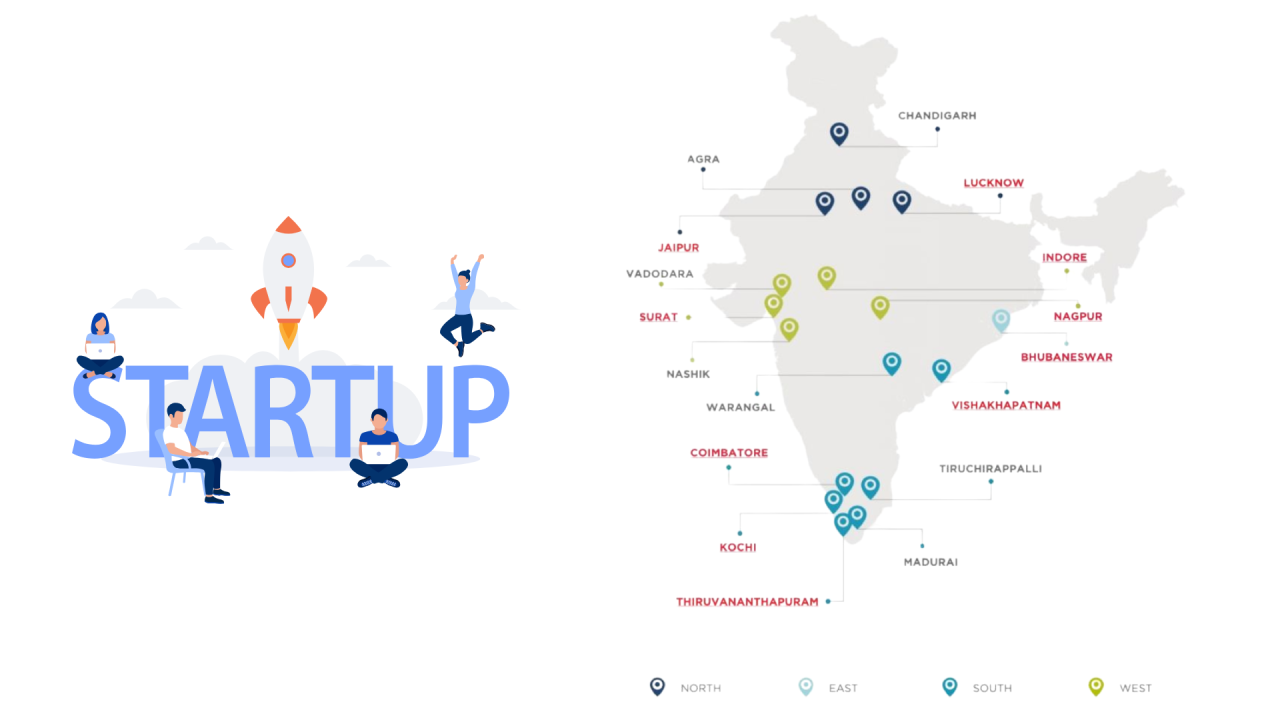

India’s AI push, supported by new national initiatives including an ISRO-guided innovation program, creates a major window for Tier 2 startups. The main keyword Tier 2 startup AI push is essential here because smaller city founders now have a clearer pathway to adopt, build and scale AI driven products without relying on metro-level infrastructure or networks.
The intent of this topic is informational with current relevance, so the tone remains analytical with news-aware depth. This guide breaks down how Tier 2 founders can align their strategy with India’s accelerating AI ecosystem and benefit from early-stage opportunities.
Understand the opportunity created by India’s AI acceleration
India’s AI vision focuses on local innovation, affordable adoption and sector specific applications. The new ISRO-guided AI initiative emphasises engineering problem solving, computational efficiency and indigenous development. For Tier 2 startups this shift is significant because it validates the idea that world class tech can now be built from smaller towns with the right support.
Startups from Tier 2 regions such as Coimbatore, Indore, Nagpur, Bhubaneswar or Jaipur already have strengths in manufacturing services, agri value chains, mobility, edtech and health delivery. AI adoption allows them to automate low value tasks, reduce manpower constraints and build scalable systems suitable for national markets. Understanding the national context helps founders make strategic choices in product design, hiring and partnerships.
Identify practical use cases aligned with local strengths
To benefit from India’s AI push, startups should map AI use cases that solve clear local problems rather than attempting overly complex general models. In Tier 2 cities, the most relevant applications fall into five zones:
- SME automation such as invoicing, workflow orchestration or inventory prediction
- Computer vision for retail, agriculture, quality checks and small factories
- Predictive analytics for logistics, transport fleets or repair workshops
- AI assisted tutoring and local language learning tools
- Healthcare triage, appointment management or diagnostics support
The ISRO-guided model of engineering discipline emphasises precision, reliability and resource efficiency. Tier 2 startups should therefore build narrow models that deliver consistent outputs rather than broad general AI systems. This approach reduces compute cost and speeds up product cycles.
Build AI readiness inside the team with lean resources
Most Tier 2 startups cannot hire large AI teams. Instead they should build AI readiness by training existing engineering or operations staff. Short technical modules, government supported skilling programs and open toolkits give teams enough capability to handle early integration.
Founders should focus on four internal capabilities:
- Basic AI workflow understanding (data input, model output, quality control)
- Integration with existing tools such as CRM, ERP or IoT sensors
- Ability to manage data hygiene and labeling for small datasets
- Comfort with using cloud based AI platforms that do not need heavy infrastructure
This readiness matches the principle behind India’s national AI efforts: lowering barriers to entry so smaller organisations can participate in high value innovation.
Position the startup with partnerships and ecosystem links
Positioning for India’s AI push requires alignment with institutions and partners. Tier 2 startups can leverage engineering colleges, incubation centres, district innovation hubs and state IT departments. Many smaller cities already operate centres of excellence or host technical universities with strong computing talent.
Partnerships with manufacturing units, hospitals, logistics operators or local government bodies can help startups gather high quality operational data. Good data beats large data for most narrow AI models. This gives Tier 2 founders an advantage because they can access domain friction points faster than metro based founders.
Engaging with national level hackathons, ISRO related innovation challenges or government AI missions strengthens credibility and visibility for funding opportunities.
Use AI to strengthen business fundamentals, not replace them
Startups should apply AI to reinforce business basics: cost, speed, accuracy and scale. For example an agri supply chain startup can use AI for crop classification or demand prediction to reduce wastage. A mobility startup can automate route planning and reduce driver downtime. A D2C manufacturing founder can use AI models to estimate production quality or machine downtime.
The most effective positioning strategy is to build AI enhanced products that remain accessible to India’s middle market. Tools that solve real operational problems outperform tools that chase hype.
Invest in compliance, transparency and responsible adoption
India’s AI direction emphasises safe, responsible and transparent deployment. Tier 2 startups must maintain data policies, user transparency and ethical guardrails. Simple practices such as disclosing AI assisted decisions, keeping audit trails and respecting user privacy help avoid compliance risks.
These guardrails also build trust among Indian consumers, who expect reliability over experimentation. Startups that embed responsible AI early gain long term advantage as regulations evolve.
Build for scale through modularity and resource efficiency
The ISRO-aligned philosophy stresses efficient engineering. For startups this means building modular AI systems that can run on lower compute, edge devices or cloud lite platforms. Such systems scale better in Tier 2 markets where network conditions or hardware budgets may vary.
Modular AI also allows rapid iteration, cost control and easier deployment across multiple industries or cities.
Takeaways
Focus on narrow, high impact AI use cases tied to Tier 2 strengths
Build small internal AI capabilities instead of chasing large teams
Partner with local institutions to access quality data and domain problems
Adopt responsible, resource efficient AI systems aligned with India’s national direction
FAQs
Do Tier 2 startups need dedicated AI engineers to begin?
Not immediately. Founders can start with cloud AI tools and train existing staff while gradually hiring specialists for advanced stages.
Which sectors in Tier 2 cities benefit most from AI early?
Agriculture, healthcare, logistics, education and manufacturing services offer immediate use cases with measurable ROI.
How can startups align with India’s AI initiatives?
By participating in national challenges, partnering with technical institutions and adopting responsible AI design principles that match policy direction.
Is AI adoption expensive for smaller startups?
Modern AI platforms allow low-cost entry. The main cost lies in building consistent workflows and maintaining good data quality.