
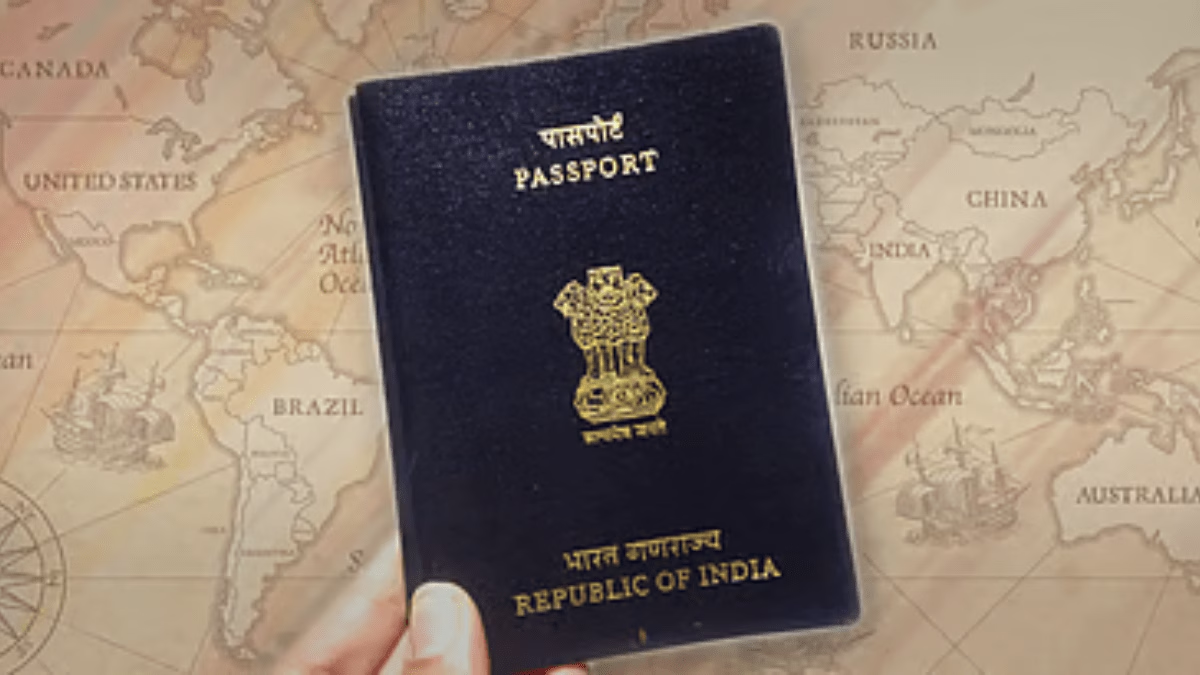

India has started expanding the e-passport system with embedded chip technology to improve security and streamline international travel. The new passport format is gradually replacing traditional passports and can be applied for through the same online process used by the Passport Seva system.
India’s e-passport application process in 2026 follows the existing passport application framework but introduces a chip-based booklet designed to enhance security and reduce the chances of tampering. The rollout is being done in phases across multiple Passport Seva Kendras and Regional Passport Offices.
What Is an e-Passport and Why India Is Introducing It
An e-passport is a biometric passport that contains a small electronic chip embedded inside the booklet. This chip stores the passport holder’s personal and biometric details such as name, date of birth, photograph, and passport number.
The chip is protected with advanced digital encryption and is designed to comply with international aviation standards set by global civil aviation authorities. Immigration systems at airports can scan the chip electronically, allowing faster verification and improved border control.
The Indian government began introducing e-passports to strengthen passport security and reduce identity fraud. Many countries already use similar electronic passports. With the new system, Indian travellers will experience quicker immigration clearance in countries that support automated passport scanning.
The introduction of the biometric e-passport in India also improves international acceptance and aligns the country with global travel security standards.
Documents Required for e-Passport Application
The documents required for an Indian e-passport application remain largely the same as those required for a regular passport. Applicants must submit identity, address, and date of birth proof.
Commonly accepted documents include:
Proof of identity such as Aadhaar card, PAN card, voter ID, or driving licence.
Proof of address such as Aadhaar card, electricity bill, bank passbook, or rental agreement.
Date of birth proof such as birth certificate, school leaving certificate, or PAN card.
Passport size photographs are generally captured digitally during the appointment at the Passport Seva Kendra, so applicants usually do not need to bring printed photos.
In some cases, additional documents may be required depending on the applicant category, such as government employees, minors, or individuals applying under the Tatkal scheme.
Online Process to Apply for an e-Passport
The online e-passport application process in India is handled through the Passport Seva portal. The steps are similar to applying for a standard passport.
First, create an account on the Passport Seva website using a valid email address. After registration, log in and choose the option to apply for a fresh passport or passport reissue.
Next, fill out the online application form with personal details, address information, family details, and emergency contact information. It is important to ensure that all information matches official documents.
Once the form is completed, applicants must pay the passport application fee online using net banking, debit card, credit card, or UPI.
After payment, schedule an appointment at the nearest Passport Seva Kendra or Post Office Passport Seva Kendra. On the appointment date, applicants must visit the centre with original documents for verification and biometric data collection.
The passport office then processes the application and initiates police verification if required. Once approved, the chip-enabled e-passport booklet is printed and dispatched to the applicant’s address.
Passport Fees for e-Passport in 2026
The passport application fee in India has not significantly changed with the introduction of e-passports.
Typical fees include:
Fresh passport with 36 pages and 10-year validity for adults generally costs around ₹1,500.
Tatkal passport processing usually costs around ₹3,500 including expedited service charges.
Minor passports and short validity passports have lower fees.
Since the e-passport replaces the standard booklet without requiring a separate upgrade fee, applicants typically pay the same government fee structure.
When You Will Receive an e-Passport
The rollout of e-passports is happening gradually across different passport offices in India. Applicants applying for new passports or passport renewals in certain regions may automatically receive the electronic passport booklet instead of the traditional version.
Existing passports remain valid until their expiry date. Travellers do not need to replace their current passport immediately unless they are applying for renewal.
As more Passport Seva Kendras adopt the technology, the chip-enabled passport will become the standard passport issued across the country.
Takeaways
India is introducing e-passports with embedded chips to improve travel security and prevent document tampering.
The application process remains the same as the regular passport system through the Passport Seva portal.
Applicants must submit identity, address, and date of birth proof during the verification process.
E-passports are being rolled out gradually and will eventually replace traditional passport booklets.
FAQs
What is the main difference between a passport and an e-passport?
An e-passport contains an electronic chip that securely stores the holder’s personal and biometric information for digital verification.
Do I need to reapply if I already have a valid passport?
No. Existing passports remain valid until their expiry date and do not need to be replaced immediately.
Is the application process different for an e-passport?
No. The process is the same as applying for a regular passport through the Passport Seva website.
Will e-passports make airport immigration faster?
Yes. Countries with electronic passport readers can process travellers more quickly using automated verification.