
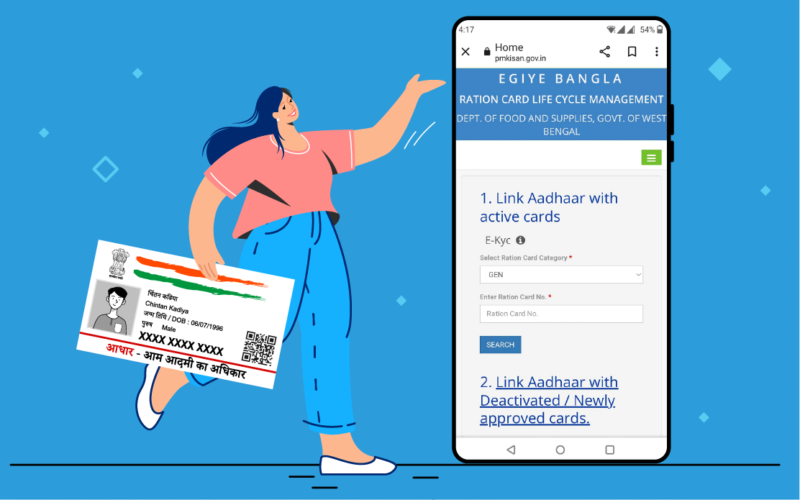

Applying for a digital ration card in 2026 has become simpler with state governments digitizing public distribution services. This guide explains the updated online process, required documents, and key steps to ensure a smooth application without errors or delays.
The process to apply for a digital ration card online in 2026 is now fully streamlined across most Indian states under the National Food Security framework. With increasing digitization, applicants can submit forms, upload documents, and track status without visiting government offices. This shift is especially relevant for Tier-2 and Tier-3 residents where access to local offices can be inconsistent.
Understanding Digital Ration Card Eligibility and Types
Before starting the application, it is important to understand eligibility criteria. Digital ration cards are issued to households based on income and socio-economic status. The main categories include Priority Household cards and Antyodaya Anna Yojana cards.
Applicants must be Indian citizens and should not already hold another ration card in any state. Aadhaar linkage is mandatory in most states to prevent duplication. State portals now auto-verify data with Aadhaar and other government databases, reducing manual verification delays.
For urban and semi-urban applicants, income certificates and proof of residence play a critical role. In rural areas, local authority verification may still be part of the process.
Documents Required for Online Ration Card Application
Having the correct documents ready significantly reduces rejection chances. Most state portals ask for scanned copies or clear photos of essential documents.
Key documents include Aadhaar cards of all family members, proof of residence such as electricity bill or rental agreement, income certificate, and passport-sized photographs. Some states also request bank account details for subsidy transfers.
Mobile number linkage is crucial because OTP-based verification is used at multiple stages. Errors in Aadhaar or mismatched details are among the most common reasons for application delays.
Step-by-Step Process to Apply Online in 2026
The application process is largely similar across states, though portals may differ slightly in interface.
Start by visiting your state’s Food and Civil Supplies Department website. Look for the option to apply for a new ration card or digital ration card.
Create a user account using your mobile number and verify it through OTP. Once logged in, fill out the application form with details of the head of family and all members. Ensure names match Aadhaar records exactly.
Upload required documents in the specified format. Most portals now accept JPEG and PDF formats with size limits. After uploading, review the application carefully before submission.
Pay any applicable processing fee online. Not all states charge a fee, but where applicable, it is usually minimal.
After submission, you will receive an application reference number. This number is essential for tracking status and future communication.
Tracking Application Status and Verification Process
Once submitted, the application goes through verification stages. This may include digital verification through Aadhaar and physical verification by local authorities.
Applicants can track status on the same portal using the reference number. Updates such as under review, verification pending, or approved are displayed in real time.
In many states, approved digital ration cards are issued as downloadable PDFs. Physical cards may still be delivered in some regions, but digital versions are now widely accepted at fair price shops.
Delays usually occur due to incorrect documents or mismatched data. Ensuring accuracy at the time of submission reduces follow-ups.
Common Mistakes to Avoid During Application
A major issue applicants face is inconsistency in personal details. Even minor spelling differences between Aadhaar and application forms can lead to rejection.
Uploading unclear or incorrect documents is another frequent problem. Always check file clarity and ensure documents are valid and up to date.
Avoid multiple applications from the same household. Duplicate entries are automatically flagged by the system, which can delay processing for all members.
Finally, always keep your registered mobile number active. Most updates and approvals are communicated through SMS alerts.
Benefits of Digital Ration Card System in 2026
The shift to digital ration cards has improved transparency and accessibility. Beneficiaries can access their details online, update family information, and even use portability features under the One Nation One Ration Card scheme.
For migrant workers and families in Tier-2 cities, this means access to subsidized food grains across different states without reapplying.
Digital systems also reduce corruption and manual errors, ensuring that subsidies reach the intended beneficiaries more efficiently.
Takeaways
- Digital ration card applications are now fully online in most states
- Accurate Aadhaar-linked details are critical for approval
- Tracking status online reduces dependency on local offices
- Digital cards are widely accepted and support portability across India
FAQs
Q1. Is Aadhaar mandatory for digital ration card application in 2026?
Yes, most states require Aadhaar linkage for all family members to ensure identity verification and prevent duplication.
Q2. How long does it take to get a digital ration card approved?
Typically, it takes 7 to 30 days depending on the state and verification process.
Q3. Can I apply for a ration card without visiting any office?
Yes, in most states the entire process including submission and tracking can be completed online.
Q4. What should I do if my application is rejected?
Check the rejection reason on the portal, correct the errors, and reapply with accurate documents.