

The Startup India initiative supports new businesses through tax benefits, funding support, and easier compliance rules. Entrepreneurs in 2026 can apply online through the official Startup India portal to access government schemes, recognition certificates, and funding opportunities.
Understanding Startup India and Its Benefits for Entrepreneurs
Startup India benefits have become an important support system for entrepreneurs launching new businesses in India. Introduced by the Government of India in 2016, the Startup India initiative was designed to encourage innovation, promote entrepreneurship, and simplify regulations for emerging companies.
Through this initiative, startups can receive government recognition, tax exemptions, access to funding schemes, and easier compliance procedures. Many new businesses across technology, manufacturing, agriculture, education, and service sectors have used these benefits to scale operations.
The government also supports startups through incubation centers, mentorship programs, and industry partnerships. One of the major components of the initiative is the Fund of Funds for Startups managed through financial institutions, which helps channel capital into eligible startups.
Entrepreneurs in Tier 2 and Tier 3 cities are increasingly using the Startup India platform to formalize their ventures and gain access to national funding networks.
Eligibility Criteria for Startup India Recognition
Before applying for Startup India benefits, businesses must meet certain eligibility conditions defined by the Department for Promotion of Industry and Internal Trade.
The company must be registered as a private limited company, limited liability partnership, or partnership firm. Sole proprietorship businesses are not eligible under the official Startup India recognition program.
Another important requirement is that the startup must be less than ten years old from the date of incorporation. In addition, the annual turnover of the business should not exceed ₹100 crore in any financial year since incorporation.
The startup should also be working toward innovation, product development, technological improvement, or a scalable business model that creates employment or wealth generation.
Companies that are formed by splitting or restructuring existing businesses are not eligible under the scheme.
Meeting these eligibility conditions allows startups to apply for official recognition and access government benefits.
Step by Step Process to Apply on the Startup India Portal
Entrepreneurs who meet the eligibility criteria can apply online through the official Startup India portal. The entire process is digital and typically takes only a few steps.
The first step is to register the business legally. Founders must incorporate their company with the Ministry of Corporate Affairs or register it as an LLP or partnership firm.
Once the company is registered, entrepreneurs need to create an account on the Startup India portal using basic details such as email address, phone number, and business information.
After creating the account, applicants must fill the recognition form. This form requires details about the business, including industry sector, innovation aspects, product or service description, and the stage of the startup.
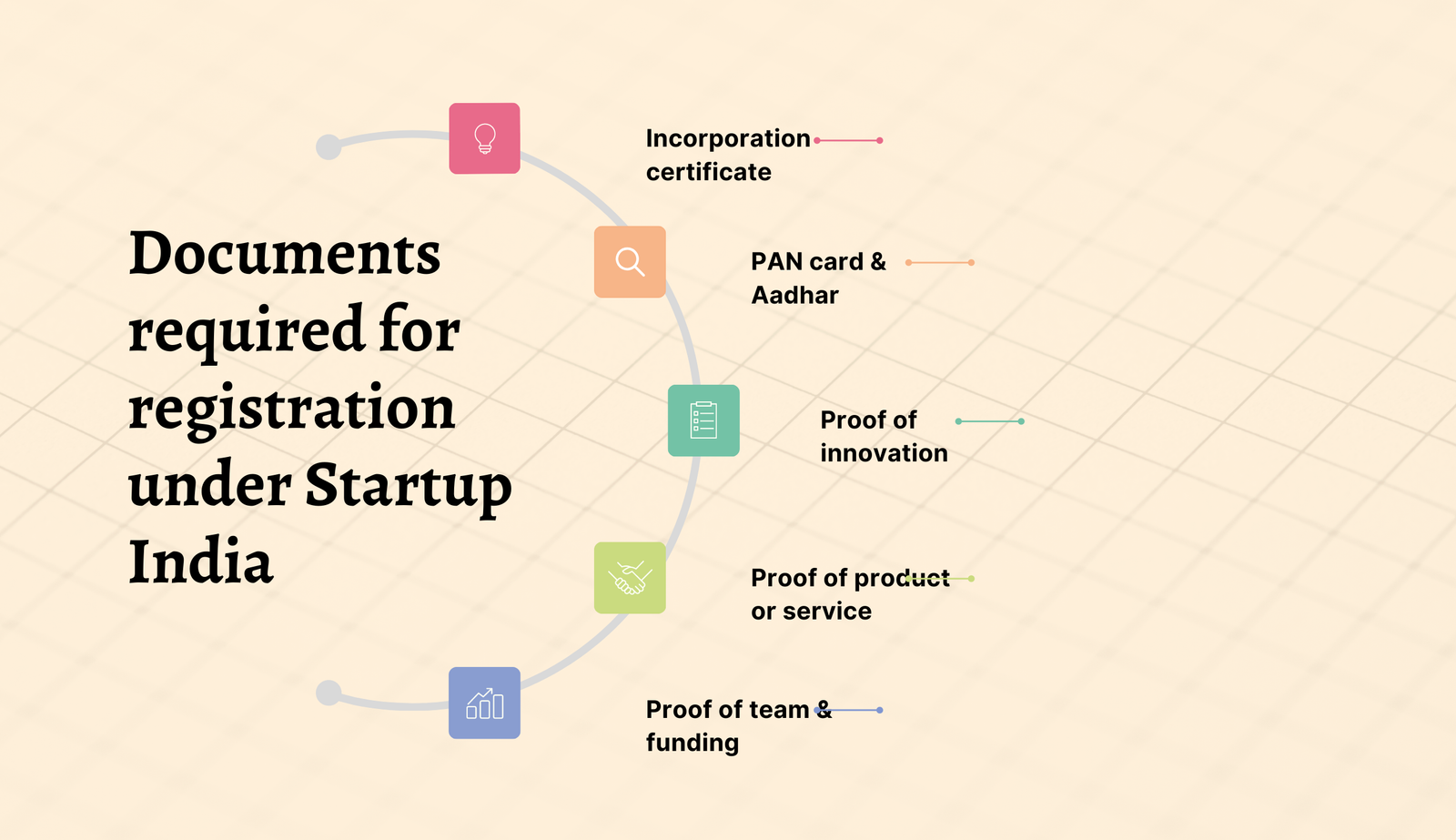
Applicants must also upload documents such as the certificate of incorporation and a brief explanation of the innovative nature of the business. Supporting documents or pitch decks can strengthen the application.
Once submitted, the application is reviewed by the concerned authorities. If approved, the startup receives official recognition and can begin applying for various Startup India benefits.
Government Funding Schemes Available for Startups
One of the most attractive aspects of the Startup India initiative is access to funding support through government backed programs.
The Fund of Funds for Startups is a major funding mechanism created by the government. Instead of directly investing in startups, this fund provides capital to venture capital firms that invest in eligible startups.
Another funding support mechanism is the Startup India Seed Fund Scheme. This scheme helps early stage startups cover expenses related to product development, prototype creation, and market entry.
Startups can also benefit from credit guarantee programs that make it easier for new businesses to obtain loans without large collateral requirements.
Several state governments in India have also launched their own startup policies, offering grants, incubation support, and innovation incentives for businesses operating in their regions.
Tax Benefits and Compliance Advantages Under Startup India
Recognized startups can access certain tax exemptions that help reduce financial pressure during the early stages of business growth.
Eligible startups may receive income tax exemption for three consecutive financial years under specific conditions. This benefit allows founders to reinvest profits into expanding their businesses.
Startups may also benefit from exemptions on capital gains under certain circumstances if the gains are reinvested into eligible startup investments.
Another advantage is simplified compliance procedures. Startups recognized under the initiative receive support through easier regulatory filings, faster patent processing, and reduced inspection requirements for certain labor and environmental laws.
These benefits aim to reduce administrative burdens so entrepreneurs can focus more on building their products and services.
Takeaways
• Startup India allows eligible businesses to receive recognition, tax benefits, and funding support from the government
• Startups must be registered companies with less than ten years of operation and turnover below ₹100 crore
• Applications for Startup India recognition are submitted online through the official Startup India portal
• Funding options include the Fund of Funds for Startups and the Startup India Seed Fund Scheme
FAQ
What is the Startup India initiative
Startup India is a government program launched to support innovation and entrepreneurship through tax benefits, funding schemes, and regulatory simplification.
Who can apply for Startup India recognition
Businesses registered as private limited companies, LLPs, or partnership firms that meet the eligibility criteria related to age, turnover, and innovation can apply.
How long does Startup India recognition take
Applications are usually reviewed within a few weeks after submission, provided all required documents are correctly uploaded.
Do startups receive direct funding from the government
Most government funding is provided through venture capital funds or seed funding schemes rather than direct grants to all startups.