
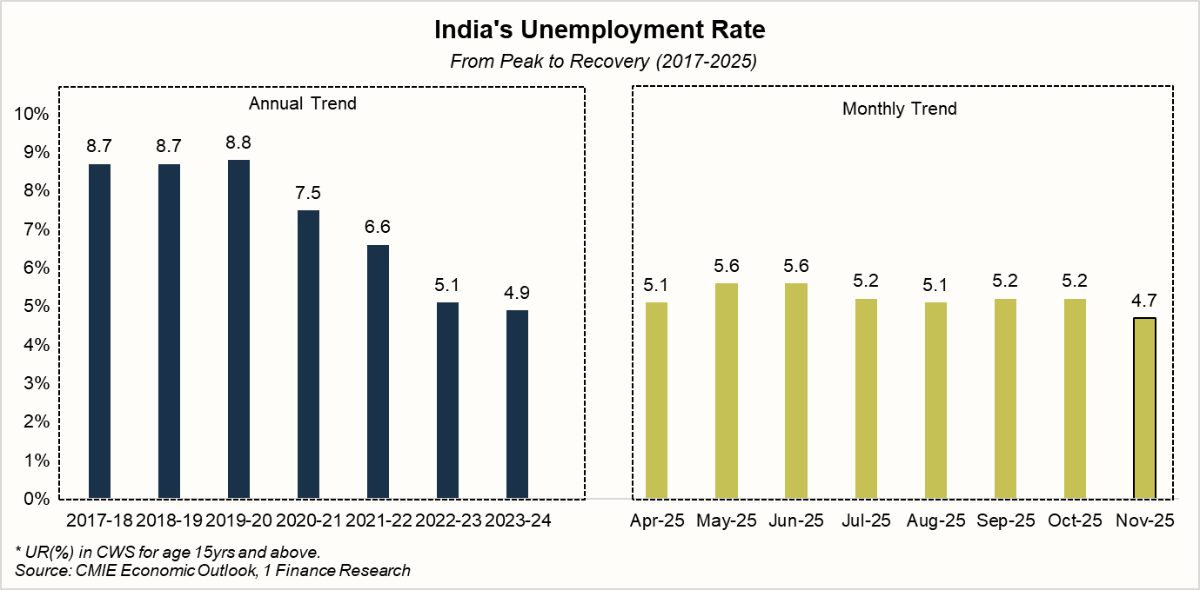

India is preparing to publish city level unemployment data through a new government labour survey. This will allow citizens, researchers, and job seekers to see employment trends in specific cities rather than only national averages. Understanding how to access and interpret this data will help people track local job markets more accurately.
India’s unemployment data has traditionally been released through nationwide surveys, mainly the Periodic Labour Force Survey. With the new government initiative to release city level unemployment data, users will soon be able to track employment conditions across dozens of major urban centres. This change is expected to give clearer insights into local labour markets and help policymakers understand regional job trends.
Why India Is Introducing City Level Unemployment Data
For years, unemployment statistics in India were largely available at the national or state level. While this data helped identify broad labour market patterns, it often failed to capture the realities of individual cities where job conditions vary significantly.
Under the new initiative, government agencies plan to publish unemployment statistics for selected cities through an expanded labour survey system. This move is designed to improve transparency in labour market reporting and provide a more granular view of employment trends.
Cities such as Jaipur, Surat, Coimbatore, Lucknow, Nagpur, and Indore have rapidly growing economies. However, their employment trends can differ widely based on industry presence, migration patterns, and local economic activity. City level unemployment data will help analysts compare job availability across these urban centres.
For job seekers, students, and policymakers, this means better visibility into where job opportunities are growing and where labour markets are tightening.
Where the New Unemployment Data Will Be Published
When the survey launches, the city level unemployment data will primarily be available through official government statistical platforms.
The most important source will be the Ministry of Statistics and Programme Implementation (MOSPI) website, which currently releases the Periodic Labour Force Survey reports. Once the expanded dataset becomes available, users will likely find city level tables and downloadable reports under labour and employment statistics sections.
Another important platform is the National Sample Survey portal, which publishes survey-based labour data. Researchers and analysts often use this database to access detailed datasets.
Government open data portals may also host city level unemployment indicators, allowing users to download spreadsheets or explore dashboards that display employment trends across different urban areas.
Step by Step Process to Check City Level Unemployment Data
Checking unemployment statistics for a specific city will typically involve a few simple steps once the survey results are published.
First, visit the official statistics portal where labour survey reports are uploaded. Look for sections related to employment statistics or labour force surveys.
Second, locate the latest survey report or dataset. These reports usually contain several tables that break down labour market indicators by region.
Third, identify the table that lists unemployment rates by city. In most cases, the report will categorize cities by population size or metropolitan region.
Fourth, review key indicators such as unemployment rate, labour force participation rate, and worker population ratio. These indicators help explain how many people are actively looking for jobs and how many are employed.
Finally, download the dataset if you need deeper analysis. Researchers often use spreadsheet tools to compare unemployment data across cities over time.
How to Interpret City Level Employment Trends
Understanding unemployment statistics requires looking beyond the headline number. A city with a higher unemployment rate does not always mean fewer job opportunities. Sometimes it indicates that more people are actively seeking work.
Labour force participation rate is another important metric. If participation increases alongside unemployment, it may mean more people are entering the job market rather than a collapse in employment.
City level unemployment data also needs to be interpreted alongside economic context. Industrial cities may experience fluctuations based on manufacturing cycles, while technology hubs may show different employment patterns.
Comparing multiple indicators across different quarters or years helps reveal whether unemployment trends are temporary or part of a longer economic shift.
Why City Level Data Matters for Job Seekers and Policymakers
More detailed labour market data helps multiple groups make better decisions. Job seekers can identify cities with stronger employment growth and better career prospects.
Local governments can use unemployment trends to design targeted skill development programs or attract industries that generate employment.
Businesses planning expansion can also use labour statistics to understand workforce availability in different cities.
In the long run, city level unemployment data can help India build more balanced regional development by highlighting areas that require additional economic support.
Takeaways
• City level unemployment data will offer more detailed insights into India’s labour market
• Official government statistical portals will be the primary source for accessing this data
• Users should analyze multiple indicators such as unemployment rate and labour participation
• The data will help job seekers, policymakers, and businesses make informed decisions
FAQs
When will city level unemployment data be released in India?
The data is expected to be released after the government completes the expanded labour survey. Publication will likely happen through official statistical reports and data portals.
Which website will provide city level unemployment statistics?
The Ministry of Statistics and Programme Implementation and other government statistical portals are expected to host the data.
What indicators are included in unemployment survey reports?
Common indicators include unemployment rate, labour force participation rate, worker population ratio, and employment distribution by sector.
Why is city level labour data important?
City specific employment data helps understand local job markets more clearly and supports better economic planning.