
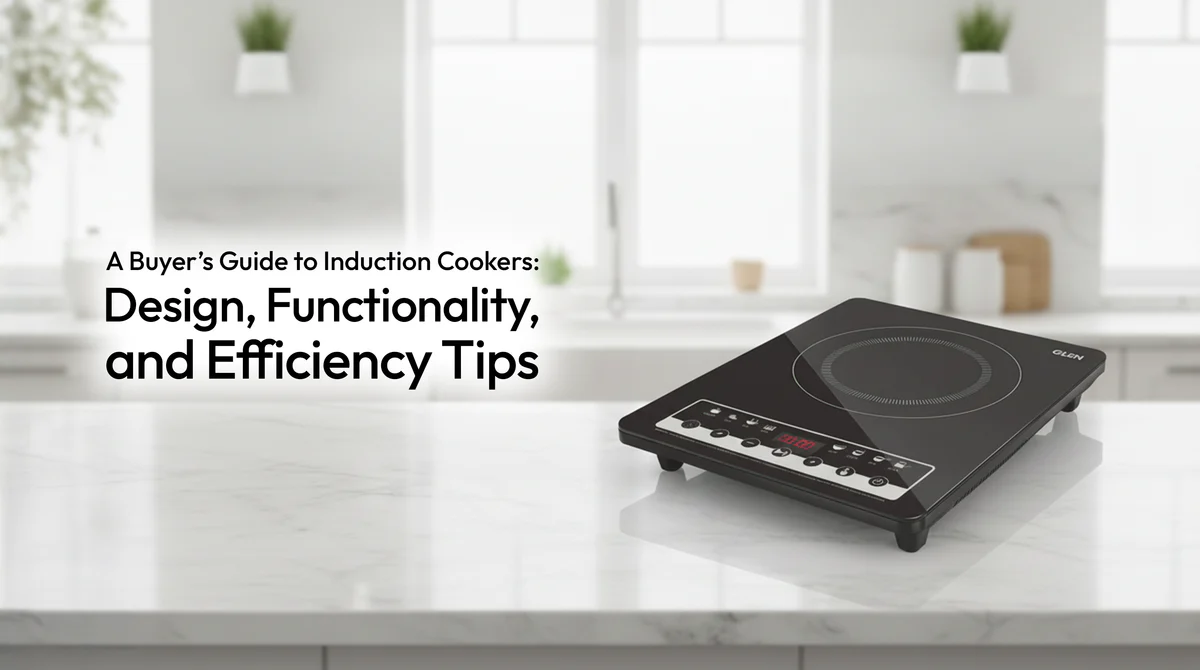

Concerns around LPG supply and rising cylinder prices are pushing many Indian households to explore electric cooking options. Choosing the right induction cooktop in India requires understanding power usage, cookware compatibility, safety features, and everyday cooking needs before making a purchase.
Why Induction Cooktops Are Gaining Popularity in India
Induction cooktops in India are becoming a practical alternative as LPG prices fluctuate and supply delays occasionally affect households. Unlike traditional gas stoves, induction cooking uses electromagnetic technology to heat cookware directly, making the process faster and more energy efficient.
This shift is particularly visible in urban apartments, hostels, and Tier 2 cities where people want a portable cooking solution. Induction cooktops also reduce indoor smoke and eliminate the need for storing gas cylinders. Many families now use them as a secondary stove during high cooking demand periods.
Another reason for growing adoption is electricity accessibility. Most Indian homes already have stable power connections, making it easier to operate induction cooktops without installing additional infrastructure.
Understanding Power Consumption and Efficiency
One of the most important factors while choosing an induction cooktop is power rating. Most models available in India range between 1200 watts and 2200 watts.
Lower power models are suitable for basic cooking tasks like boiling milk, making tea, or cooking small meals. Higher wattage models provide faster heating and are better suited for full meals that include frying, sautéing, and pressure cooking.
Many cooktops also include preset cooking modes such as dosa, curry, milk, or deep fry. These modes automatically adjust power levels to simplify cooking for beginners.
Energy efficiency is another advantage. Since heat is transferred directly to the vessel instead of the cooking surface, less electricity is wasted compared to traditional electric coils.
Cookware Compatibility Matters
Before buying an induction cooktop in India, check whether your existing utensils are compatible. Induction cooking works only with cookware made from ferromagnetic materials.
Common compatible cookware includes stainless steel and cast iron vessels. Aluminium and copper utensils typically do not work unless they have a magnetic base.
A quick way to test compatibility is by placing a magnet on the base of the utensil. If the magnet sticks firmly, the utensil will work on induction cooktops.
Many households gradually replace old cookware with induction friendly options such as induction base pressure cookers, pans, and tavas.
Safety Features to Look For
Safety is a major advantage of induction cooking technology. Modern cooktops come with multiple built in protection systems.
Auto shut off is one of the most useful features. If no utensil is detected on the cooktop surface, the device automatically switches off. This prevents overheating and reduces electricity waste.
Another feature is temperature control. Advanced models detect excessive heat and stop operation to prevent damage to internal circuits.
Child lock features are also helpful in homes with young children. This prevents accidental button presses and keeps the cooking surface safe during operation.
Portability and Kitchen Space Benefits
Induction cooktops are widely used in small apartments, rented homes, and student accommodations because they require minimal space.
Unlike traditional stoves, they do not require permanent installation. Users can simply plug the cooktop into a regular power socket and start cooking.
This portability also makes them useful during travel or temporary housing situations. Many people carry induction cooktops to hostels, PG accommodations, and office kitchens.
For households worried about LPG supply disruptions, an induction cooktop can serve as a reliable backup cooking system.
Key Buying Factors for Indian Households
When comparing induction cooktops in India, consider build quality and brand reliability. Reputable brands usually provide better temperature control and longer appliance life.
Look for models with clear digital displays and responsive touch controls. These features make cooking easier and improve overall usability.
Noise level is another small but noticeable factor. Some induction cooktops produce a fan sound during operation. Better models operate more quietly.
Finally, check warranty coverage and service network availability. Appliances with nationwide service support are easier to maintain if repairs are needed.
Takeaways
Induction cooktops are becoming popular in India due to LPG supply concerns and rising cylinder costs
Power rating between 1800 and 2200 watts is ideal for everyday Indian cooking
Compatible cookware such as stainless steel and cast iron is required for induction cooking
Safety features like auto shut off and child lock improve reliability and usability
FAQs
Do induction cooktops consume a lot of electricity in India?
Induction cooktops are generally energy efficient because they transfer heat directly to the vessel. In many cases they use less energy compared to traditional electric coil stoves.
Can induction cooktops replace LPG stoves completely?
Yes, many households use induction cooktops as their primary cooking appliance. However, some families keep LPG as a backup during power outages.
Which utensils work best on induction cooktops?
Stainless steel and cast iron utensils with magnetic bases work best. Aluminium vessels usually require an induction compatible base layer.
Is induction cooking safe for daily use?
Yes. Induction cooktops are considered safe because the surface remains relatively cool and the appliance automatically shuts off when no vessel is detected.