
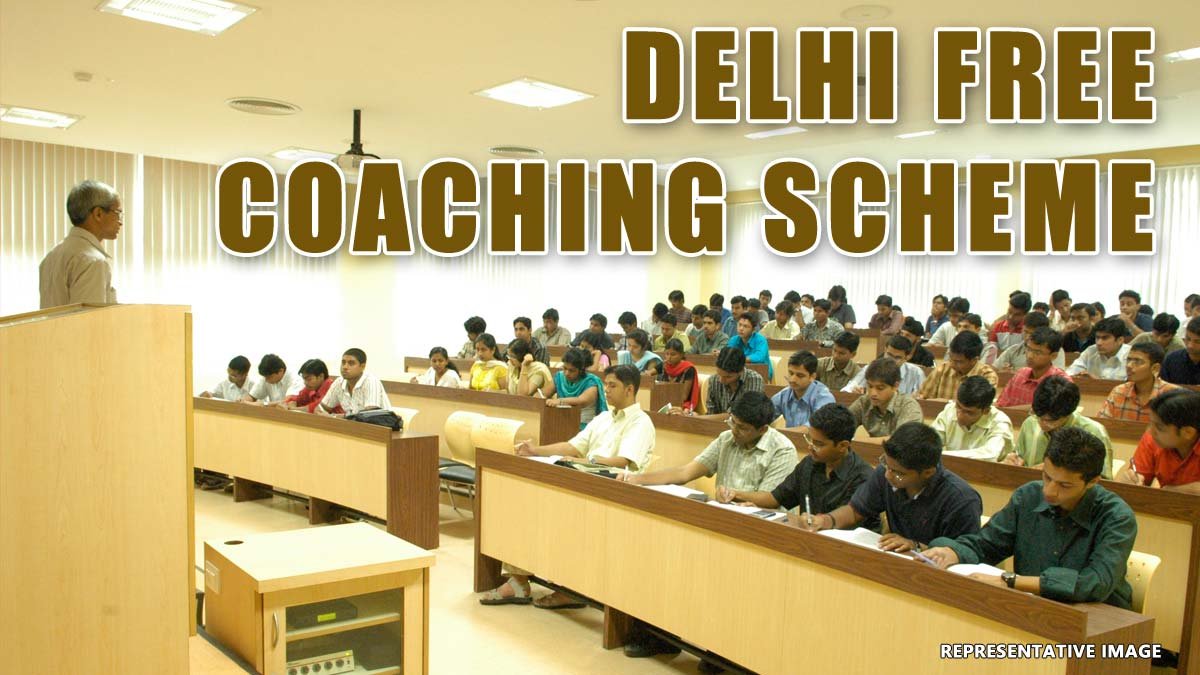

Free government coaching schemes for competitive exams in 2026 are helping students from economically weaker sections prepare for UPSC, SSC, banking, railways, and state level exams. This guide explains eligibility, application process, documents required, and how to secure admission under these schemes.
Free government coaching schemes for competitive exams are available across multiple states in 2026 to support students from Scheduled Castes, Scheduled Tribes, Other Backward Classes, minorities, and economically weaker sections. These schemes aim to improve access to quality coaching for national and state level competitive exams. Most programs are run through state social welfare departments, minority welfare departments, or skill development missions. Understanding eligibility criteria and deadlines is essential because applications are time bound and seats are limited.
Types of Competitive Exams Covered Under Free Coaching Schemes
Most state government free coaching programs cover high demand exams such as UPSC Civil Services, State Public Service Commission exams, SSC CGL, SSC CHSL, banking exams like IBPS and SBI PO, railway recruitment exams, and sometimes NEET and JEE for professional courses.
Some states also provide coaching for police recruitment, teacher eligibility tests, and judicial services. The coaching may be offered through empanelled private institutes or government run training centers. In certain cases, online coaching options are also available to reach students in Tier 2 and Tier 3 cities.
The support may include tuition fees, study material, test series, and in some cases a monthly stipend to cover accommodation or travel expenses.
Eligibility Criteria for State Government Coaching Schemes
Eligibility varies by state, but common conditions apply across most schemes.
Applicants must be residents of the respective state.
Income limit is usually capped under a specified annual family income threshold.
Category certificate is required for SC, ST, OBC, or minority specific schemes.
Minimum educational qualification must match the target exam requirement.
Age limit must align with the competitive exam rules.
For example, a student applying for free UPSC coaching must have completed graduation and fall within the civil services age limit. Income certificates are mandatory and must be issued by a competent authority.
Students should verify updated criteria on their respective state department portal before applying.
Step by Step Application Process in 2026
The application process for state government free coaching schemes is largely online in 2026.
Step 1 Visit the official website of the concerned department such as Social Welfare, Tribal Welfare, or Minority Affairs of your state.
Step 2 Look for the free coaching scheme notification for the current academic year.
Step 3 Register using your mobile number and email ID.
Step 4 Fill in personal details, academic qualifications, and exam preference.
Step 5 Upload required documents including income certificate, caste certificate if applicable, Aadhaar card, domicile certificate, and educational marksheets.
Step 6 Submit the application before the deadline and download acknowledgment receipt.
After submission, shortlisted candidates are often selected based on merit, entrance test, or document verification. Final lists are published on the official portal.
Documents Required for Successful Claim
To claim benefits under a free coaching scheme, applicants must keep the following documents ready:
Aadhaar card
State domicile certificate
Income certificate within validity period
Category certificate if applicable
Educational qualification certificates
Passport size photograph
Bank account details
Incomplete or incorrect documentation is one of the main reasons applications are rejected. Students must ensure that income details match official records.
Selection Process and Seat Allocation
Since seats are limited, most states follow a transparent selection mechanism. This may include merit based shortlisting based on previous academic performance or a screening test conducted by the department.
Some states reserve seats district wise to ensure fair representation from rural and semi urban areas. Priority is often given to candidates from lower income brackets.
Once selected, candidates receive confirmation via SMS or email. They must confirm admission within the specified time frame or risk cancellation.
Common Mistakes to Avoid During Application
Many students lose opportunities due to avoidable errors.
Missing the application deadline
Uploading expired income certificate
Selecting the wrong exam category
Entering incorrect academic details
Not checking final merit list publication
Applicants should track notifications regularly and maintain copies of submitted forms.
Benefits for Students in Tier 2 and Tier 3 Cities
Students in smaller cities often lack access to high quality coaching institutes. Free government coaching schemes bridge this gap by providing structured preparation support.
With digital classrooms and hybrid learning models, students can access lectures without relocating to metro cities. Financial assistance reduces the burden on families and allows aspirants to focus fully on preparation.
In 2026, the expansion of online modules under these schemes has further improved accessibility for rural candidates.
Takeaways
• Free government coaching schemes in 2026 support UPSC, SSC, banking, railways, and state exams
• Eligibility depends on income limit, domicile status, and category criteria
• Applications are mostly online and require valid certificates
• Early application and accurate documentation improve selection chances
FAQs
Q1. Can general category students apply for free coaching schemes?
Some schemes are category specific, while others are open to economically weaker sections irrespective of caste. Eligibility depends on state rules.
Q2. Is there any entrance test for selection?
In many states, selection may include merit based shortlisting or a screening test due to limited seats.
Q3. Are online coaching options available under these schemes?
Yes, several states now offer online or hybrid coaching models to support students from remote areas.
Q4. Do students receive financial assistance besides coaching?
Certain schemes provide stipends for accommodation or travel, depending on state guidelines.