
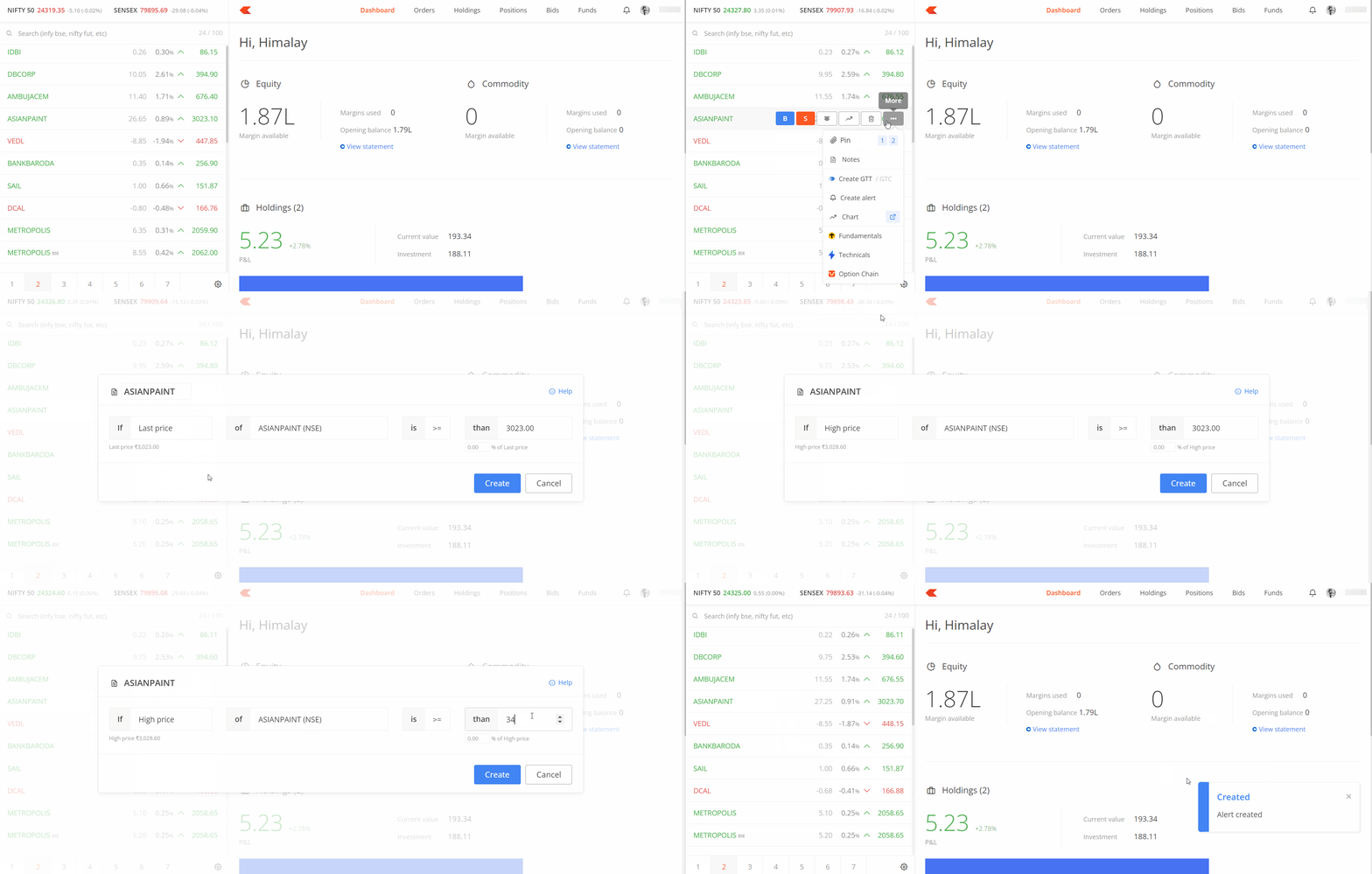

MCX price tracking alerts are essential for traders who monitor commodities and metals prices in real time. A structured workflow helps traders react quickly to volatility in gold, silver and other MCX contracts without constantly watching the screen.
Commodity markets in India operate through the Multi Commodity Exchange where futures contracts for gold, silver, crude oil, natural gas and agricultural commodities are actively traded. Prices move based on global cues, currency fluctuations, supply demand data and speculative activity. Because these contracts are leveraged, even small percentage movements can impact margins significantly. Setting up regional price tracking alerts ensures that traders respond to critical levels instead of relying on guesswork.
Understanding MCX Contracts and Regional Price Sensitivity
Before configuring MCX price alerts, traders must understand contract specifications. Each commodity has multiple contract months with defined lot sizes and tick values. For example, gold and silver futures have different minimum price movements and margin requirements. Alerts must be set on the correct contract month that you are actively trading.
Regional sensitivity plays a role due to currency movement. MCX prices are influenced by international benchmarks and the rupee dollar exchange rate. If global gold prices rise but the rupee strengthens sharply, domestic futures may show limited upside. Traders should therefore track both global spot prices and MCX futures.
Knowing key support and resistance levels is crucial. Alerts should not be random. They must correspond to technical levels such as previous day high and low, weekly breakout points or psychological round numbers.
Choosing the Right Trading Platform for Alerts
Most registered brokers in India provide mobile and desktop platforms with customizable alert features. Ensure your trading account has real time data access enabled. Delayed data can make alerts ineffective during volatile sessions.
Navigate to the watchlist section and add relevant MCX contracts. From there, select the price alert option. Platforms usually allow alerts based on last traded price, percentage change or price crossing above or below a defined threshold.
Advanced traders may also use charting software integrated with technical indicators. Alerts can be linked to moving averages, RSI levels or breakout zones. This method is useful for systematic trading strategies rather than discretionary decisions.
Step by Step Workflow for Airtight Price Tracking
First, identify your trading plan. Decide whether you are a scalper, intraday trader or positional trader. Alert levels differ for each strategy. Intraday traders may set tighter price bands, while positional traders track broader levels.
Second, mark critical levels on daily and hourly charts. These include support, resistance, previous settlement price and high volume zones. Enter these levels into the alert system.
Third, configure dual alerts. For example, if gold futures are trading at 62000, set one alert slightly above resistance and another slightly below support. This ensures you capture breakout or breakdown scenarios.
Fourth, enable notification channels. Choose push notifications, SMS or email based on urgency. For high volatility commodities like silver or crude oil, instant mobile push alerts are recommended.
Fifth, review alerts daily. Commodity markets react to global events overnight. Adjust your levels based on fresh data and updated technical patterns.
Integrating Fundamental Triggers With Alerts
Technical alerts alone are not sufficient for airtight tracking. Commodity prices respond to macroeconomic events such as central bank announcements, inflation data and geopolitical developments. Maintain a calendar of major economic events that impact metals prices.
For example, US Federal Reserve policy updates often affect gold and silver. On such days, tighten your alert levels because price swings may accelerate. Currency movement also plays a role. If the rupee shows unusual volatility, metals futures may react even without large global price changes.
Combining price alerts with volume spikes can enhance decision making. High volume breakouts are generally more reliable than low volume moves. Some platforms allow volume based alerts as well.
Risk Management and Alert Discipline
Setting up alerts is only useful if accompanied by risk management rules. Pre define your stop loss and target before entering a trade. Alerts should trigger evaluation, not emotional reaction.
Avoid setting too many alerts. Excessive notifications reduce focus and may lead to impulsive trading. Prioritize levels that align with your trading plan.
Keep margin requirements in mind. Commodities trading involves mark to market settlement. If prices move against your position, additional margin may be required. Alerts help you respond before losses expand.
Regularly test your notification system. Ensure your app permissions allow background alerts. A missed notification during volatile trading hours can result in significant financial impact.
Takeaways
• Set alerts based on technical levels, not random prices
• Track global cues and currency movement along with MCX prices
• Use dual alerts for breakout and breakdown scenarios
• Combine alerts with strict risk management discipline
FAQs
Q1: Can I set MCX price alerts on mobile apps?
Yes. Most registered brokerage apps allow real time price alerts through push notifications, SMS or email.
Q2: Should I track international gold prices along with MCX?
Yes. MCX metals prices are influenced by global benchmarks and the rupee dollar exchange rate.
Q3: How many alerts should a trader set?
Only set alerts at critical technical levels relevant to your strategy to avoid notification overload.
Q4: Do alerts guarantee profitable trades?
No. Alerts provide timely information, but trading decisions must follow a structured risk management plan.