
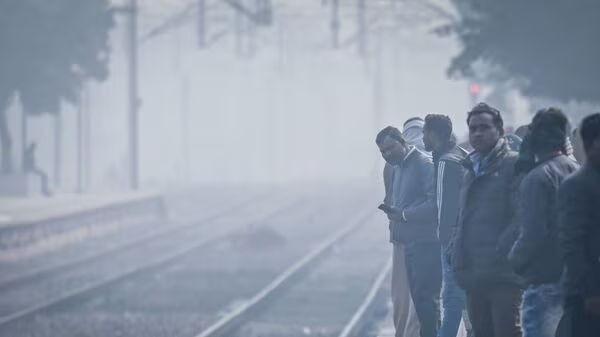

Tracking dense fog and cold conditions using IMD warnings is essential for safe travel during winter months in many parts of India. Fog related accidents, transport delays, and health risks rise sharply when visibility drops and temperatures fall, especially in northern and central regions.
This topic is evergreen but becomes operationally critical during winter spells. The tone here is educational with practical guidance so readers can act immediately when conditions worsen.
Understanding IMD fog and cold weather warnings
The India Meteorological Department issues structured warnings to indicate weather severity. Dense fog warnings are generally classified by visibility levels, ranging from shallow fog to very dense fog where visibility can drop below 50 metres. Cold wave warnings are issued when minimum temperatures fall significantly below normal for a region.
IMD warnings are colour coded to indicate risk levels. Yellow suggests caution, orange signals preparedness, and red indicates high risk conditions that can severely impact travel and daily life. Understanding this structure helps beginners avoid panic while still taking the alerts seriously.
Where to check IMD fog and cold condition updates
The most reliable way to track dense fog and cold conditions is through IMD’s official city wise and district wise bulletins. These updates are usually released at least twice a day, with special advisories during extreme weather events.
In addition to national level updates, regional meteorological centres issue localized forecasts. These are particularly useful for Tier 2 and Tier 3 cities where fog patterns can differ significantly from nearby metros. Avoid relying solely on generic weather apps that may not reflect ground level visibility conditions accurately.
How to interpret fog intensity for travel planning
Fog intensity directly affects road, rail, and air travel. Visibility above 500 metres usually allows cautious driving. When visibility drops below 200 metres, travel risk increases sharply. Dense fog below 100 metres often leads to highway pile ups and train delays.
IMD warnings often mention expected visibility ranges during morning and late night hours. Beginners should focus on timing. Fog tends to be densest between early morning hours, gradually lifting after sunrise. Planning departures after visibility improves reduces risk substantially.
Using cold wave alerts to assess health and safety risks
Cold wave warnings are not just about discomfort. Prolonged exposure to low temperatures increases risks for children, elderly people, and those with respiratory conditions. IMD alerts often include temperature departure from normal, which helps assess severity.
When minimum temperatures fall sharply, frost formation and black ice on roads become possible in some regions. These conditions make early morning travel particularly dangerous for two wheelers and pedestrians. Monitoring night temperature forecasts helps decide whether travel can be delayed safely.
Safe travel practices during dense fog conditions
Tracking warnings is only effective if combined with safe behaviour. During dense fog, reduce speed significantly and maintain larger gaps between vehicles. Use low beam headlights or fog lamps where available. High beam lights reflect off fog particles and reduce visibility.
Avoid sudden lane changes and frequent overtaking. On highways, follow road reflectors and lane markings rather than relying solely on visual cues. If visibility becomes extremely poor, pulling over at a safe location until conditions improve is often the safest choice.
Rail and air travel considerations during fog
Dense fog frequently disrupts train schedules and flight operations. IMD warnings help predict disruption windows, especially during peak winter mornings. Passengers should check train running status or flight advisories before leaving for stations or airports.
Airports in fog prone regions use instrument landing systems, but prolonged fog can still lead to diversions and cancellations. Knowing the forecast helps passengers plan buffer time or reschedule non essential travel.
Combining IMD warnings with local updates
IMD alerts provide the broad picture, but local authorities often issue additional advisories. Traffic police, district administrations, and highway authorities may impose speed restrictions or temporarily close certain routes.
For beginners, combining IMD warnings with local civic updates creates a more accurate safety plan. This approach is particularly useful in semi urban areas where fog intensity can vary within short distances.
Planning daily routines around weather alerts
Tracking dense fog and cold conditions should become part of daily routine during winter. Checking forecasts the night before helps plan school drop offs, office commutes, and long distance travel.
For those working early shifts or driving long routes, setting weather alerts on mobile devices can provide timely warnings. Consistency in checking updates matters more than reacting only during extreme events.
Takeaways
IMD warnings explain fog and cold severity clearly when understood correctly
Visibility levels are more important than temperature alone for travel safety
Early morning travel carries the highest fog related risk
Combining IMD alerts with local advisories improves decision making
FAQs
What does dense fog mean in IMD warnings?
Dense fog usually indicates visibility below 200 metres, with very dense fog falling below 50 metres.
Are weather apps enough to track fog conditions?
Generic apps help, but IMD bulletins offer more accurate visibility based warnings for Indian conditions.
Is it safe to travel during a cold wave alert?
Travel is possible, but extra precautions are needed, especially during early morning and late night hours.
Do fog conditions improve quickly after sunrise?
In most cases, visibility improves after sunrise, but persistent cold conditions can delay fog clearance.