
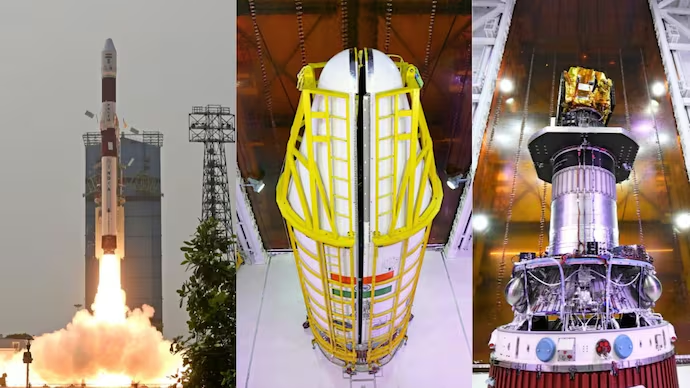

The PSLV-C62 mission has drawn wide public attention, and many first time space followers want to track the launch live and understand what ISRO’s real time data actually means. This guide explains how beginners can follow the mission step by step and read official updates correctly.
Understanding the PSLV-C62 mission and its objective
The PSLV-C62 mission is part of India’s Polar Satellite Launch Vehicle programme, designed to place satellites into precise orbits. In this mission, ISRO is deploying an Earth observation satellite to strengthen space surveillance and data gathering capabilities. For viewers, the mission follows a predictable launch sequence, which makes it ideal for first time tracking. Knowing the mission objective helps interpret why certain flight phases matter more than others during live coverage.
Where to track the PSLV-C62 mission live
Tracking the PSLV-C62 mission live is best done through official ISRO digital platforms. These include ISRO’s live webcast page, its verified YouTube channel, and official social media handles. Television channels often relay the same feed, but the primary webcast gives the most accurate visuals and audio commentary. Beginners should log in at least 20 minutes before liftoff to catch the mission briefing, countdown milestones, and final go or no go confirmations.
How to read the launch countdown and liftoff stages
The launch countdown is shown in hours, minutes, and seconds before liftoff. When the timer reaches zero, ignition begins. The first stage uses solid fuel boosters, which provide the initial thrust. Shortly after liftoff, strap on motors separate, followed by stage separations. Each separation confirms the rocket is shedding weight efficiently. If the countdown pauses briefly, it usually indicates a technical check and not a failure. This is normal in many ISRO launches.
Interpreting altitude, velocity, and telemetry data
During the live broadcast, ISRO displays telemetry values such as altitude, velocity, and mission elapsed time. Altitude shows how high the rocket has climbed from Earth’s surface. Velocity indicates how fast it is traveling, which must increase steadily to achieve orbit. Beginners should focus on smooth increases rather than exact numbers. Sudden drops or freezes would signal an anomaly, but gradual changes are expected as stages ignite and separate.
Understanding satellite separation and mission success signals
Satellite separation is the most critical moment in the PSLV-C62 mission. When ISRO confirms successful separation, the launch vehicle has completed its primary job. This announcement usually comes with applause in the mission control room. However, mission success also depends on whether the satellite starts transmitting signals and enters its intended orbit. ISRO later releases confirmation updates once ground stations establish contact with the satellite.
How to follow post launch updates and mission data
After liftoff, ISRO continues sharing updates for several hours or days. These include orbit parameters, payload health reports, and initial data reception status. Beginners should look for terms like nominal performance, stable orbit, and payload functioning normally. These indicate that the satellite systems are operating as planned. Post launch briefings often explain technical achievements in simple language for the public.
Common mistakes beginners make while tracking ISRO missions
Many first time viewers mistake temporary signal loss or camera switches for technical failures. In reality, communication blackout periods occur when the rocket moves beyond certain tracking stations. Another common misunderstanding is assuming the mission ends at liftoff. For ISRO, mission completion includes satellite health checks and orbit validation, which happen well after launch.
Why PSLV missions matter beyond the launch day
PSLV missions like C62 contribute to long term national capabilities in weather monitoring, disaster management, navigation, and space research. Understanding live tracking helps the public appreciate the complexity behind routine sounding launches. It also builds awareness of India’s growing role in space technology and satellite services.
Takeaways
PSLV-C62 tracking is best done through official ISRO live webcasts and channels
Focus on stage separation and satellite deployment rather than exact telemetry numbers
Temporary signal gaps during launch are normal and not mission failures
Mission success is confirmed only after satellite health and orbit stability checks
FAQs
Can beginners understand ISRO launch data without technical background?
Yes. By focusing on visual cues, stage separation announcements, and official confirmations, even non technical viewers can follow the mission clearly.
What does mission elapsed time mean during the launch?
Mission elapsed time shows how long the rocket has been in flight since liftoff and helps track key events like stage separation.
Is satellite separation the final step of the mission?
It is the final step for the launch vehicle, but the mission continues until the satellite is confirmed healthy in orbit.
Why does ISRO sometimes delay the countdown?
Delays allow engineers to recheck systems for safety and accuracy. They are precautionary and common in space launches.