
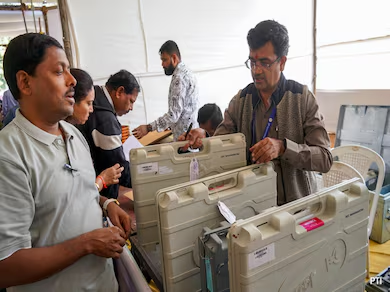

Voting in municipal corporation elections is a time sensitive civic process that directly affects local governance, infrastructure, and daily services. For citizens in Tier 2 cities like Mumbai, Pune, Thane, and similar urban centres, understanding how to vote in municipal corporation elections on polling day helps avoid confusion, delays, and missed participation.
Municipal elections follow strict procedures defined by state election commissions. While the fundamentals remain consistent, city specific rules, polling schedules, and holiday declarations often differ. This article explains what voters must know before stepping out on polling day.
Understanding municipal corporation elections and voter eligibility
Municipal corporation elections decide the elected representatives of city level governing bodies. These bodies manage essential services such as water supply, roads, sanitation, local taxation, and urban planning. Unlike state or national elections, these polls are conducted under the supervision of state election commissions.
To be eligible to vote, your name must appear on the municipal electoral roll of the concerned city ward. Residency within the municipal limits and valid voter registration are mandatory. Voters registered in one city cannot vote in another, even if they own property there.
Checking your name on the voter list before polling day
One of the most common reasons citizens fail to vote is missing or incorrect voter details. Before polling day, check your name on the electoral roll using official voter search portals or local ward office listings.
Confirm your polling booth location, ward number, and serial number. Polling stations can change between elections due to delimitation or administrative reasons. Never assume your old booth location remains the same.
For Tier 2 cities, local language spellings can sometimes cause mismatches. Verify details carefully and raise corrections if time permits.
Polling day timing and holiday rules
Polling hours are fixed and announced well in advance. Most municipal elections follow a morning to evening voting window, with exact timings notified city wise. Late arrivals after the cut off time are not allowed to vote.
In many cities, polling day is declared a local public holiday to encourage voter turnout. However, this holiday usually applies only within municipal limits. Private employers are expected to allow employees time off to vote, but enforcement varies.
Plan your visit early in the day to avoid queues, especially in densely populated wards.
What to carry to the polling booth
On polling day, carry an approved voter identification document. While the voter ID card is preferred, several alternative government issued photo IDs are usually accepted.
Do not carry electronic devices such as mobile phones, cameras, or smart watches inside the polling station. These are restricted items. Carrying them can delay your entry or lead to confiscation until voting is complete.
If you have a physical disability or are a senior citizen, assistance facilities such as priority queues or ramps are often provided.
Voting process inside the polling station
Once inside the polling booth, election officials verify your identity against the voter list. Indelible ink is applied to your finger to prevent multiple voting.
Municipal elections typically use electronic voting machines. The ballot unit displays party symbols and candidate names specific to your ward. Vote carefully as there is no option to change your selection once confirmed.
After casting your vote, exit the booth calmly to allow smooth flow for other voters.
Special considerations for large cities like Mumbai and Pune
In large urban corporations like Mumbai, Pune, and Thane, polling is often staggered across phases due to scale and security needs. This means different wards may vote on different days.
Voters must pay attention to their specific ward schedule. Confusion between phases can result in missed voting opportunities. Traffic diversions and public transport changes are common on polling days, so plan your travel accordingly.
Election related restrictions such as silence periods and dry days are enforced strictly.
What happens if you cannot vote
If your name is missing from the voter list or you are outside the city on polling day, voting is not permitted. There is no postal or proxy voting option for municipal elections for general voters.
However, absence from one election does not affect future eligibility. Citizens should use the post election revision period to update records for the next cycle.
Why municipal voting matters for Tier 2 cities
For Tier 2 and emerging urban centres, municipal corporations play a decisive role in shaping growth, investment, and quality of life. Issues like waste management, road repairs, water supply, and local transport are decided at this level.
Voting in municipal corporation elections ensures that city governance reflects resident priorities rather than low turnout outcomes.
Takeaways
Check your name and booth details before polling day
Carry valid photo ID and avoid restricted items
Arrive early to avoid queues and confusion
Municipal voting directly impacts daily city services
FAQs
Is polling day a holiday for everyone in the city?
Polling day is usually a local holiday within municipal limits, but private sector policies may vary.
Can I vote if I recently shifted houses within the city?
You can vote only if your updated address appears on the electoral roll of the new ward.
Are municipal elections held using EVMs?
Yes, most municipal corporation elections use electronic voting machines.
Can senior citizens get assistance at polling booths?
Yes, priority access and basic assistance are usually provided for senior citizens and persons with disabilities.