
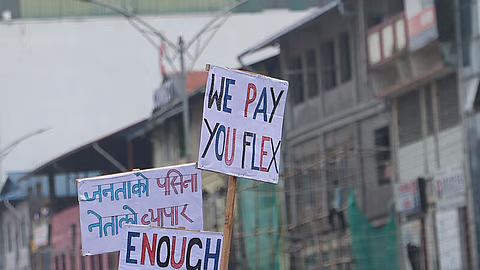

Protests by youth wings in smaller state capitals like Bhopal significantly influence public sentiment by highlighting governance issues, amplifying local frustrations and shaping political narratives. These demonstrations often become catalysts for wider debate, especially in regions where youth participation is rising and political competition is intensifying.
Why youth led protests matter in smaller state capitals
Youth wing protests hold greater visibility in smaller capitals because these cities serve as administrative, cultural and political hubs for surrounding districts. Demonstrations by groups such as the All India Youth Congress frequently focus on issues like unemployment, exam delays, price rise and alleged administrative misconduct.
In places like Bhopal, protests can gather momentum quickly because student groups, district political units and young workers converge from nearby towns. As these cities have concentrated media presence, even modest scale protests gain public attention. The impact extends beyond city limits, influencing sentiment in Tier 2 and Tier 3 regions that closely follow capital city developments.
How youth activism spreads through regional networks and digital channels
Youth wing protests often travel fast across districts because political workers, students and social organisations maintain active networks. When a protest in Bhopal highlights an issue such as recruitment irregularities or governance lapses, similar discussions begin in nearby towns like Sehore, Raisen and Vidisha.
Digital platforms accelerate this spread. Videos, photographs and short clips circulated through social media shape impressions rapidly, especially among first time voters. In smaller towns where offline political engagement is limited, digital activism creates a sense of participation and urgency.
As a result, the original protest triggers wider discourse, strengthening the influence of youth voices on regional narratives.
Effect on political parties and their campaign strategies
Political parties respond quickly to youth wing protests because these events signal shifts in public mood. When youth activists raise an issue that resonates broadly, parties adjust their messaging, launch counter campaigns or issue clarifications to prevent loss of support.
A strong protest can elevate internal youth leaders who demonstrate organisational skills. These leaders often gain greater visibility within the party structure, influencing candidate selection and strategy development.
Parties also reassess their ground level engagement. If protests reveal deep dissatisfaction among students or young workers, campaign teams prioritize outreach at colleges, coaching centres, industrial clusters and low income neighbourhoods. This recalibration often affects election plans across multiple districts.
How protests influence administrative responses and public trust
When youth wings protest, administrative authorities face immediate pressure to respond. Transparent handling of the issue can improve public trust. Conversely, forceful crowd control, detentions or communication gaps can shift sentiment against officials.
In smaller capitals, where interactions between citizens and administration are more direct, people closely observe how police and officials manage protests. Incidents of lathi charge or aggressive action can trigger strong reactions, especially when youth groups share real time visuals online.
Repeated protests on similar grievances highlight systemic issues. This increases scrutiny of government performance and shapes the narrative leading into elections. Public perception often depends on how quickly and effectively authorities address the root cause of the protest.
Role of campuses and student communities in amplifying messages
University campuses in smaller capitals play a central role in shaping youth activism. Bhopal hosts several major institutions that attract students from across the state, providing a fertile environment for organised youth movements.
Students often echo and amplify the concerns raised during protests. Even small gatherings on campus can inspire larger mobilisations across the city. Through debates, discussions and peer networks, student communities help convert isolated issues into state level conversations.
This amplification is especially important in regions where youth unemployment and academic issues drive political engagement.
How public sentiment shifts depending on protest tone and outcomes
Public support for youth protests depends largely on tone, behaviour and outcomes. Peaceful, issue focused demonstrations typically gain widespread sympathy. Residents view them as legitimate expressions of frustration, particularly when grievances are documented and relatable.
However, if protests lead to property damage, traffic disruption or clashes, sentiment can shift towards caution or disapproval. Small capitals depend heavily on uninterrupted daily activity, and disruptions can alienate sections of the public.
The impact also depends on results. If protests lead to policy reviews, investigations or corrections, public faith in activism increases. If no action follows, residents may become cynical, affecting the credibility of both youth groups and authorities.
Why youth activism continues to grow in smaller regions
Youth activism is rising because demographic patterns favour higher political participation. Many Tier 2 and Tier 3 cities have a large young population facing challenges related to employment, education and mobility.
Smartphone access and digital literacy have given young residents new tools to express dissent and mobilise support. Political parties recognise this shift and attempt to integrate youth leaders more prominently into local structures.
As engagement increases, youth activism becomes a powerful lens through which residents judge political accountability and administrative performance.
Takeaways
Youth wing protests in small capitals influence opinion across surrounding districts
Political parties adjust strategies quickly in response to youth mobilisation
Administrative handling of protests shapes public trust and election narratives
Student communities amplify messages, turning local protests into wider movements
FAQs
Do youth protests affect election outcomes in smaller capitals
Yes. They shape voter perception, highlight local issues and influence campaign narratives, particularly in closely contested regions.
Why do youth wings protest more actively now
Higher unemployment, exam related grievances, economic pressure and increased digital visibility have encouraged stronger youth participation.
How do authorities typically handle these protests
They deploy police teams, issue statements and initiate inquiries. Public sentiment depends on whether the response is seen as fair and measured.
Can protests in one capital influence neighbouring towns
Yes. Smaller capitals act as regional centres, and protest messages spread quickly through student networks and social media.